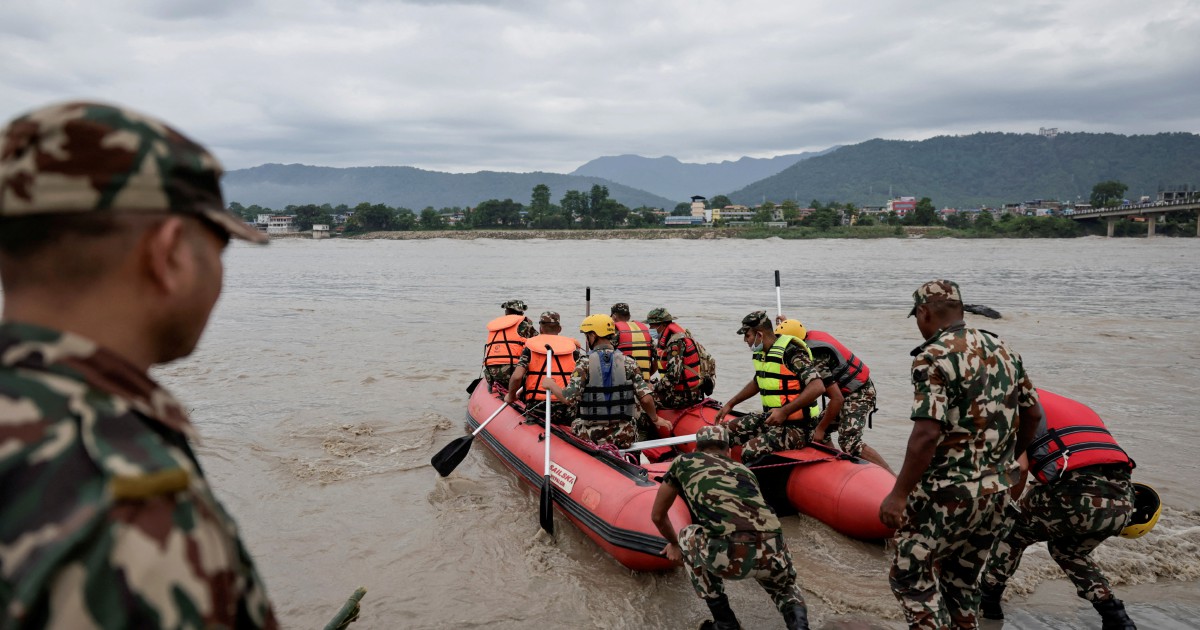
Nepal's government is grappling with what Prime Minister Balendra Shah has characterised as an "unimaginable and heartbreaking" natural disaster following massive flooding that has swept across the Himalayan nation. The scale of the calamity remains unclear as emergency officials scramble to compile comprehensive casualty figures and locate thousands of missing persons in affected regions. The floods represent one of the most significant humanitarian challenges to confront the South Asian country in recent memory, testing the capacity of its disaster response infrastructure at a critical moment.
The exact death toll remains in flux as recovery teams continue operations across inundated areas, with several districts reporting communication breakdowns that hamper accurate reporting. Authorities acknowledge that preliminary figures are likely incomplete, given the challenges of accessing remote mountain communities where landslides triggered by torrential rainfall have destroyed roads and isolated settlements. This information vacuum has compounded anxiety among families desperately seeking news of relatives caught in the deluge. The government has mobilised all available resources, yet the mountainous terrain and severely damaged infrastructure have created significant obstacles to comprehensive damage assessment and rescue coordination.
For Southeast Asian nations, Nepal's crisis underscores the increasing vulnerability of Himalayan and South Asian regions to extreme weather events intensified by climate change. The monsoon season regularly brings heavy precipitation to Nepal, but the intensity and scale of this particular disaster suggest patterns that meteorologists have linked to shifting global climate patterns. Malaysia and other regional nations have experienced similar catastrophic flooding in recent years, making this a cautionary case study for early warning systems, evacuation protocols, and emergency preparedness that transcends national boundaries.
The flooding has exposed critical weaknesses in Nepal's disaster management capabilities. While the government has established protocols for rapid response, implementation remains hampered by budgetary constraints, inadequate infrastructure in rural zones, and the sheer unpredictability of mountain weather systems. Emergency services are stretched thin across multiple affected districts, with rescue teams working around the clock despite exhaustion and dwindling supplies. International humanitarian organisations have begun coordinating assistance, but getting aid to isolated pockets of survivors requires helicopter operations and manual mountain routes, both time-consuming and resource-intensive.
Thousands reported missing present perhaps the most distressing aspect of the unfolding tragedy. Families have converged on government registration centres seeking information, many holding photographs of loved ones. The delay in locating survivors owes partly to the sheer geographic expanse affected and partly to the likelihood that many bodies remain trapped beneath debris or swept downstream. Officials have cautioned that final casualty figures may not emerge for weeks, as rescue teams continue systematically searching devastated areas. This prolonged uncertainty perpetuates trauma for grieving families already reeling from the disaster's immediate impact.
The economic ramifications extend beyond immediate humanitarian concerns. Destroyed agricultural lands threaten food security for rural populations already vulnerable to seasonal shortages. Infrastructure damage—particularly to roads, bridges, and water systems—will require substantial reconstruction investment that Nepal's developing economy can ill afford. Preliminary assessments suggest damages could reach hundreds of millions of dollars, potentially derailing development initiatives and straining government finances already stressed by competing demands. The reconstruction phase will likely extend for months or even years, affecting broader regional stability and development trajectories.
Prime Minister Shah's public acknowledgment of the disaster's magnitude reflects the unprecedented nature of the crisis. Government officials have typically been cautious about characterising natural disasters in extreme language, but the scale here appears to have prompted more candid assessments. This suggests that internal damage reports are even more alarming than figures released to the media, indicating coordination challenges between central authorities and district-level administrators still attempting to compile accurate information from devastated regions.
The international response has begun mobilising, though logistics present formidable challenges. Neighbouring India has deployed humanitarian assistance, while the international community has signalled readiness to provide resources through established relief channels. However, Nepal's mountainous geography means that aid delivery remains slow compared to crises in more accessible regions. This geographic reality necessitates that the country develop stronger domestic disaster response capabilities, emphasising local preparedness and community-level resilience as first lines of defence against future calamities.
Climate experts have connected the severity of this flooding to broader patterns of weather intensification across South Asia. Warmer atmospheric temperatures increase moisture retention, leading to more concentrated rainfall over shorter periods—exactly the conditions that triggered this disaster. Nepal, positioned at the climate interface between the Indian subcontinent and the Tibetan plateau, experiences particularly volatile weather systems. As climate change accelerates, such "unimaginable" events may become distressingly routine, placing enormous pressure on governments already struggling with preparedness and response.
The path forward demands immediate humanitarian action combined with longer-term structural reform. Rebuilding must incorporate climate-resilient architecture and improved early warning systems designed to function in remote areas lacking reliable electricity or telecommunications. Nepal's government has indicated commitment to these improvements, yet implementation will require sustained international support and domestic political will. For Southeast Asian neighbours, Nepal's unfolding catastrophe serves as a stark reminder that natural disaster preparedness remains perpetually inadequate without continuous investment and regional cooperation frameworks addressing shared climate vulnerabilities.

