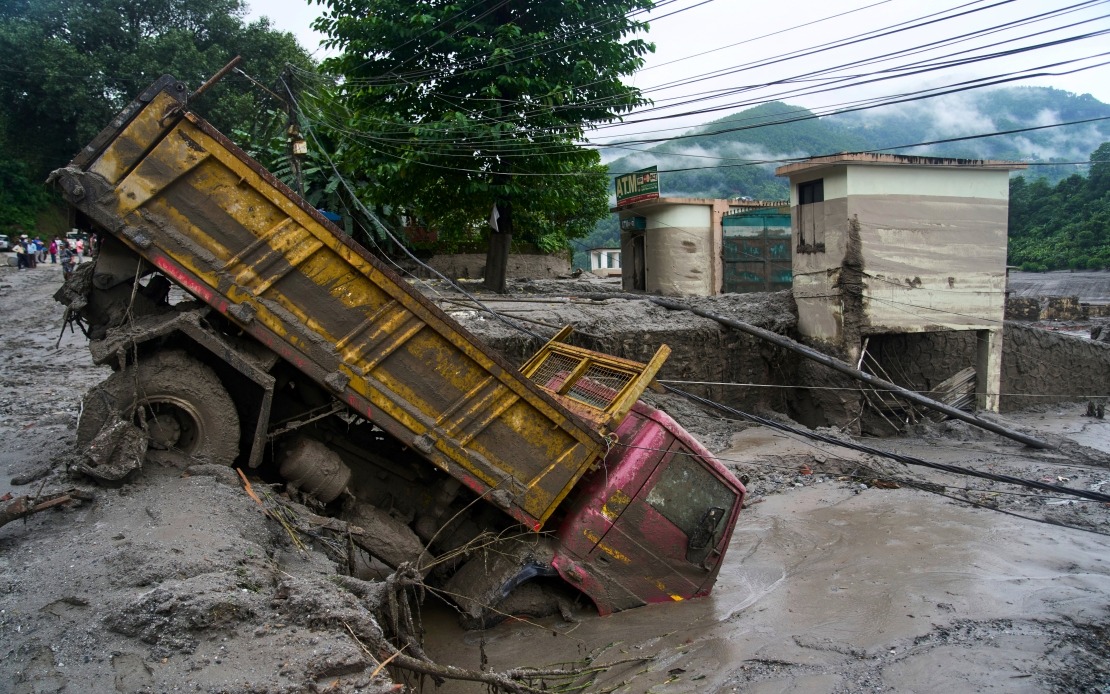
Nepal's disaster management authorities have sounded a renewed alarm over the possibility of additional flooding along the Bhote Koshi River in Rasuwa district, merely two days after a catastrophic deluge devastated the same region on Wednesday. The National Disaster Risk Reduction and Management Authority (NDRRMA) confirmed on Friday that water levels in the river have surged once more, now carrying substantial quantities of debris and mud through the waterway, raising concerns among officials and rescue teams stationed across affected areas.
The escalating situation represents a compounding crisis for Nepal, where rescue and relief operations are already stretched thin following the initial catastrophe. The NDRRMA's warning specifically identified the Rasuwa section of the Bhote Koshi River as the focal point of renewed danger, the identical stretch where the August 26 flood wreaked devastating consequences across communities and infrastructure. This recurrence underscores the unpredictability of riverine systems in monsoon-affected regions, particularly where topographical vulnerabilities and climate patterns create conditions favouring rapid water accumulation and release.
The humanitarian toll continues to mount as recovery efforts progress. Official figures now indicate that 475 people have lost their lives in the flooding disaster, with hundreds more still unaccounted for and presumed missing. Search and rescue operations remain concentrated along the Bhote Koshi and Trishuli rivers, where teams work methodically through debris fields and downstream areas in desperate hope of locating survivors and recovering bodies for identification and dignified burial. The scale of this loss has prompted widespread regional concern and international humanitarian assistance offers.
For Malaysian observers and regional security analysts, the Nepal flooding episode carries broader significance beyond immediate humanitarian concern. The Himalayan region's monsoon vulnerability affects downstream populations across multiple nations, including countries throughout Southeast Asia where transboundary river systems connect to the Mekong and other crucial waterways. Nepal's experience demonstrates the precarious conditions facing mountainous nations with limited infrastructure capacity to manage extreme weather events, a challenge increasingly relevant as climate change alters precipitation patterns globally.
The NDRRMA has explicitly instructed all personnel engaged in rescue and relief operations to maintain heightened vigilance and readiness for rapid evacuation if circumstances deteriorate. This guidance applies not only to official rescue workers but extends to any individuals remaining in identified high-risk zones near the affected rivers. The authority has emphasised that personnel must immediately relocate to elevated ground should they observe warning indicators such as unusual water discolouration, rising levels, or debris movement.
The renewal of flood warnings reflects the complex hydrogeological realities of Himalayan river systems, where concentrated rainfall in upper catchments can translate into devastating flows in lower elevations within hours. The presence of debris and mud in current flows suggests that yesterday's surge mobilised fresh sediment and vegetation from higher elevations, indicating that upstream rainfall or glacial melt may be continuing. This pattern raises troubling questions about whether the initial August 26 event truly represented a standalone incident or merely the opening chapter of a prolonged period of hydrological instability.
Nepal's NDRRMA operates within significant resource constraints typical of developing nations confronting environmental emergencies. The authority must coordinate across multiple districts and international borders, liaising with Indian authorities downstream where the Trishuli River carries potential hazards across the bilateral boundary. The Bhote Koshi itself originates in Tibet, meaning that weather patterns and snowmelt dynamics in the Chinese-controlled region influence downstream conditions in Nepal independent of local precipitation.
For Malaysian disaster management agencies and Southeast Asian regional bodies, the Nepali situation offers instructive lessons about preparedness frameworks and early warning systems. Malaysia's own experience with monsoon flooding, particularly in Peninsular and East Malaysian states, shares certain characteristics with Himalayan flooding though with distinct topographical features. Studying Nepal's response mechanisms, technological limitations, and coordination challenges provides valuable perspective for regional capacity-building initiatives and bilateral humanitarian assistance protocols.
The international dimension of this crisis extends beyond immediate disaster response into climate adaptation and development policy discussions. Nepal's vulnerability to catastrophic flooding stems partly from limited economic resources for comprehensive water management infrastructure, deforestation in upland areas that reduces watershed protection, and climate variability that increasingly produces extreme precipitation events. These underlying factors require long-term strategic intervention beyond emergency response, suggesting roles for development organisations, multilateral institutions, and regional cooperation frameworks.
As rescue operations intensify and the missing person count evolves with ongoing discoveries, the renewed flood warning casts an anxious shadow over communities already traumatised by the initial disaster. The psychological and logistical burden of potential second disaster within days of the first creates compounding stress for both survivors and responders. Medical facilities already overwhelmed with casualties and injuries must prepare for possible additional admissions, while shelter facilities for displaced persons face uncertainty about whether population surges may recur.
The authorities' decision to issue this fresh advisory reflects cautious professionalism rather than panic-mongering, grounded in observable hydrological data and sound risk assessment principles. Early warnings, even if subsequent events do not fully materialise as predicted, represent essential practice for building institutional credibility and public compliance with evacuation orders during genuine emergencies. Communities that have experienced false alarms may paradoxically respond less responsively to genuine threats, creating a delicate balance between precautionary communication and warning fatigue.
Moving forward, Nepal's experience during this monsoon season will likely inform discussions within regional forums and development banks about infrastructure investment priorities. Hydroelectric projects, flood management systems, and early warning technology infrastructure represent significant capital requirements that many developing nations struggle to finance independently. The confluence of humanitarian disaster and infrastructure limitations highlights why transnational cooperation on water resource management and climate adaptation remains essential for regional stability and prosperity across the Hindu Kush-Himalayan corridor and beyond.

