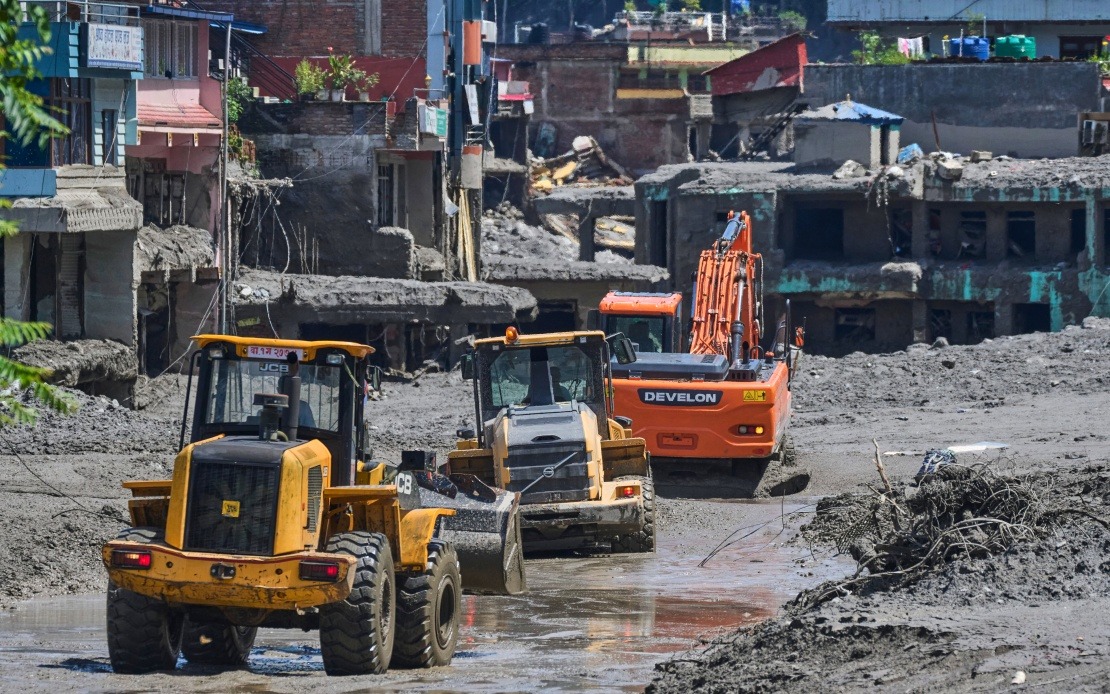
Nepal's government has thrown its full weight behind emergency response efforts following catastrophic flooding in the Bhote Koshi River, with search, rescue and relief operations taking centre stage as authorities grapple with the scale of destruction across multiple districts. The disaster, which struck on Wednesday, has prompted the Office of the Prime Minister and Council of Ministers to declare rescuing survivors and providing immediate humanitarian aid as top priorities, according to a statement issued by the Embassy of Nepal in Kuala Lumpur on Thursday.
The flooding inflicted particularly severe consequences on four districts in central Nepal: Rasuwa, Nuwakot, Dhading and Gorkha. Preliminary assessments point to substantial loss of life alongside widespread destruction of homes, farmland, roads and essential services infrastructure. However, as rescue operations continue in difficult terrain and challenging weather conditions, the full extent of both human casualties and material damage remains unclear, underscoring the ongoing uncertainty surrounding the disaster's true toll.
Security agencies and government authorities are working methodically to locate survivors still trapped in affected areas, with rescue teams operating across all four devastated districts. The priority placed on this initial phase reflects the critical window that typically exists for finding survivors in the hours and days immediately following major flooding events. Simultaneously, officials are cataloguing damage to infrastructure and documenting losses to inform subsequent reconstruction planning and resource allocation decisions.
The scale of the humanitarian challenge has prompted Nepal's government to launch a broad-based fundraising appeal aimed at mobilising domestic and international support. The Prime Minister's office has called directly on individuals, charitable organisations, private businesses and philanthropic supporters to contribute financial resources that will enable authorities to safely relocate displaced families and support their eventual recovery and rehabilitation. This multi-pronged approach acknowledges that immediate emergency response must be followed by sustained medium and long-term assistance to help affected communities rebuild.
Recognising the significant Nepali diaspora presence in Malaysia, the Embassy of Nepal in Kuala Lumpur has specifically appealed to Nepali nationals working and residing in the country, along with Nepali community associations, business networks, social welfare organisations and humanitarian-minded individuals. The embassy has framed this appeal as an opportunity for overseas Nepali communities to demonstrate solidarity with compatriots facing immediate hardship, leveraging the emotional and financial resources of diaspora networks that have historically played important roles in supporting Nepal during crises.
To facilitate contributions from Malaysia, the embassy has designated specific bank accounts through which donations can be channelled directly to official relief mechanisms. Two primary clearing houses have been established: the Prime Minister's Disaster Relief Fund and the Prime Minister's Relief Fund, both operating through established banking institutions. The Rastriya Banijya Bank accounts (1130100003762001 and 1130100000006006) and Nepal Bank Limited accounts (00211600510039000003 and 00200100510039000001) represent authorised channels ensuring that contributions flow directly to government relief coordination bodies rather than through informal or less transparent mechanisms.
The provision of QR codes alongside account details reflects modernised fundraising practices that simplify donation procedures for technologically-connected contributors. This infrastructure facilitates rapid mobilisation of resources from abroad, particularly important given that financial aid from diaspora communities can begin flowing within hours of an appeal, potentially reaching affected populations ahead of slower international relief coordination mechanisms. For Malaysian-based Nepali professionals, many of whom earn wages significantly above Nepali income levels, such appeals carry particular weight and urgency.
The Bhote Koshi River disaster exemplifies the vulnerability of Nepal's mountainous terrain and river systems to catastrophic flooding, particularly during monsoon seasons when precipitation intensifies. The four affected districts comprise regions with significant populations living in flood-prone areas with limited infrastructure resilience. Rasuwa and Nuwakot districts lie directly along major river corridors where sudden flooding can surge with devastating force through populated valleys and settlements.
For Malaysia and broader Southeast Asia, Nepal's disaster serves as a sobering reminder of climate-change-amplified extreme weather patterns affecting the wider Asian region. Catastrophic flooding has become increasingly frequent across South and Southeast Asia, impacting countries from Pakistan and India through to Thailand and Indonesia. The humanitarian response mechanisms activated in Nepal, including diaspora fundraising and government relief coordination, reflect adaptation strategies emerging across the region as communities and governments confront mounting climate-related hazards.
The embassy's coordinated approach integrating government relief frameworks with diaspora mobilisation represents a strategic recognition that major disasters require multiple funding sources and relief channels operating simultaneously. While international aid mechanisms and bilateral assistance typically develop over weeks, diaspora contributions can commence within days, providing stopgap humanitarian resources during the critical early phase when displaced populations face acute needs for shelter, food, medical supplies and clean water. The emphasis on structured banking channels also ensures transparency and accountability, addressing legitimate concerns about donation effectiveness when relief systems lack clear governance mechanisms.
As rescue operations continue across the four devastated districts, the success of Nepal's relief effort will depend substantially on the speed and adequacy of funds mobilised through initiatives like the embassy's appeal. For Malaysia's substantial Nepali community, the disaster represents both a humanitarian crisis demanding response and a test of diaspora solidarity networks that connect overseas workers to their countries of origin. The coming weeks will reveal the effectiveness of such mobilisation efforts in translating sympathy into concrete resources that facilitate survivor rescue, emergency relief delivery, and ultimately, community reconstruction and resilience building.

