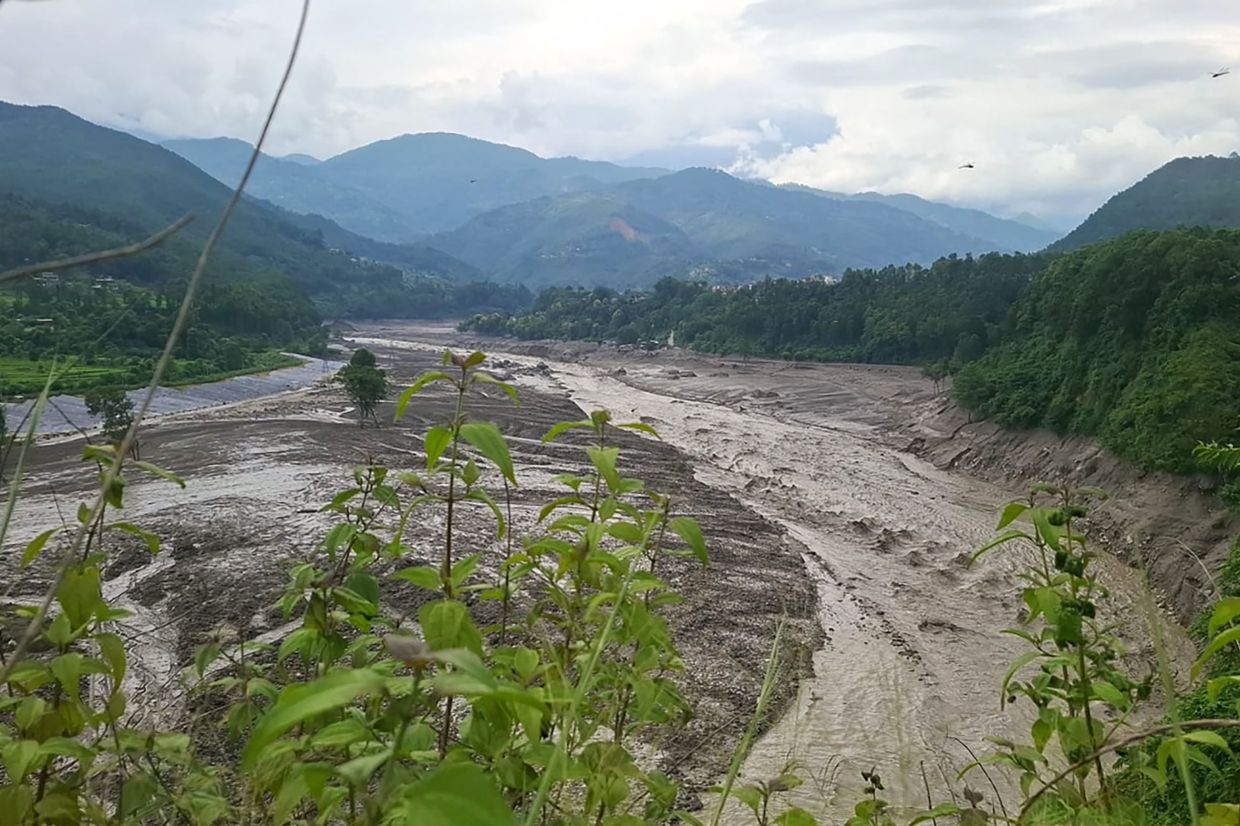
A devastating avalanche from a Himalayan glacier unleashed catastrophic flash floods across Nepal on Wednesday, killing at least 22 people and leaving hundreds of tourists, construction workers and villagers unaccounted for. The disaster struck without warning when a mass of ice and rock tumbled down a mountainside, damming the Lhende Khola River before releasing a sudden wall of water that swept through villages and infrastructure in its path. The surging torrent transformed the Bhotekoshi River into a churning torrent around 9am local time, obliterating settlements, severing critical transportation routes and damaging multiple hydropower installations across the affected region.
The human toll of the catastrophe is still emerging. Of the estimated 384 tourists reported missing, approximately 291 hail from countries including India, the United States, the United Kingdom and Malaysia. The missing tourists are predominantly Indian pilgrims and members of the Indian diaspora who were attempting to reach Mount Kailash, a sacred Hindu pilgrimage site located in the Tibetan autonomous region of China. The Nuwakot district, situated downstream from the initial flood surge, endured some of the most severe devastation, with entire residential and commercial buildings swallowed by vast quantities of mud and debris. Multiple vehicles, including trucks and vans, remain entombed beneath the silt and rubble. Malaysian authorities reported particular concern after their embassy in Kathmandu received confirmed reports from travel operators that 11 Malaysian nationals had lost contact with their operators while travelling through the heavily impacted Rasuwa district.
The international response mobilised swiftly as neighbouring countries recognised the scale of the humanitarian emergency. Nepal's government spokesperson Sasmit Pokharel announced that appeals for assistance had been dispatched to both India and China, seeking their expertise in coordinating complex rescue operations across difficult mountain terrain. Chinese President Xi Jinping issued direct orders to enhance search and rescue capabilities along the Tibetan border region of Gyirong, where Chinese authorities were simultaneously undertaking large-scale operations. Meanwhile, Indian Prime Minister Narendra Modi engaged directly with Nepal's Prime Minister Balendra Shah, pledging India's comprehensive humanitarian support and emphasising the close coordination occurring between Indian and Nepali rescue teams. Official channels across South Korea also confirmed that their nationals employed at a hydropower construction facility were among the missing, signalling the multinational composition of the disaster's victims.
Climate scientists at the Kathmandu-based International Centre for Integrated Mountain Development have identified a glacier ice-rock avalanche as the trigger for this catastrophe. Their analysis reveals that the Lhende Khola, a tributary of the Bhotekoshi system, experienced unprecedented flooding as the falling glacier mass momentarily obstructed the watercourse before the accumulated water broke through with tremendous force. Saswata Sanyal, a disaster risk reduction specialist with the climate research organisation, emphasised the alarming pattern: the same river has flooded twice within fourteen months, both times under circumstances linked to glacial activity in the warming Himalayan environment. His observation underscores a troubling reality facing the region's residents and visitors—that early warning systems and preparedness mechanisms have become essential survival tools.
This catastrophe represents the second major flood disaster in these identical districts within twelve months. An almost identical sequence of events occurred in August of the preceding year when a glacial lake in Tibet overflowed due to elevated temperatures across the mountain region. That earlier event claimed nine lives and damaged critical infrastructure, including a bridge spanning the Nepal-China border. The recurrence of such disasters at accelerating intervals points toward a systemic climatic shift affecting the entire Himalayan ecosystem. Climate researchers warn that the region is experiencing warming at rates significantly exceeding global averages, a phenomenon directly attributable to human-caused climate change. This differential warming has profound implications for the stability of glacial systems and the predictability of hydrological events throughout the region.
The scientific evidence documenting this dangerous trend has accumulated with sobering consistency. Research conducted earlier this year by scholars based in Kathmandu discovered that glaciers distributed across the Hindu Kush Himalaya range are melting at rates that have doubled since the year 2000. The acceleration correlates directly with rising planetary temperatures and shifting climate patterns. Extreme weather phenomena—including intensifying heat waves, heavy precipitation events and devastating landslides—have become increasingly frequent occurrences across this vast mountainous region. The vulnerability of this landscape stems from its geographic and climatic characteristics: the Himalayan range spanning Nepal and adjacent nations including India experiences disproportionate exposure to flash flooding, landslide activity and glacial hazards due to its elevation, precipitation patterns and now-accelerating rates of ice loss.
For regional observers including Malaysian stakeholders, this disaster carries particular resonance. Malaysian citizens regularly participate in pilgrimage and tourism activities throughout the Himalayan region, rendering the territory personally significant to many Malaysian families and communities. The presence of 11 unaccounted-for Malaysians underscores how instantaneously and comprehensively such natural disasters can affect ordinary travellers pursuing spiritual or recreational objectives. The incident reflects a broader Southeast Asian vulnerability to climate-related hazards, as warming atmospheric conditions and glacial retreat generate cascading hydrological consequences throughout Asia's major river systems that sustain hundreds of millions of people across the continent.
The disaster also illuminates the urgent necessity for enhanced cross-border coordination and early warning infrastructure. The mountainous terrain spanning Nepal, China and India complicates unified response capabilities, yet the transnational character of modern tourism and economic activity—evidenced by the diverse nationality of missing persons and the presence of South Korean industrial workers—demands integrated preparedness protocols. Climate specialist Saswata Sanyal's assertion that early warning constitutes the foundational adaptation mechanism in warming mountain regions reflects a pragmatic recognition that predicting and preventing such events entirely remains scientifically impossible under current climate trajectories. Instead, regional governments must accelerate investment in monitoring systems, evacuation procedures and community education to minimise casualties when inevitable disasters occur.
The Himalayan region occupies irreplaceable geographic and cultural significance for billions of people throughout South and Southeast Asia. Its river systems nourish the subcontinent's agricultural foundations, its glaciers provide essential water resources during dry seasons and its spiritual significance attracts devotees from across the world. As climate change accelerates ice loss and destabilises historically consistent hydrological patterns, the region faces a transformative challenge requiring unprecedented levels of scientific understanding, international cooperation and policy innovation. Nepal's government, constrained by limited resources and capacity, must navigate this crisis while advocating internationally for climate mitigation measures that address root causes rather than merely managing symptoms of an increasingly unstable environment.

