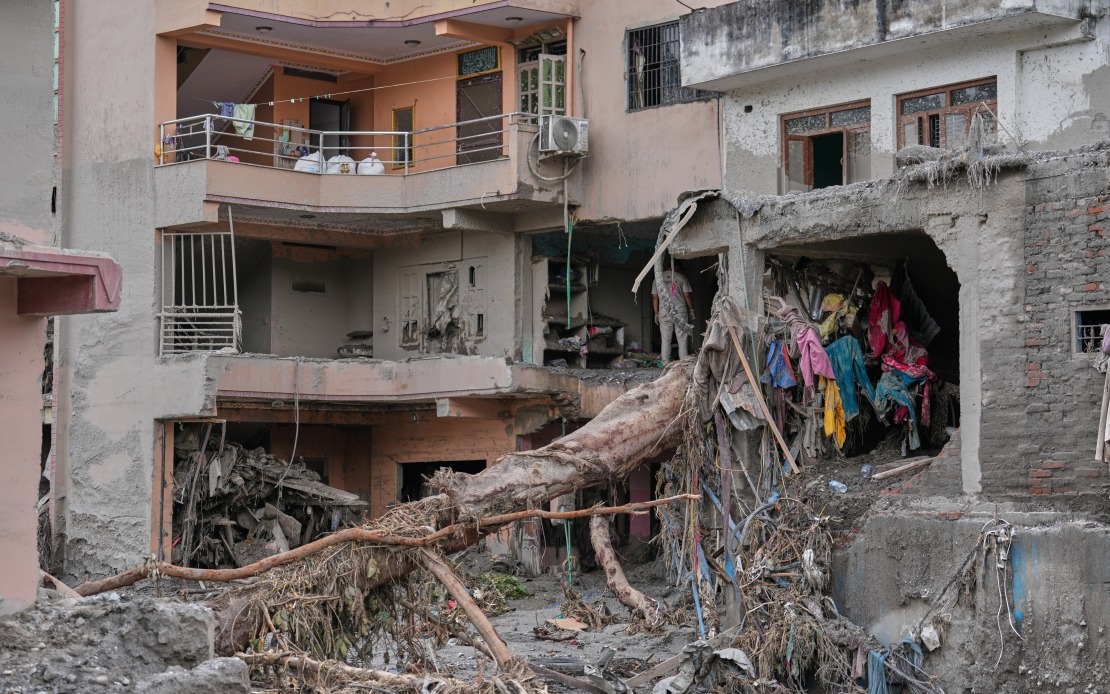
Nepal has initiated a systematic approach to managing the unidentified casualties from catastrophic flooding that swept through the Himalayan nation on August 26, establishing protocols to preserve genetic and physical evidence before committing remains for burial or other final arrangements. Prime Minister Balendra Shah disclosed the government's strategy through a social media statement on Saturday evening, underscoring the nation's commitment to assisting families who remain separated from missing loved ones even as mass fatalities mount across affected regions.
The Bhotekoshi River inundation has emerged as one of Nepal's most devastating natural disasters in recent years, carving a destructive path through vulnerable mountain communities along its corridor. The flooding unleashed torrential damage across multiple districts including Rasuwa, Nuwakot, and Dhading, where the river's swollen waters overwhelmed settlements and destroyed critical infrastructure including roads, bridges, and power lines. The disaster has exposed the fragility of development in steep terrain where monsoon precipitation can rapidly transform waterways into lethal forces, a risk that intensifies across the broader Himalayan region as climate patterns become increasingly erratic.
Recovery operations have progressed methodically despite logistical challenges inherent to mountain rescue in remote areas. Authorities have successfully retrieved 675 bodies from locations scattered across eight districts spanning central Nepal: Rasuwa, Dhading, Nuwakot, Chitwan, Tanahun, Gorkha, Nawalparasi East, and Nawalparasi West. This geographic spread reflects the extensive territorial impact of the Bhotekoshi's rampage and illustrates how a single environmental event can simultaneously affect communities hundreds of kilometres apart, overwhelming local morgues and identification services.
The decision to preserve biological evidence represents a practical acknowledgment of the challenges confronting authorities in a developing nation with limited forensic infrastructure. Many bodies recovered from flood-affected areas arrive in advanced states of decomposition, particularly those extracted from river sediments or pulled from under collapsed structures days after the initial event. Traditional visual identification becomes impossible under these circumstances, leaving forensic analysis as the primary mechanism for establishing identities and enabling families to proceed with culturally appropriate funeral rites.
DNA preservation protocols offer lasting solutions to identification problems that might otherwise condemn remains to indefinite storage. By collecting and archiving genetic material in properly maintained facilities, Nepali authorities create the possibility of future matching against family references, whether collected immediately or years hence. This approach acknowledges that some families may currently be displaced, unreachable, or struggling with their own catastrophic losses, yet may eventually seek answers about missing relatives.
The Prime Minister's emphasis on government management of unidentified remains carries significant implications for bereaved families and cultural practices. In Nepal, as across much of South Asia, proper funeral rites hold profound spiritual and social importance. Leaving bodies unburied indefinitely creates anguish extending far beyond material loss, yet premature disposal without identification efforts forecloses the possibility of family closure. The state's commitment to balance these competing demands through evidence preservation before disposition represents an attempt to honor both practical necessity and cultural obligation.
This disaster unfolds against a backdrop of intensifying climate vulnerability across the Himalayan region, an area increasingly prone to extreme precipitation events and cascading natural hazards. Nepal's geographic position as a high-altitude nation dependent on monsoon systems renders it particularly susceptible to flooding during intense rainfall seasons. The August 26 inundation reflects broader patterns of environmental change that regional governments have struggled to address through mitigation and early warning systems.
The disaster's management also highlights Nepal's institutional capacity challenges. Limited resources constrain the nation's ability to establish world-class forensic facilities or conduct rapid large-scale genetic testing. International assistance frequently becomes necessary during major calamities, whether through expert deployment or funding for emergency response. This incident underscores how middle-income countries in South Asia remain vulnerable to overwhelming natural disasters despite development progress, requiring sustained investment in disaster preparedness and response infrastructure.
For Malaysia and other Southeast Asian nations, the Nepali flood offers instructive lessons about disaster resilience in mountainous terrain. Southeast Asia's own highland regions face comparable hazards from monsoon flooding and geological instability. Examining how Nepal manages mass casualty identification and victim management provides practical insights for refining regional protocols. Additionally, the disaster demonstrates the interconnected nature of environmental challenges across Asia, where climate-driven changes in one nation's hydrology potentially influence downstream communities and broader regional weather patterns.
The ongoing recovery operation emphasizes the human dimension beneath statistical summaries of bodies recovered and districts affected. Behind the figure of 675 recovered remains stand personal tragedies—families torn apart, communities devastated, livelihoods destroyed. The commitment to preserve evidence and facilitate identification, though necessarily impersonal in execution, represents a significant gesture toward restoring some measure of dignity and closure amid overwhelming loss. As Nepal's authorities continue recovery efforts and implement identification protocols, the global community watches not merely a response to immediate crisis but an examination of how developing nations build resilience and compassion amid catastrophe.

