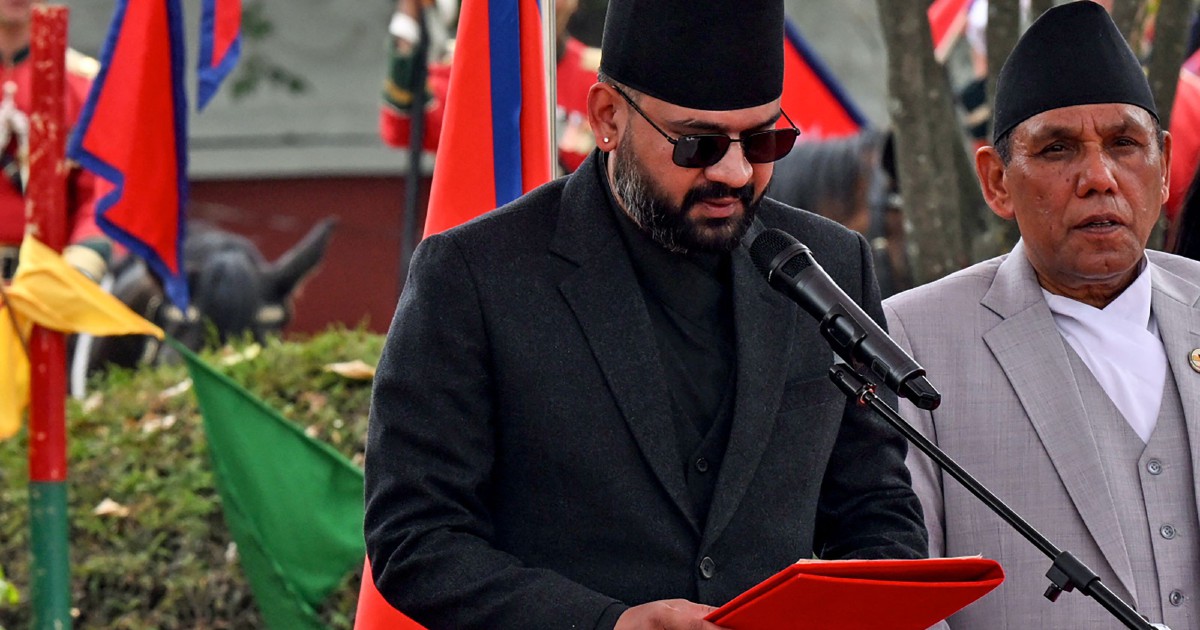
Nepal's Prime Minister Balendra Shah has secured an official exemption permitting him to retain his characteristically dark sunglasses while attending sessions in the legislature, authorities confirmed on Tuesday, marking a resolution to a minor constitutional propriety debate that had drawn scrutiny from parliamentary leadership. The parliament speaker had previously cautioned against the practice, citing traditional decorum standards within the chamber, but the allowance has now been granted on the basis of documented medical necessity.
The issue gained prominence when parliamentary officials flagged concerns about whether the Prime Minister's consistent use of eyewear in the legislative chamber adhered to accepted parliamentary conventions. The speaker's initial position reflected the institution's long-standing expectations that members conduct themselves according to formal protocols, which traditionally include attending sessions without obscuring facial features. This stance appeared to reflect broader parliamentary norms observed across many legislatures worldwide, where the ability to maintain visual contact and read facial expressions among lawmakers is considered fundamental to transparent debate and democratic conduct.
However, the Prime Minister's office subsequently provided medical documentation substantiating the necessity for the sunglasses, shifting the discussion from a matter of parliamentary etiquette to one of health accommodation. The medical rationale has now been accepted by parliamentary administration, demonstrating the institution's willingness to balance procedural conventions with legitimate healthcare requirements. This resolution reflects a pragmatic approach increasingly adopted by modern legislatures, which recognise that rigid adherence to traditional protocols must yield when individual health circumstances warrant accommodation.
The resolution carries significance beyond the immediate circumstances of one individual's comfort in parliament. For Malaysian observers and other Southeast Asian democracies, the incident illustrates how legislative bodies navigate the tension between maintaining institutional dignity and respecting contemporary standards of inclusivity and medical accommodation. Many regional parliaments have similarly grappled with questions about dress codes, accessibility requirements, and whether strict adherence to historical conventions serves legitimate parliamentary purposes or simply perpetuates tradition for its own sake.
Nepal's decision to grant the exemption also reflects evolving attitudes toward disability and health accommodation in public institutions across South Asia. The country has made incremental progress in implementing provisions for citizens with various health conditions in formal settings, though implementation remains inconsistent. This parliamentary precedent may subtly influence how other government institutions in Nepal approach similar requests, potentially normalising the accommodation of medical requirements in spaces traditionally governed by rigid formality.
Parliamentary decorum guidelines worldwide have been subject to gradual revision, with numerous legislatures reconsidering requirements that lack demonstrable functional necessity. Some parliaments have relaxed strictures on attire, permitted the use of digital devices during sessions, and approved accommodations for members with disabilities or health conditions. Nepal's acceptance of the Prime Minister's medically-justified sunglasses represents a modest but meaningful step in this direction, acknowledging that modern parliamentary procedure can remain dignified and functional whilst accommodating individual health circumstances.
The incident also highlights the importance of clear health documentation in administrative decision-making. By providing medical grounds for the exemption, the Prime Minister's office shifted discussion away from personality or preference toward objective health necessity, establishing a framework that could be applied consistently to similar requests from other members of parliament or government officials. This principle-based approach strengthens institutional credibility by demonstrating that exceptions to rules respond to legitimate requirements rather than personal influence or rank.
For regional democracy watchers, the episode offers a minor but instructive case study in how contemporary legislatures balance competing values. Parliamentary institutions function most effectively when they maintain public confidence through dignified conduct and transparent procedures, yet they must simultaneously demonstrate responsiveness to genuine individual needs. Nepal's parliament has apparently struck this balance by granting the exemption whilst maintaining the underlying principle that parliamentary dress codes and deportment standards serve institutional purposes rather than merely perpetuating historical habit.
The resolution may also prompt other South Asian parliaments to revisit their own protocols regarding medical accommodations and accessibility. Regional legislatures have historically been slow to modernise procedural rules, often invoking tradition as justification for maintaining conventions that contemporary standards would question. Nepal's flexible approach to this particular issue could encourage comparable consideration of accessibility requirements in other contexts, from physical infrastructure for members with mobility limitations to procedural accommodations for those with health conditions affecting their participation in parliamentary work.
As democratic institutions across Southeast Asia continue developing their institutional frameworks, questions about balancing tradition with practical necessity become increasingly routine. The permit granted to Nepal's Prime Minister to wear medically-necessary sunglasses in parliament represents a small but significant acknowledgment that contemporary democracy can honour institutional heritage whilst accommodating the realities of modern life. For legislatures grappling with similar policy questions, the resolution demonstrates that thoughtful accommodation of medical requirements need not compromise parliamentary dignity or function.

