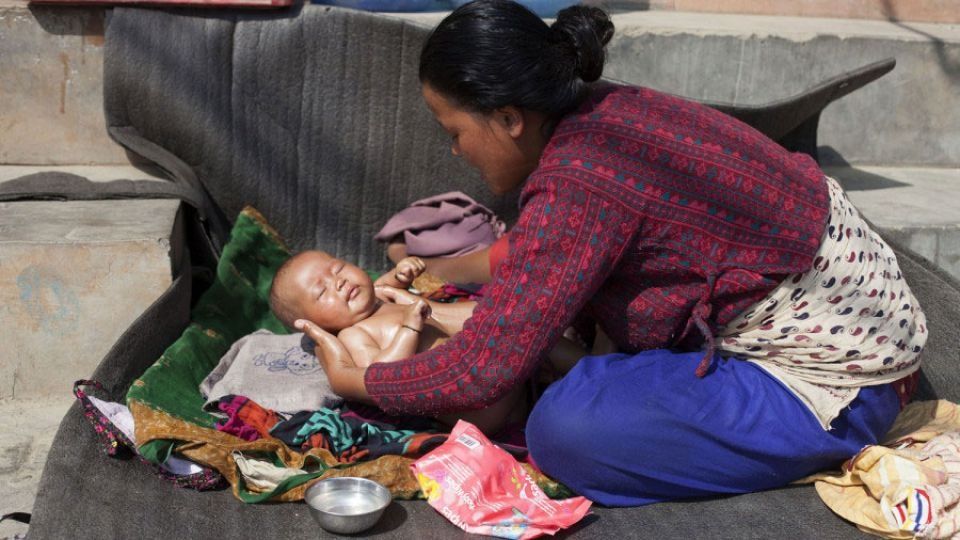
Nepal has achieved a remarkable reduction in teenage pregnancy and childbirth rates, cutting adolescent fertility by more than a third over the past two decades and establishing itself as a standout performer in South Asia. According to a comprehensive research report released this week, the country's adolescent fertility rate fell to 71 births per 1,000 women aged 15-19 years in 2022, down from 110 per 1,000 in 2001—a 35 per cent decline that far outpaces the progress of neighbouring countries with comparable development levels, notably India. The study, titled "Improvements in Adolescent Sexual and Reproductive Health and Rights in Nepal" and produced by the Centre for Research on Environment Health and Population Activities (CREHPA), the African Institute for Policy Development (AFIDEP) and Exemplars in Global Health (EGH), paints a portrait of sustained institutional and policy commitment that has borne tangible results.
The trajectory of change documented in the report becomes even more striking when measured against the extraordinary obstacles Nepal has navigated during this period. The nation endured a decade-long armed conflict, prolonged political turbulence, a devastating earthquake, and the global Covid-19 pandemic—conditions that typically undermine progress in public health indicators. Dr Mahesh Puri, the study's lead researcher, emphasised that achieving such significant gains "despite these challenges" demonstrates that focused, evidence-based intervention can transcend even severe structural constraints. This finding carries particular relevance for Southeast Asian and South Asian policymakers, who often cite resource scarcity or political instability as barriers to advancing reproductive health outcomes.
Nepal's identification as a "positive outlier" within the Exemplars in Adolescent Sexual and Reproductive Health and Rights multi-country study—which also examined Cameroon, Ghana, Rwanda, Malawi, India and Nepal—underscores the comparative nature of this achievement. The research framework was specifically designed to identify low- and lower-middle-income nations that have defied typical development trajectories by exceeding expectations in adolescent sexual and reproductive health. The classification as a positive outlier means Nepal's progress has "surpassed that of other countries with comparable characteristics," placing it in rarefied company among developing economies attempting to address this critical public health challenge.
Yet the report also reveals a deeply uneven landscape concealed beneath the national statistics. Substantial disparities in adolescent pregnancy persist across lines of wealth, education, religion, geography and ethnicity. Girls from the poorest households face dramatically higher pregnancy risks than their counterparts from affluent families, a pattern that reflects broader inequalities in healthcare access and educational opportunity. The education gradient is particularly pronounced: adolescent girls with no formal schooling or only primary-level education experience significantly elevated pregnancy rates compared to those who have completed secondary or higher education, suggesting that each additional year of schooling functions as a protective factor against early pregnancy.
Religious and ethnic divides further complicate the narrative of national progress. Adolescent pregnancy rates remain substantially higher among girls from Dalit and Muslim communities than among Brahmin girls, indicating that progress has not been evenly distributed across Nepal's diverse population. Most concerning is the stagnation within the Muslim population, where the adolescent pregnancy rate remained frozen at 23 per cent between 2016 and 2022—the highest rate among any religious group tracked in the study. Geographic disparities compound these inequities: Madhesh and Karnali provinces recorded persistently elevated adolescent pregnancy rates throughout the 2006-2022 period, signalling that the national achievement masks pronounced regional variation and suggesting that development benefits have concentrated in certain areas while bypassing others.
A counterintuitive finding emerges from the data on unintended pregnancies, which have actually increased despite overall fertility declines. The proportion of pregnancies that were unintended climbed from 25 per cent in 2001 to 31 per cent in 2022—a troubling reversal that suggests improved contraceptive access may be creating new patterns of sexual behaviour without corresponding shifts in family planning practice or intention. Unintended pregnancy rates reach approximately 40 per cent among adolescents from the wealthiest families, substantially higher than the national average, implying that affluence does not automatically translate to intentional pregnancy planning. Urban adolescents report slightly higher rates of unintended pregnancy than rural counterparts—32 per cent versus 28 per cent—a finding that challenges assumptions about modernisation and reproductive autonomy. At the provincial level, Gandaki province recorded the highest proportion of unintended pregnancies at 37 per cent, more than one and a half times the rate in Madhesh at 22 per cent.
The broader context of unintended pregnancy in Nepal is staggering according to complementary research from the United Nations Population Fund (UNFPA). Its 2022 "Seeing the Unseen" report documents that nearly half of all pregnancies in Nepal remain unintended, with approximately two-thirds of these terminating in abortion. This means that roughly 30 per cent of all pregnancies nationally end in abortion—a figure that carries profound implications for women's autonomy, health outcomes, and access to safe services. The UNFPA report emphasises that the economic, social and health costs of unintended pregnancy have "long remained largely unseen," suggesting that official statistics fail to capture the full burden these pregnancies impose on individuals, families and health systems. The divergence between declining adolescent childbirth and rising unintended pregnancy rates points to a potential shift in outcomes—fewer births but not necessarily fewer conceptions or pregnancies.
The researchers identified four pillars underlying Nepal's comparative success in reducing adolescent pregnancy and childbirth rates. First, the country has pursued deliberate legal and policy reforms explicitly centred on protecting and advancing adolescent health rights, embedding reproductive health considerations into the legislative and regulatory framework. Second, Nepal has systematically expanded access to adolescent-friendly health services, including comprehensive family planning information and access to safe abortion services, bringing clinical support closer to young people and reducing stigma around service utilisation. Third, sustained investment in girls' education and empowerment has created economic and social incentives for school attendance and delayed childbearing. Fourth, multi-stakeholder collaboration involving government agencies, international development partners, civil society organisations and community leaders has created reinforcing momentum across multiple sectors rather than siloing reproductive health within a single ministry or programme.
This architecture of change offers instructive lessons for the region. Dr Puri noted that "with sustained investment in health education and adoption of rights-based policies, countries can achieve remarkable progress in sexual and reproductive health despite major hurdles and challenges." The emphasis on rights-based frameworks is particularly important, as it reframes reproductive health not as a technical or demographic problem but as a matter of human dignity and agency. For Malaysia and other upper-middle-income Southeast Asian nations, the Nepali experience suggests that progress is neither inevitable nor automatic, requiring deliberate policy choice and sustained institutional commitment. For lower-income countries in the region, it demonstrates that substantial gains remain possible even amid profound obstacles, provided that governments make adolescent reproductive health a genuine priority and allocate resources accordingly. The study thus transcends its Nepali context to offer a broader message: development outcomes in this domain are neither predetermined by national income levels nor derailed by political volatility, but rather shaped by policy choices and institutional determination.

