Nepal's freshly elected government is pursuing an ambitious diplomatic strategy that positions the Himalayan nation as an attractive partner for both its giant neighbours, China and India. Foreign Minister Shishir Khanal's first official visit to Beijing this week signals the administration's determination to harness Beijing's technological capabilities and investment capital while simultaneously cultivating ties with New Delhi. The balancing act reflects a broader shift in how the country's leadership intends to navigate regional geopolitics while delivering on electoral promises to stabilise the nation's perpetually turbulent political landscape.
The Rastriya Swatantra Party's commanding victory in March parliamentary elections, securing 182 of 275 seats, came as a watershed moment following months of civil unrest. Generation Z-led street protests last September, which claimed 76 lives, had destabilised the previous administration and created momentum for fundamental change. The incoming leadership, headed by 36-year-old former rapper Prime Minister Balen Shah, capitalized on public appetite for reform centred on three core pledges: restoring institutional stability, revitalizing economic performance, and tackling endemic corruption. This mandate gives the government considerable political space to experiment with different approaches to regional engagement, distinguishing it from previous governments constrained by coalition politics and frequent leadership transitions.
During his Beijing meetings with China's chief diplomat Wang Yi and senior Communist Party official Wang Huning, Khanal articulated a vision for Nepal that extends far beyond traditional trade relationships. The Foreign Minister identified agriculture, healthcare, tourism and scientific research as priority sectors for bilateral cooperation, signalling that the government sees value in comprehensive development partnerships rather than extractive resource arrangements. This multisectoral approach appeals to Nepal's new leadership, which must demonstrate concrete improvements in living standards within a reasonable timeframe to validate the electoral mandate and prevent disillusionment among the youth voters who powered their victory.
Yet beneath the diplomatic pleasantries lies a fundamental economic challenge that constrains Nepal's options. The country confronts a substantial trade imbalance with China, a deficit that persists despite Beijing's unprecedented gesture of granting tariff-free access to its US$20 trillion market across more than 8,000 product categories. Khanal acknowledged that Nepalese businesses have failed to capitalise on this opportunity, attributing the shortfall to decades of political dysfunction. Nepal has endured 32 government changes over the past 35 years, creating an environment of such profound uncertainty that foreign investors and domestic exporters remain reluctant to commit resources. The new administration thus faces the burden of proving that political instability has genuinely ended, a challenge requiring months or years of consistent governance rather than rhetorical assurances.
The government's willingness to court multiple partners simultaneously reflects shrewd recognition that over-reliance on any single neighbour carries strategic risks. Khanal emphasised that Nepal would "value its relationship with each country in its own way," a formulation designed to assuage Beijing's concerns about growing Indian influence while maintaining New Delhi's confidence in Kathmandu's independence. The Foreign Minister specifically identified India as a potential market for Nepalese energy exports, while positioning China as the principal source of tourist arrivals, thereby allocating different economic roles to each neighbour. This differentiation allows the government to claim progress on multiple fronts while avoiding the appearance of capitulation to either power.
One domain where this pragmatism becomes especially apparent involves internet infrastructure and digital connectivity. Nepal is actively negotiating with both Elon Musk's Starlink and China's Huawei regarding provision of broadband services, a critical input for modernisation efforts. Khanal confirmed that no final decision has been reached and that legal and regulatory frameworks require substantial revision before any system can be deployed. Significantly, he reported that China has not raised objections to Starlink's potential operation on its border, despite Beijing's historical complaints about the satellite system at international forums. This apparent Chinese flexibility suggests that Beijing may be moderating its stance to preserve influence with Nepal's new leadership, recognising that heavy-handed pressure could drive Kathmandu closer to Washington or New Delhi.
China's diplomatic posture toward Nepal illustrates how Beijing adapts its neighbourhood strategy when confronted with unexpected political transitions. Wang Yi's assurances that China has "always placed Nepal at the forefront of its neighbourhood diplomacy" and Beijing's reiteration of commitment to infrastructure development reflect efforts to consolidate influence with the new administration. However, analysts note that the election outcome may have surprised Chinese planners. The victory of a reformist party championing youth-oriented policies and institutional modernisation diverges markedly from the incumbent government that China had cultivated relationships with over preceding years. Beijing's typical preference for continuity and predictability means that popular movements displacing incumbent governments often trigger strategic recalculation among Chinese policymakers.
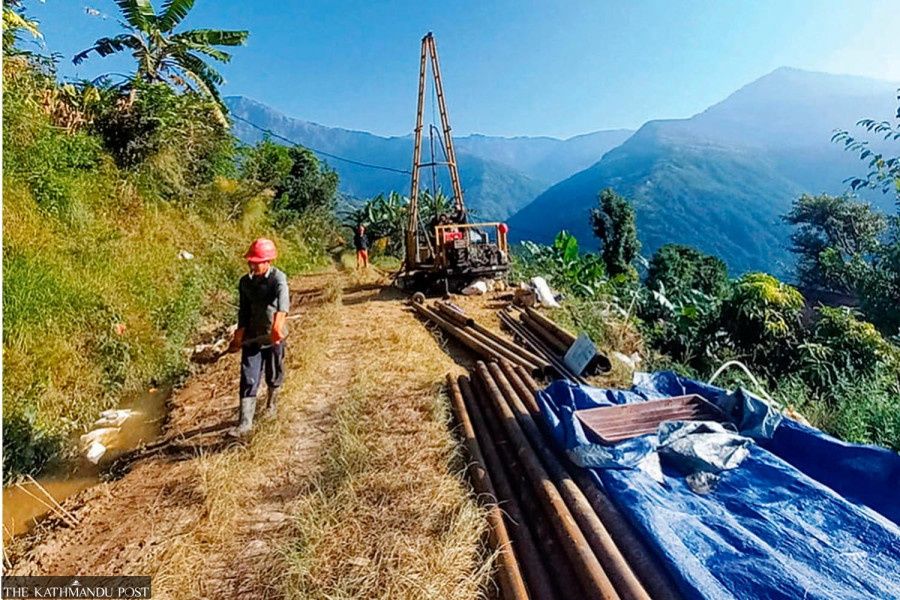
The infrastructure cooperation between Nepal and China remains consequential yet fraught with complications. Beijing has highlighted cooperation in power generation, highway construction, port development and aviation as evidence of substantive partnership, initiatives that form part of the Belt and Road Initiative architecture. Nevertheless, financing disputes and implementation delays have repeatedly hindered project completion, frustrating both Chinese lenders and Nepalese recipients. The new government's ability to accelerate these stalled projects while diversifying funding sources will substantially determine whether China's infrastructure commitments translate into tangible benefits for ordinary Nepalis.
Regional analysts interpret Nepal's diplomatic manoeuvrings through the lens of great power competition in South Asia. Eric Olander, co-founder of the China-Global South Project, suggests that Beijing may view the electoral outcome as potentially problematic, particularly given the precedent of youth-led movements successfully pressuring governments. Wang Yi's reported emphasis during talks that Nepal should not "swing too far in the direction of either India or the US" reveals Chinese anxiety that the new administration might tilt away from Beijing. Yet this formulation itself indicates that China recognises legitimate Nepalese interests in cultivating relationships with multiple partners, a subtle acknowledgment that exclusive spheres of influence no longer characterise regional dynamics.
For Malaysia and other Southeast Asian nations, Nepal's political transition and diplomatic recalibration offer instructive lessons about managing great power competition. The Himalayan country's experience demonstrates that newly empowered governments, particularly those driven by youth and reform mandates, resist pressure toward exclusive alignment with any single power. Nepal's simultaneous engagement with China, India and the West reflects a pragmatic calculation that economic diversification and technological access require maintaining options rather than forging binding commitments. As Chinese and Indian influence expands throughout the region, smaller states increasingly adopt Nepal's balancing strategy, leveraging their geographic positioning and strategic significance to extract concessions from competing powers rather than accepting subordinate roles within any bloc.
The sustainability of Nepal's diplomatic equilibrium ultimately depends on the government's domestic performance. If Prime Minister Shah's administration successfully reduces corruption, stabilises institutions and delivers measurable economic improvements, international partners will compete for access and influence. Conversely, if the new government fails to distinguish itself from its predecessors through genuine reform, both China and India may lose patience with incremental engagement and pressure for more decisive alignment. For now, Nepal's leadership enjoys a window of opportunity created by electoral legitimacy and international goodwill toward reformist movements, a window that regional observers suggest remains open for perhaps 18 to 24 months before concrete results become essential to maintaining political momentum.