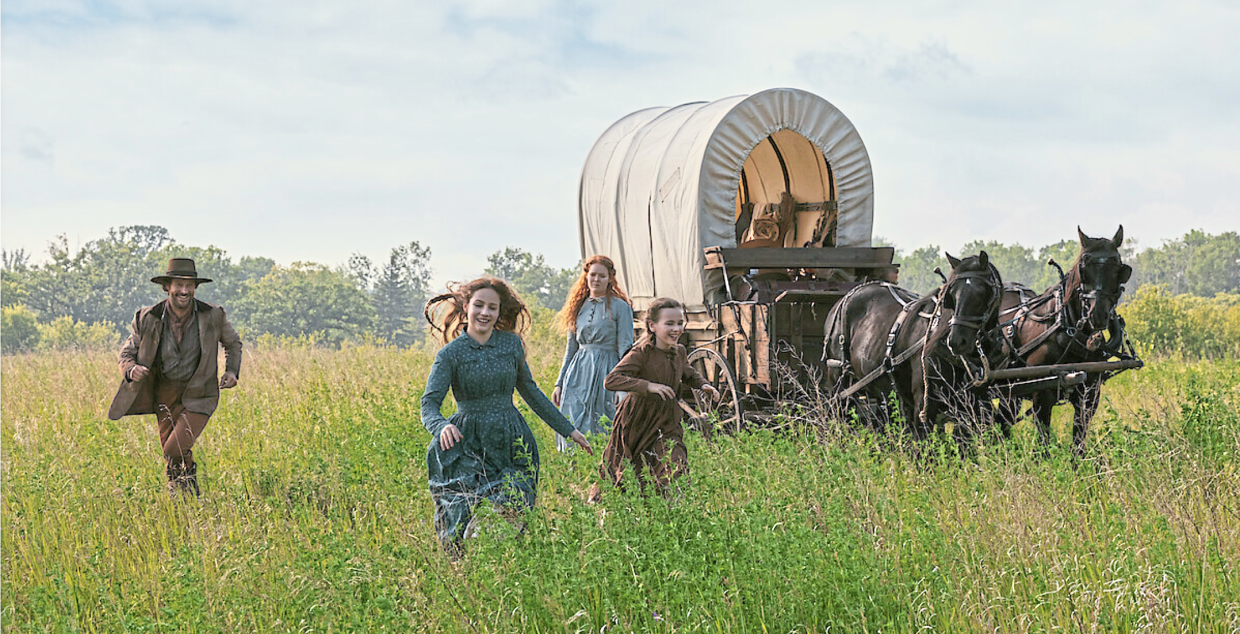
Netflix is breathing new life into one of American literature's most enduring narratives with its upcoming adaptation of Little House On The Prairie, scheduled to premiere in 2026. The streaming platform's take on Laura Ingalls Wilder's beloved 1935 novel marks another chapter in the story's long history of adaptation, introducing the pioneering Ingalls family to audiences who may have only encountered the material through the iconic 1970s NBC television series or the source material itself. Australian actor Luke Bracey has been cast as Charles Ingalls, the father figure anchoring this multigenerational tale of resilience and family bonds tested by the harsh realities of 19th-century frontier settlement.
What distinguishes this contemporary reimagining from its predecessors is its deliberate engagement with the more complex historical narratives surrounding westward expansion. Rather than presenting frontier life as an unambiguous triumph, the Netflix series grapples with settler-colonial dynamics and the experiences of Indigenous peoples whose lands were being claimed and transformed by incoming settlers. This approach reflects broader contemporary conversations about how historical storytelling can acknowledge multiple perspectives and truths, particularly regarding colonialism and its lasting impacts on Native American communities. The creative decision to foreground these themes signals that the production intends to honour the original story while contextualizing it within a more nuanced understanding of American history.
Bracey has articulated his understanding of why this particular narrative has maintained its grip on audiences across multiple generations. The Australian actor emphasizes that the enduring appeal of the Ingalls family saga is no coincidence; rather, the universal themes of familial love persisting through hardship and uncertainty resonate across cultural and temporal boundaries. At its core, the story explores how families maintain emotional cohesion and mutual support when confronted with deprivation, illness, displacement, and the constant threat of failure. These themes transcend the specific historical moment of American settlement and speak to fundamental human experiences of struggle and togetherness that remain relevant whether viewers are watching in the 1970s, 2020s, or beyond.
The ensemble cast brings considerable talent to their respective roles. Alice Halsey inhabits the role of Laura Ingalls, the central character whose coming-of-age journey forms the emotional heart of the narrative. Crosby Fitzgerald portrays Caroline Ingalls, Laura's mother, who must navigate the demands of maintaining household and family during an era when women possessed severely circumscribed autonomy and opportunity. Skywalker Hughes takes on the role of Mary, Laura's elder sister, completing the immediate family structure that audiences will follow throughout the series. This casting represents a thoughtful assembly of performers tasked with bringing depth and authenticity to characters whose fictional lives have already been inhabited by multiple actors across different media and decades.
Halsey has reflected meaningfully on the gender dynamics that structured life for girls and women during the period depicted in the series. Her observations highlight the profound asymmetries in opportunity and education that characterized the 19th century, where sons received educational privileges, social mobility, and access to knowledge that daughters were systematically denied. Halsey underscores the point that contemporary opportunities available to women—particularly in fields where women can pursue independent careers and creative expression—would have been entirely foreclosed to her had she lived during Laura's era. This intergenerational comparison serves to illuminate how substantially the landscape of possibility has shifted for women, even as ongoing disparities in various sectors remind viewers that the work of achieving equality remains incomplete.
The production is being guided by creator and showrunner Rebecca Sonnenshine, whose vision shapes the overall direction, tone, and thematic emphasis of the series. Sonnenshine's involvement suggests a thoughtful stewardship of material that carries significant cultural weight and nostalgic resonance for many viewers. Entrusting the project to an accomplished showrunner signals that Netflix intends to treat the adaptation with the seriousness and resources such a prominent intellectual property deserves. The quality of writing, visual direction, and production design will likely prove crucial in determining whether this version successfully bridges the gap between faithful adaptation and contemporary relevance.
A notable development in the production's journey is that Netflix has already greenlit a second season even before the first season has aired to the public. This vote of confidence suggests that the streaming platform possesses considerable faith in the material and the creative team's execution. Such advance renewals have become increasingly common in the streaming era, where networks attempt to secure creative continuity and demonstrate commitment to long-term storytelling arcs. For the cast and crew, the renewal provides security and opportunity to plan multi-season narratives without the uncertainty that characterized television production in earlier eras.
Hughes has commented on the positive experience of filming the inaugural season, emphasizing the collaborative relationships and memorable moments generated during production. Her remarks suggest a cast and crew working cohesively to bring the material to life, creating not merely a television product but a shared creative experience. The prospect of returning to film additional episodes allows the ensemble to deepen their portrayals, explore new dimensions of their characters, and expand the world that viewers will inhabit when the series debuts on the platform.
For Malaysian and Southeast Asian audiences, this adaptation offers an opportunity to engage with a foundational narrative of American cultural history while simultaneously encountering a version that interrogates rather than celebrates the ideological dimensions of colonial expansion. The story's exploration of family perseverance amid hardship carries cross-cultural resonance, particularly in societies where extended family structures and mutual obligation remain central to social organization. Furthermore, the explicit attention to Indigenous perspectives and settler-colonial critique reflects global conversations about decolonization and historical truth-telling that have gained prominence in recent years across the Asia-Pacific region.
The 2026 premiere will arrive at a moment when nostalgic reboots and historical retellings constitute a significant portion of streaming content, yet each adaptation must justify its existence by offering something new to audiences already familiar with the source material. Netflix's Little House On The Prairie will succeed or fail based on whether it can balance fidelity to the beloved original story with the contemporary insights and production values that justify revisiting this well-trodden narrative ground. The involvement of talented performers like Bracey, combined with Sonnenshine's creative direction, suggests the platform may have assembled the necessary ingredients for a compelling and relevant interpretation.

