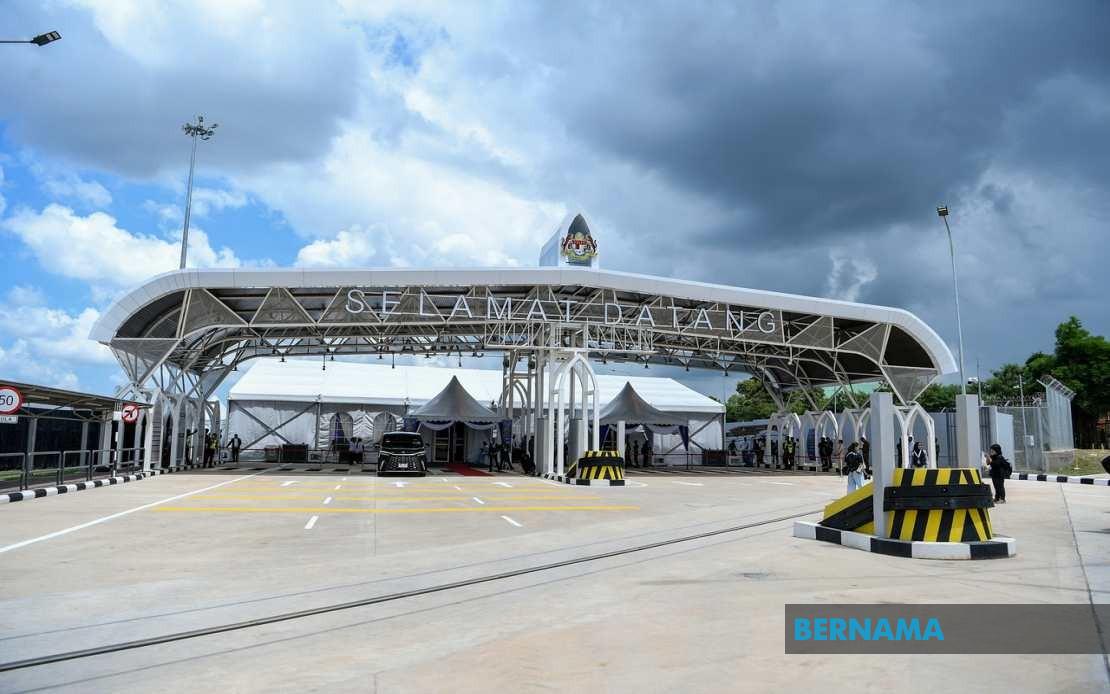
The new 900-metre border crossing connecting Bukit Kayu Hitam's Immigration, Customs, Quarantine and Security Complex in Kedah with Thailand's Sadao Customs, Immigration and Quarantine Complex has delivered tangible benefits in reducing cross-border congestion and boosting bilateral trade after just one month of full operations. Inaugurated jointly by Thai Prime Minister Anutin Charnvirakul and Malaysian Prime Minister Datuk Seri Anwar Ibrahim on July 10 before commencing operations the following day, the facility represents a significant infrastructure milestone in easing logistics flows between two of Southeast Asia's most integrated economies.
The facility's rapid success reflects the mounting pressure on existing border infrastructure to accommodate growing trade volumes between Malaysia and Thailand. According to Sadao Customs director Buntoon Oucharoen, nearly all commercial vehicles—lorries, buses and vans—have migrated to the new route within weeks of opening, effectively redirecting traffic away from congested older crossing points. The infrastructure now processes more than 1,000 logistics vehicles daily, a volume that underscores the critical importance of border efficiency for regional supply chains.
The technological backbone driving this efficiency gains centres on advanced inspection equipment, particularly the "Fast Scan" X-ray systems that have dramatically compressed container scanning intervals from five minutes to under sixty seconds. This acceleration eliminates one of the primary bottlenecks in traditional border procedures, allowing commercial vehicles to maintain momentum through customs clearance without extended queue times. The integration of cargo information systems accessible through digital platforms further streamlines the clearance process, permitting vehicles to transit the complex with minimal administrative friction.
The economic impact has been immediately apparent in bilateral trade statistics. Between July 11 and 31, import values from Thailand to Malaysia climbed to 19 billion baht (RM2.35 billion), representing a fifty-eight percent increase compared with 12 billion baht (RM1.48 billion) during the corresponding period in 2023. Export flows in the opposite direction proved even more robust, surging to 24 billion baht (RM2.97 billion) from 13 billion baht (RM1.61 billion), reflecting an eighty-five percent year-on-year expansion. These substantial gains within a mere three-week window suggest the route's capacity to unlock pent-up trade demand that previous infrastructure constraints had suppressed.
Beyond goods movement, the facility's design incorporating 11 inbound and 11 outbound lanes has enhanced passenger flows and tourism connectivity across the border. The Hatyai-Songkhla Hotel Association has acknowledged the facility's contribution to weekend and holiday tourism traffic, indicating that the crossing's benefits extend beyond logistics into the broader regional mobility ecosystem. This dual functionality—serving both commercial and leisure travellers—maximises the infrastructure's utility and revenue potential for both nations.
The crossing's opening occurs within a broader context of intensifying Malaysia-Thailand economic integration. Bilateral trade for the January-to-March 2026 period reached RM31.33 billion (US$7.90 billion), compared with RM27.35 billion (US$6.15 billion) during the same quarter in 2025, reflecting sustained expansion despite global economic headwinds. The joint trade ambition of US$30 billion (RM122.6 billion) by 2027 represents an achievable target given current trajectory, provided infrastructure investments like the Bukit Kayu Hitam-Sadao complex continue removing friction from cross-border commerce.
For Malaysian readers, the significance extends beyond bilateral trade statistics. The Bukit Kayu Hitam crossing sits at the northern portal of Malaysian commerce, channelling substantial goods flows to Peninsular Malaysia's manufacturing and agricultural sectors whilst facilitating exports from Kedah, Perlis, and broader northern regions to Thai markets. Enhanced border efficiency directly benefits domestic enterprises, particularly small and medium enterprises reliant on time-sensitive logistics and just-in-time supply chains. Reduced crossing times translate to lower transport costs, improved competitiveness for Malaysian exporters, and faster market access for Thai imports destined for Malaysian consumers.
The infrastructure development also positions Malaysia advantageously within Southeast Asian logistics networks. As regional manufacturing increasingly distributes across multiple countries, efficient border crossing capabilities become competitive assets. Thailand-Malaysia corridors link into broader ASEAN supply chains extending through Vietnam, Cambodia, and Laos. The Bukit Kayu Hitam-Sadao facility's modernisation enhances Malaysia's attractiveness as a logistics hub and manufacturing location, potentially attracting enterprises seeking reliable cross-border operational capabilities.
The diplomatic dimension merits attention as well. The crossing's joint inauguration by both prime ministers underscores Thailand-Malaysia relations' strategic importance during a period when both nations navigate regional geopolitical complexities. The facility represents tangible cooperation beyond rhetorical commitment, delivering concrete economic benefits that reinforce political partnerships. Next year's celebration of 70 years of diplomatic relations will occur against a backdrop of strengthened economic infrastructure, suggesting maturity in the bilateral relationship extending beyond traditional diplomatic channels.
Operational sustainability remains critical for realising the facility's long-term potential. The rapid adoption of new routes demonstrates commercial responsiveness to improved infrastructure, but maintaining efficiency requires consistent maintenance, staff training, and periodic technology upgrades. Both nations' customs authorities must sustain the modernised inspection protocols and digital systems integration that currently drive performance gains. Any deterioration in operational standards would undermine the competitive advantages the crossing currently provides.
Looking forward, the Bukit Kayu Hitam-Sadao facility serves as a model for other ASEAN border crossings facing similar congestion pressures. The integration of advanced technology, optimised lane configurations, and coordinated bilateral procedures offers a template applicable throughout the region. As ASEAN deepens economic integration through initiatives like the ASEAN Regional Forum and enhanced customs protocols, infrastructure investments like this crossing demonstrate practical pathways to reducing non-tariff barriers and accelerating regional commerce. The facility's early success suggests that intelligent infrastructure investment, coupled with technological modernisation and administrative coordination, can substantially enhance regional economic efficiency and competitiveness.

