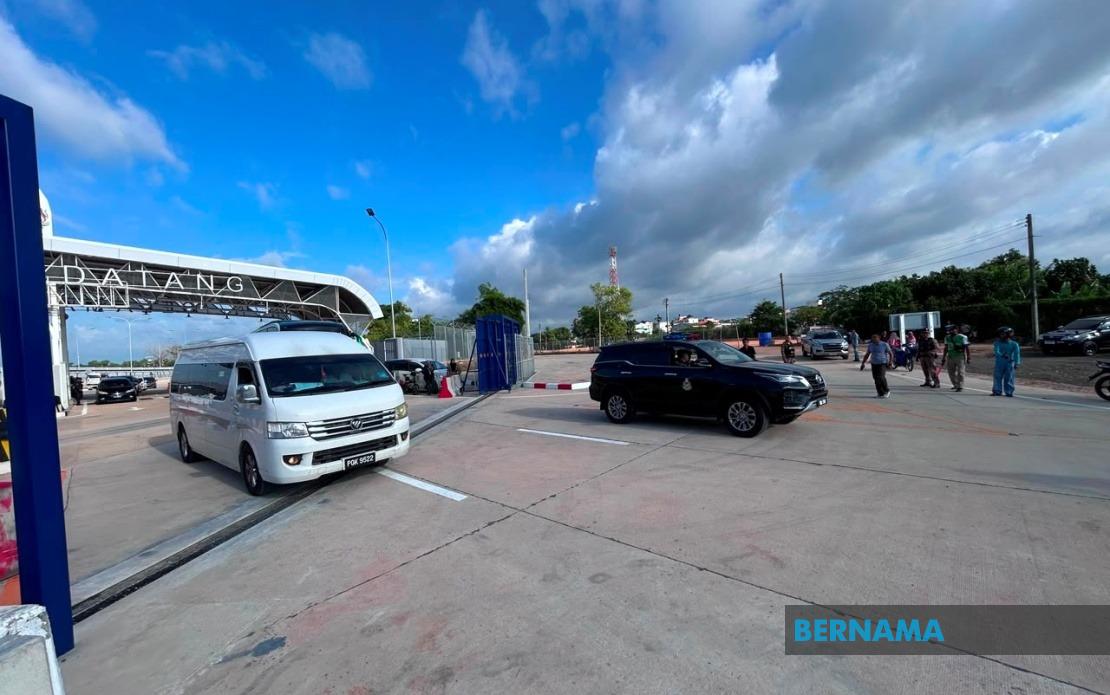
A new road linking the Bukit Kayu Hitam Immigration, Customs, Quarantine and Security Complex in Kedah with the Sadao Customs, Immigration and Quarantine Complex in Thailand began operations on July 11, marking a significant step in regional border infrastructure development. The route, which commenced service at 6 am, represents the culmination of joint efforts between Malaysian and Thai authorities to modernise crossing procedures at one of Southeast Asia's busiest international checkpoints. Prime Minister Datuk Seri Anwar Ibrahim and Thai counterpart Anutin Charnvirakul jointly inaugurated the facility the previous day, underscoring the bilateral importance of the project.
The initiative addresses a longstanding challenge facing the hundreds of thousands of travellers and commercial operators who traverse this border annually. Weekend and holiday periods have traditionally created severe bottlenecks, with vehicles queuing for extended periods before clearing customs and immigration screening. The congestion has been particularly acute during school breaks and festive seasons when leisure travel peaks. By establishing a dedicated, purpose-built route with segregated traffic lanes, authorities expect to substantially improve throughput and reduce processing times for both private motorists and commercial freight operators moving between Malaysia and Thailand.
Early feedback from users has been overwhelmingly positive. Mohd Faizal Ahmad, a 42-year-old motorist from Penang, noted that the infrastructure represents a marked improvement over previous arrangements, particularly for holiday travellers. He highlighted that the new configuration should significantly diminish the gridlock that had previously characterised school holiday periods, translating to shorter journey times for Malaysian tourists and business travellers heading into Thailand. Such observations underscore how structural improvements to border infrastructure directly enhance traveller experience and economic efficiency across the region.
Commercial operators have similarly recognised the operational advantages. Wan Muhammad Shahid Wan Mohd Desa, a 28-year-old truck driver, emphasised that the expanded road accommodates better spatial separation between heavy and light vehicles during the customs clearance process. Previously, lorries heading to the Danok area shared congested routes with standard vehicles, creating cascading delays that rippled through the border complex. The new design implements systematic lane management that keeps heavy commercial traffic segregated, allowing goods vehicles to navigate the checkpoint more efficiently whilst minimising interference with passenger vehicle flows. This operational logic is particularly crucial for maintaining supply chain fluidity in the region, where cross-border trade remains economically vital for both nations.
The facility improvements extend beyond mere road capacity. Thai national Mat Li Daman, a frequent cross-border traveller, observed that the revamped Sadao CIQ complex provides substantially more comfortable and spacious accommodation compared to its predecessor. The expanded facility incorporates improved areas for documentation processing and vehicle declaration procedures, reducing the physical crowding that had previously characterised customs interactions. Such upgrades enhance the dignity and efficiency of the border experience for all travellers, whilst also improving working conditions for customs and immigration personnel managing the flow. For a cross-border region where millions of interactions occur annually, this modernisation carries psychological as well as logistical significance.
The strategic rationale underlying this infrastructure investment extends well beyond alleviating immediate congestion. Malaysian and Thai policymakers recognise that efficient border operations directly facilitate people-to-people exchange, tourism development, and bilateral trade expansion. The Bukit Kayu Hitam-Sadao corridor represents one of the most economically integrated borders in Southeast Asia, with substantial flows of Thai workers entering Malaysia, Malaysian tourists visiting Thailand, and significant commercial goods movements in both directions. When customs procedures become smoother and less time-consuming, the entire regional economy benefits through reduced transaction costs and enhanced business confidence.
For Malaysia specifically, improved border efficiency at Bukit Kayu Hitam holds particular relevance given the country's position as a regional tourism and trade hub. Northern Peninsular Malaysia, particularly Kedah and Perlis, derives substantial economic benefit from Thai visitor arrivals and cross-border shopping excursions. Similarly, Malaysian retailers and traders operating in Thailand depend on reliable logistics networks. Any reduction in border crossing times translates into cost savings throughout supply chains and improved competitiveness for Malaysian enterprises engaged in regional commerce. The new road represents an investment in economic fundamentals rather than mere convenience infrastructure.
The broader regional context amplifies the significance of this project. As Southeast Asian nations increasingly emphasise regional integration through frameworks like the ASEAN Economic Community, border infrastructure improvements become critical enablers of that vision. Efficient, modern border facilities signal commitment to deepening economic integration and facilitate the movement of goods, services, and people that such integration requires. The Bukit Kayu Hitam-Sadao corridor upgrade thus serves as a tangible demonstration of Malaysia and Thailand's willingness to invest in practical integration measures that generate mutual benefit.
Initial traffic observations on opening day confirmed operational expectations. Users reported smooth vehicular flow along the new route, with processing proceeding more expeditiously than historical norms for this crossing. The early success suggests that the infrastructure design effectively addresses previous bottleneck points. However, sustained efficiency will depend on ongoing coordination between Malaysian and Thai customs authorities, adequate staffing at both complexes, and regular maintenance of the new facilities. The physical infrastructure alone cannot guarantee optimal outcomes; bureaucratic coordination and organisational efficiency remain essential complementary factors.
Longer-term implications warrant consideration as well. Should the new road successfully reduce crossing times whilst maintaining security standards, it may serve as a template for other border crossings within Malaysia and throughout Southeast Asia. The project demonstrates that substantial capacity expansion is technically feasible without compromising customs and immigration integrity. This experience may inform future infrastructure decisions at other sensitive borders where congestion similarly constrains economic activity and traveller convenience. The Bukit Kayu Hitam precedent therefore carries pedagogical value for regional policymakers confronting similar challenges.
The opening of the Bukit Kayu Hitam-Sadao road represents convergence between infrastructure investment and diplomatic cooperation. Both Malaysian and Thai governments recognised a mutual problem, invested jointly in solutions, and coordinated implementation. The result promises tangible benefits for millions of annual users spanning tourists, traders, workers, and ordinary travellers navigating the Malaysia-Thailand border. As the facility matures, its success will likely influence border management thinking across the region, potentially spurring additional cross-border infrastructure projects designed to facilitate movement whilst maintaining necessary security screening. For Malaysia and Thailand, the new road symbolises both practical problem-solving and deeper regional integration commitment.

