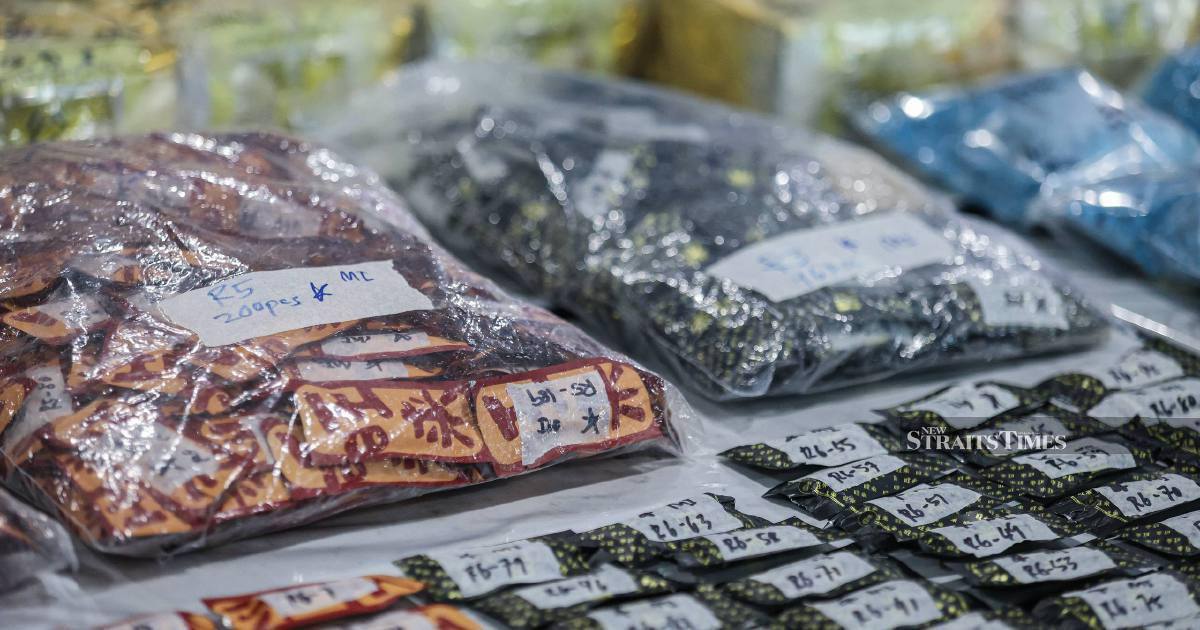
The Malaysian Maritime Enforcement Agency (MMEA) executed a significant drug interdiction operation on Sunday, apprehending two brothers suspected of orchestrating a maritime smuggling venture from Johor Baru. The operation resulted in the seizure of contraband valued in excess of RM6.85 million, marking another substantial blow against drug trafficking networks operating through Malaysia's coastal waters. The arrests underscore the persistent challenge posed by criminal syndicates exploiting maritime routes to move illicit substances across regional borders.
The interception represents a critical moment in understanding evolving drug trafficking patterns along the Johor Strait and wider Southeast Asian waters. Authorities have increasingly focused enforcement efforts on sea-based smuggling operations, recognising that traffickers frequently shift tactics to exploit maritime vulnerabilities when land borders tighten. The choice of a naval route by these suspects reflects a calculated strategy to evade conventional checkpoint detection, relying instead on the vastness of territorial waters and the relative scarcity of maritime patrol resources compared to terrestrial entry points.
The confiscated substance identified as 'Piu Piu' represents an emerging concern within the regional drug landscape. While established narcotics such as methamphetamine, ketamine, and fentanyl have long dominated enforcement reports, the appearance of novel psychoactive substances with street names like 'Piu Piu' indicates that trafficking organisations are continuously adapting their product portfolios. These designer drugs frequently present additional complications for authorities, as their chemical compositions may not immediately fall under existing controlled substances legislation, creating regulatory gaps that traffickers exploit.
For Malaysian enforcement agencies, the RM6.85 million valuation carries significant operational importance. This figure reflects not merely the street value of the contraband but also signals the scale at which trafficking networks are operating. Investments in this magnitude suggest sophisticated criminal organisations with substantial capital resources and distribution networks already positioned across multiple countries. The size of the shipment implies that this was likely destined as wholesale inventory rather than supplies for a single market, indicating coordinated cross-border activities that may involve Malaysian criminal groups and international syndicate partners.
The MMEA's capacity to conduct this interception demonstrates the agency's enhanced surveillance and interdiction capabilities, developed through international cooperation frameworks and technological investment. Maritime enforcement in the region has evolved considerably over recent years, moving beyond reactive patrols toward intelligence-led operations. The targeting of this particular vessel and the subsequent seizure suggest that authorities possessed advance intelligence about the shipment, pointing to improved coordination between Malaysian law enforcement and international partners or informant networks within trafficking communities.
Johor Baru's strategic location renders it particularly vulnerable to maritime smuggling activities. The state's extensive coastline and proximity to Singapore, combined with its position along major maritime trade corridors, creates multiple opportunities for illegal cargo movements. The Johor Strait itself, one of the world's busiest shipping lanes, provides cover for illicit operations amidst legitimate commercial traffic. This geographic reality has made Johor consistently one of Malaysia's primary drug trafficking hotspots, requiring sustained enforcement attention and resource allocation.
The circumstances surrounding the brothers' operation raise broader questions about trafficking supply chain vulnerabilities. If these individuals successfully sourced, arranged transport, and positioned themselves for a major transnational move, their apprehension represents the disruption of a cell rather than dismantling of an entire network. Typically, such operations involve multiple layers of participants—from source country producers through intermediate distributors to final market operatives. Targeting this particular segment may yield valuable intelligence about upstream suppliers and downstream customer arrangements, making the interrogation phase as operationally significant as the physical seizure.
Regional implications of this bust extend beyond Malaysia's borders. The drug trade in Southeast Asia increasingly functions as an interconnected ecosystem, with supply chains spanning from production zones in the Golden Triangle and Golden Crescent through transit nations including Malaysia toward consumer markets throughout the region and beyond. A substantial seizure in Johor waters potentially disrupts planned deliveries across the Strait into Singapore or onward shipments to other destinations. It may also trigger organisational responses from trafficking networks, who may recalibrate routes, modify operational procedures, or adjust pricing structures to accommodate the financial loss.
The emergence of 'Piu Piu' and similar novel substances reflects the dynamic nature of the global drug market. Clandestine chemists continuously reformulate compounds to achieve pharmacological effects while nominally avoiding legal classifications, creating a perpetual cat-and-mouse dynamic with regulatory authorities. Malaysian authorities must balance enforcement against trafficking with scientific assessment and legislative responses to novel drugs. International cooperation through platforms such as the ASEAN Narcotics Cooperation Center becomes increasingly vital as criminal organisations exploit the permeable borders and diverse regulatory frameworks that characterise the region.
Moving forward, this seizure reinforces the necessity for sustained investment in maritime security infrastructure across Malaysia's coastlines. The financial scale of interceptions indicates that deterrence through enforcement, whilst essential, must be coupled with preventative measures addressing underlying vulnerabilities in port security, vessel trafficking, and documentation systems. Intelligence sharing with neighbouring countries, particularly Singapore given the Johor Strait's shared governance, remains crucial for identifying patterns and disrupting syndicate operations before they reach execution stages.
The apprehension of these two brothers contributes to Malaysia's ongoing struggle against transnational drug trafficking, a challenge that shows no signs of diminishing without comprehensive, regionally coordinated responses. Each successful operation generates operational learning and intelligence gains, yet the sheer profitability of the trade ensures that trafficking networks continuously emerge to exploit market demand and geographic vulnerabilities.

