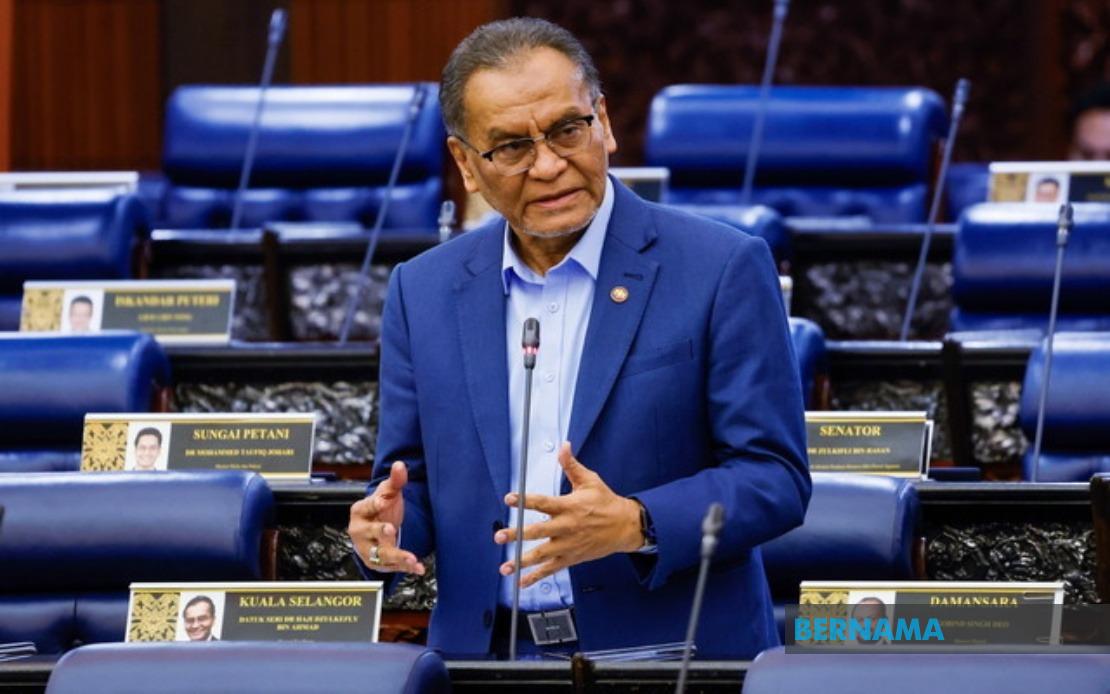
The Health Ministry is moving forward with plans to construct a hospital in Bandar Enstek, Nilai, Negeri Sembilan, a decision aimed at addressing healthcare demand in the Seremban district and alleviating the strain on the existing Tuanku Ja'afar Hospital. Health Minister Datuk Seri Dr Dzulkefly Ahmad outlined the development in Parliament this week, emphasizing that the northern Seremban corridor location reflects the state's accelerating urbanisation and the corresponding surge in residents requiring medical services.
The announcement follows a comprehensive reassessment of healthcare infrastructure planning in Negeri Sembilan, including a review of the earlier proposed Tuanku Ja'afar Hospital 2 facility that had been earmarked for Rasah. Dr Dzulkefly indicated that consultations between the Health Ministry and Negeri Sembilan Menteri Besar Datuk Seri Aminuddin Harun on June 16 resulted in the decision to pursue the Bandar Enstek location as a more strategically advantageous option for meeting the state's evolving healthcare needs.
State authorities have pinpointed two separate parcels of land, each comprising 50 acres and situated within Federal territory, as potential sites for the new hospital. The Health Ministry intends to conduct site inspections in coming months to evaluate both locations and determine which offers the optimal conditions for development. Once a site is selected, the ministry will submit an application to the Department of the Director General of Lands and Mines to secure approval for converting the land's designation from its current status to medical use.
The timeline for project initiation depends on securing the necessary approvals from the lands authority. Once land-use conversion is approved, the Health Ministry will immediately commence preliminary investigations and planning stages. These foundational activities will encompass comprehensive land surveying, geotechnical studies to assess soil conditions, development of preliminary architectural concepts, detailed cost projections, and a formal Value Assessment exercise to validate the financial viability of the undertaking.
Beyond the main hospital project, the state government has also committed to releasing additional land for complementary healthcare initiatives. Aminuddin has agreed to alienate approximately 36.748 acres of Federal Reserve land in central Bandar Seremban to facilitate future medical development, including additional facilities for the existing Tuanku Ja'afar Hospital and establishment of a Centre of Excellence specialising in advanced healthcare training and research. This coordinated approach suggests a broader vision for Negeri Sembilan's healthcare infrastructure that extends beyond simple facility expansion to include capacity building and specialised service development.
The congestion at Tuanku Ja'afar Hospital has become increasingly acute as Seremban's population and economic activity have expanded. The existing facility, which serves as the main government hospital for the district, has struggled to accommodate rising demand for both emergency and routine care. The new Bandar Enstek hospital is expected to distribute patient load more effectively across the healthcare network, reducing wait times and improving service quality at both institutions. This dual-facility approach aligns with international best practices where regional healthcare systems employ geographically dispersed major hospitals to optimise access and efficiency.
For Malaysian healthcare professionals working internationally, the government has implemented incentive programmes designed to encourage their return. Through TalentCorp, the Returning Expert Programme offers financial incentives including complete income tax exemptions and excise duty exemptions on locally manufactured vehicle purchases. Applications from the healthcare sector have been particularly robust, with the largest proportion of returning professionals originating from the United Kingdom, Singapore, and Australia. Medical specialists and physicians comprise the most significant applicant group, suggesting that career advancement opportunities and competitive compensation packages abroad have drawn Malaysian talent to these destinations.
Regarding the utilisation of foreign medical personnel in Malaysia's healthcare system, existing regulations have long permitted appropriately qualified international doctors and nurses to practice within the country, subject to stringent oversight from the Malaysian Medical Council and Malaysian Nursing Board. These regulatory frameworks ensure that quality standards are maintained and that foreign professionals meet the same competency requirements as their Malaysian counterparts. The Health Ministry currently appoints non-citizen medical specialists in critical disciplines and in geographic locations where domestic specialist capacity is insufficient, addressing specific gaps in service provision.
The recruitment strategy for foreign medical officers includes engagement of non-citizen graduate doctors who possess permanent resident status or are spouses of Malaysian citizens, permitting them to undertake housemanship training through Ministry of Health facilities. This approach leverages available talent while maintaining a pathway toward long-term integration into the healthcare workforce. However, the broader question of systematic foreign nurse recruitment remains under review, with the Ministry conducting ongoing feasibility assessments in collaboration with other relevant government agencies. These deliberations reflect the delicate balance between meeting immediate workforce shortages and protecting employment opportunities for Malaysian citizens within the nursing profession.

