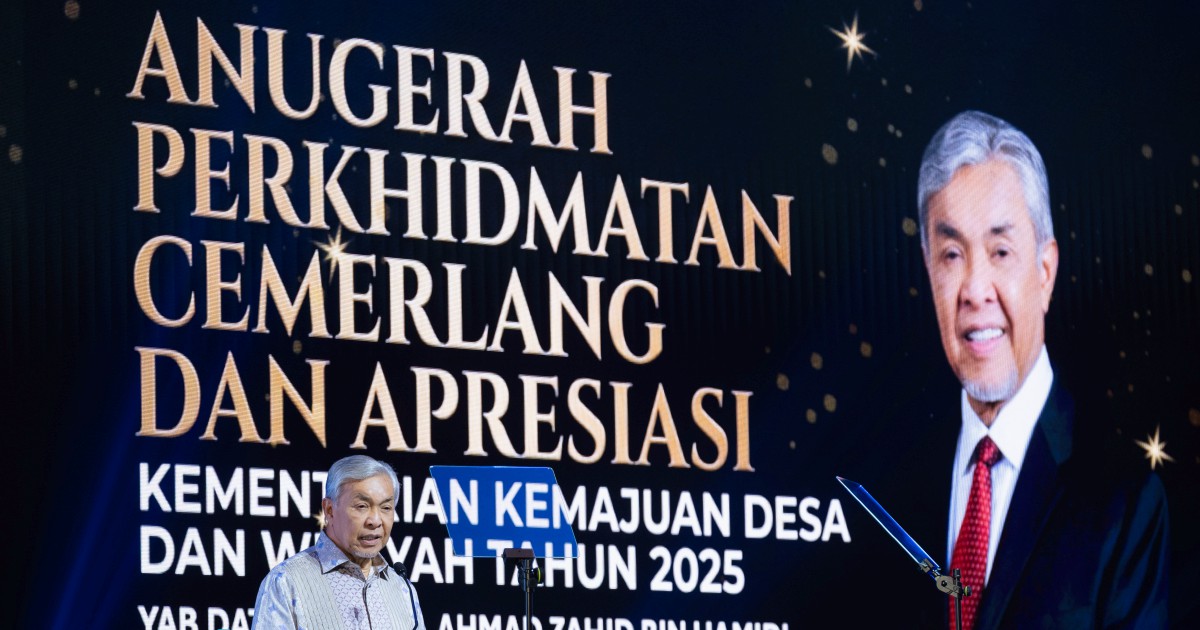
Infrastructure development in Malaysia's two largest states on Borneo is set to receive fresh attention as Deputy Prime Minister Datuk Seri Dr Ahmad Zahid Hamidi signalled openness to considering new rural road construction projects for Sabah and Sarawak in the forthcoming 2027 Budget allocation. The announcement reflects ongoing pressure to address connectivity gaps that continue to isolate remote communities from regional economic hubs and essential services across the eastern Malaysian states.
The infrastructure deficit in many Sabah and Sarawak villages remains a persistent challenge for both state economies and rural livelihoods. Decades of uneven development have left numerous settlements without reliable land routes to major commercial and administrative centres, forcing residents to depend on inefficient river transport or dangerous jungle trails. This geographic isolation constrains economic opportunities, limits access to quality healthcare and education, and perpetuates the rural-urban wealth disparity that characterises much of East Malaysia.
Zahid's statement signals that the federal government recognises the urgency of systematically addressing these infrastructure shortfalls. By explicitly naming both Sabah and Sarawak, he underscores Kuala Lumpur's commitment to rural development in regions where political support and socioeconomic progress remain intertwined. For federal policymakers, improving physical infrastructure serves dual purposes: it genuinely enhances quality of life for marginalised communities while simultaneously strengthening government credibility in states where electoral competition remains keenly contested.
The 2027 Budget process represents a significant opportunity for bundling infrastructure commitments that may have accumulated across multiple budget cycles. Government agencies, state authorities, and local representatives in both Sabah and Sarawak have likely compiled detailed proposals for road projects that address genuine connectivity challenges. The consideration of these requests signals that the budgetary envelope for 2027 may have sufficient flexibility to accommodate fresh infrastructure expenditure beyond baseline commitments.
Rural road development carries particular importance in Sarawak, where vast distances, challenging terrain, and scattered settlement patterns create unique engineering and logistical demands. Similarly, Sabah's mountainous interior and distributed communities require sustained investment in transportation infrastructure to realise their economic potential. When these roads eventually open, they typically catalyse agricultural productivity, enable market access for local producers, and facilitate access to government services that previously required expensive travel.
For Malaysian policymakers, rural road investment also represents a measurable outcome that can be communicated to constituents during campaign periods. Unlike abstract fiscal measures or regulatory reforms, completed road projects are tangible and visible, creating political dividends that extend across electoral cycles. This practical reality ensures that infrastructure proposals from Sabah and Sarawak receive serious consideration during budget formulation, particularly if construction timelines can align with significant political events or anniversaries.
The economic multiplier effects of rural road construction warrant consideration beyond simple connectivity metrics. These projects generate employment during construction phases, stimulate local material supply chains, and create permanent maintenance jobs. For Sabah and Sarawak economies heavily dependent on resource extraction and agriculture, improved internal connectivity can facilitate value-added processing and direct marketing that traditionally flowed through distant intermediaries. Rural entrepreneurs gain capacity to service larger markets and negotiate better prices when transportation costs decline significantly.
From a broader Southeast Asian perspective, Malaysia's commitment to rural road development reflects regional trends toward infrastructure investment as a poverty-reduction strategy. Neighbouring countries including Indonesia and Thailand have similarly prioritised connecting remote communities through targeted road programmes. These initiatives acknowledge that geographic isolation perpetuates economic disadvantage in ways that education alone cannot remedy, requiring complementary physical infrastructure investment.
The evaluation process that Zahid foreshadowed will likely involve multiple criteria including community need, project feasibility, engineering standards, and alignment with broader state development strategies. Federal authorities must balance compelling rural development arguments against competing demands from urban infrastructure maintenance, public transport modernisation, and mega-projects that dominate budget headlines. This allocation challenge explains why even justified rural road proposals sometimes await several budget cycles before securing funding approval.
Implementation capacity in both states will also factor into decision-making. Sabah and Sarawak road authorities must demonstrate ability to manage projects effectively, maintain fiscal discipline, and complete works within reasonable timelines. Projects from states demonstrating strong execution records typically advance more quickly through approval processes, creating subtle incentives for improved administrative performance.
The timing of Zahid's announcement warrants noting, as it precedes formal budget consultation cycles and indicates preliminary interest rather than firm commitments. This approach allows the government to gauge response from stakeholder groups and gather additional project information before finalising allocations. By indicating willingness to consider rural road proposals, federal leadership creates political credit with rural constituencies while avoiding premature financial pledges during periods of economic uncertainty.
For Malaysian rural residents in Sabah and Sarawak, this statement represents conditional optimism rather than certainty. The pathway from consideration to budget allocation to construction remains lengthy and competitive. Nevertheless, the explicit acknowledgment of rural road deficiencies and the signal that solutions will receive budgetary scrutiny suggests that infrastructure development remains a legitimate government priority deserving investment alongside other pressing national needs.

