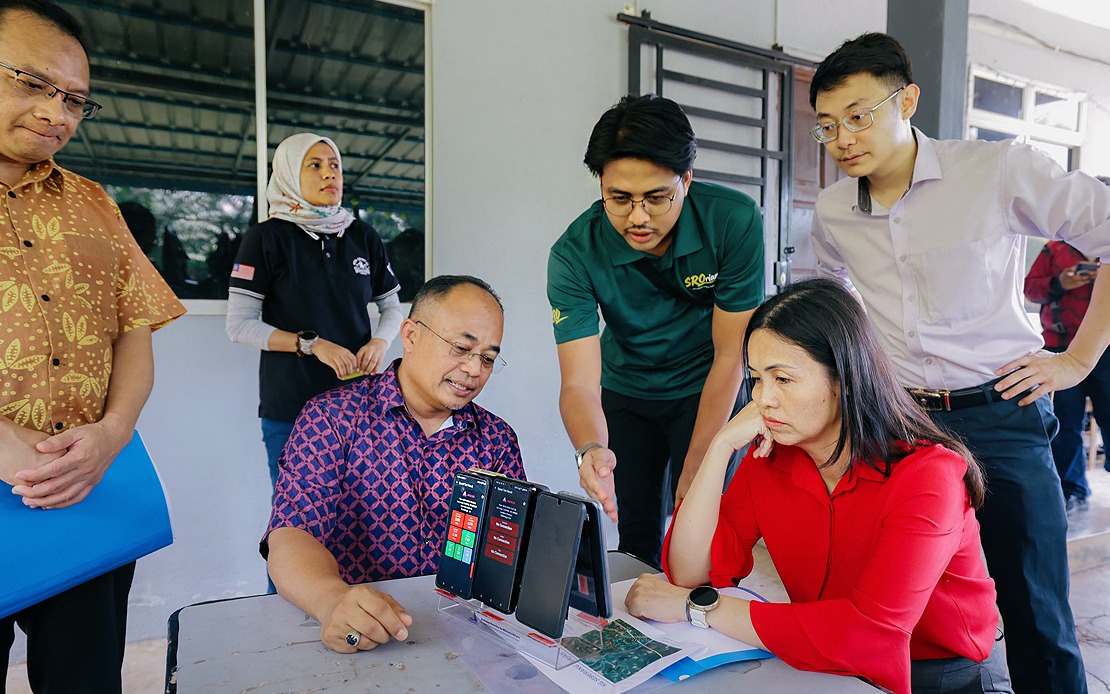
Residents of Kampung Seberang Gajah in Tangkak will soon gain access to improved internet connectivity following government plans to erect an additional telecommunications tower in the rural settlement. The infrastructure project comes after Deputy Communications Minister Teo Nie Ching conducted a field survey of service performance in the area, accompanied by officials from the Malaysian Communications and Multimedia Commission (MCMC) and representatives from telecommunications service providers.
The decision to construct the new facility addresses a long-standing coverage gap that has hampered digital connectivity across the locality. Despite two existing telecommunications towers in proximity to Kampung Seberang Gajah, their transmission range and signal strength have proven inadequate for serving the needs of residents dispersed throughout the village and surrounding areas. This limitation has left many households and businesses unable to access reliable broadband services, a growing necessity for education, commerce, and access to government digital services.
Teo indicated that the MCMC has taken a proactive role by directing telecommunications companies to develop infrastructure that will bridge this connectivity divide. The regulatory intervention underscores official recognition that private sector investment alone has not sufficiently penetrated rural settlements where consumer density and profit margins may be lower. The directive represents a strategic effort to extend the reach of Malaysia's digital economy into underserved communities, aligning with broader national objectives to close the urban-rural technology gap.
Plans for the new tower have progressed beyond the conceptual stage and are now in the final approval phase. The telecommunications company responsible for the project is currently seeking clearance from local municipal authorities to commence construction. This administrative step, while procedural, represents a critical juncture that will determine the timeline for implementation. Delays in permit processing could extend the waiting period for residents who have endured connectivity challenges for extended periods.
Recognising the urgency of the situation, Teo appealed to local authorities to expedite their approval procedures and encouraged the selected company to prioritise construction scheduling once permits are secured. Her emphasis on acceleration reflects understanding of the genuine hardship posed by digital exclusion in contemporary Malaysia. Without adequate internet access, students in the village face barriers to online learning, small business operators cannot effectively compete in digital markets, and families struggle to maintain connections with relatives in urban centres.
The site survey conducted by Teo, MCMC leadership, and telecommunications executives served as a diagnostic exercise to evaluate current service performance gaps and validate the necessity for infrastructure expansion. This hands-on assessment approach provides decision-makers with direct observational data rather than relying solely on technical reports or complaint statistics. Such visits also signal political commitment and accountability to affected constituents, demonstrating that connectivity challenges in rural areas receive ministerial-level attention.
The Tangkak district case exemplifies broader challenges confronting Malaysia's telecommunications sector in achieving nationwide coverage equity. While urban concentrations in Kuala Lumpur, Penang, and Johor Bahru enjoy multiple service provider options and dense tower networks, rural and semi-rural communities like Kampung Seberang Gajah often depend on fragmented coverage that fails to meet modern usage demands. The proliferation of video streaming, remote work arrangements, and online education since the global pandemic has dramatically increased bandwidth requirements, rendering older infrastructure inadequate.
For Malaysia's digital transformation agenda, rural connectivity projects carry significance beyond immediate beneficiaries. Communities with reliable broadband access develop differently from those constrained by poor connectivity. Digital literacy spreads more readily, entrepreneurship flourishes, and youth migration to cities potentially slows when rural opportunities remain viable. Furthermore, in the context of Southeast Asian regional competition, countries with comprehensive digital infrastructure gain advantages in attracting tech investment and talent retention.
The MCMC's directive to service providers reflects regulatory approach balancing market incentives with mandated coverage obligations. Telecommunications companies operating in Malaysia agree to coverage targets and service quality benchmarks as conditions of their operating licenses. This tower project likely derives from such contractual commitments rather than purely voluntary corporate social responsibility. Nonetheless, translating regulatory requirements into actual field infrastructure remains an ongoing process requiring sustained official oversight.
Looking forward, completion of the Kampung Seberang Gajah tower should deliver measurable improvements in signal strength and data throughput for households and businesses. The project may also serve as pilot demonstration for similar interventions across other rural settlement clusters. As Malaysia advances its 5G rollout and contemplates next-generation connectivity standards, ensuring that foundational broadband infrastructure reaches all communities establishes prerequisite conditions for digital inclusion.
The initiative also reflects evolving parliamentary sensitivity to technology equity issues. Rural constituencies represent politically significant voting blocs, and broadband access has emerged as tangible election-cycle priority alongside traditional infrastructure investments in roads and water systems. Teo's field visit and public commitment to acceleration represent political messaging that current government takes digital divide seriously.

