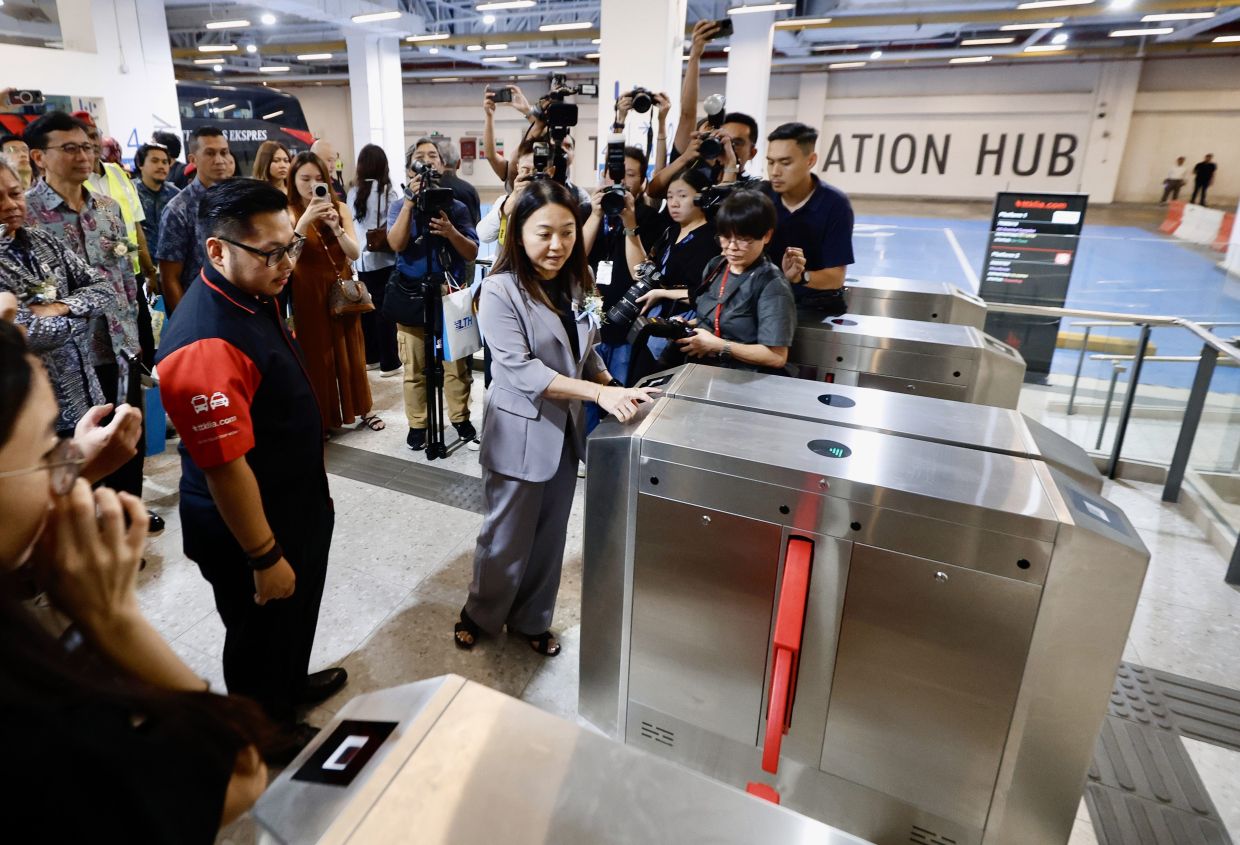
Kuala Lumpur's transport infrastructure has expanded with the launch of the LaLaport Transportation Hub at Bukit Bintang City Centre, marking another step in the capital's effort to streamline urban mobility and reduce traffic congestion. The facility, which began phased operations in February and was formally inaugurated on Thursday (July 16), represents a collaborative approach to consolidating bus services in a centralized location designed to improve passenger experience and operational efficiency.
The hub is positioned to become a significant transport nexus in the heart of Kuala Lumpur's commercial district. Around 30 bus operators are expected to utilize the facility, which currently handles approximately 3,000 daily passenger journeys but has been engineered with the capacity to accommodate up to 10,000 passengers. This scalability reflects planners' recognition that the city's transport needs continue to evolve, requiring infrastructure that can be adapted as demand grows. The phased rollout approach has allowed authorities to test operations and optimize services before reaching full capacity.
Minister in the Prime Minister's Department (Federal Territories) Hannah Yeoh underscored the strategic importance of the hub during its launch, highlighting that the facility provides express bus passengers with dedicated boarding and drop-off points. Such infrastructure improvements address a fundamental challenge in urban transit: the lack of organized passenger management at bus stations. By consolidating operations in a purpose-built facility, the hub eliminates the need for buses to navigate congested streets searching for informal boarding areas, thereby reducing traffic disruption and improving service reliability. The ministerial endorsement signals government commitment to prioritizing urban mobility as a national concern.
The scale of transportation demand in Kuala Lumpur provides context for why such infrastructure investments have become urgent. According to data from Kuala Lumpur City Hall (DBKL), the capital experiences an average inflow of 1.2 million vehicles daily, while the city generates approximately 5.5 million journeys in and out each day. These figures illuminate the congestion challenge facing planners and underscore why expanding public transport capacity remains a critical policy objective. By shifting passengers from private vehicles to organized bus networks, the hub contributes to reducing vehicular volumes and associated pollution while improving overall urban mobility.
The hub's physical design reflects contemporary standards for passenger comfort and convenience. Located on Level LG1 of LaLaport BBCC's East Atrium, the facility includes 11 bus bays accommodating simultaneous vehicle operations. The waiting areas are air-conditioned, addressing Malaysia's tropical climate, while ticketing counters and self-service machines enable diverse payment options. Real-time passenger information screens provide schedule updates, reducing uncertainty for commuters. These amenities transform the bus terminal experience from a purely functional utility into a passenger-oriented facility where travelers can wait comfortably and access information reliably.
Intermodal connectivity has been deliberately engineered into the hub's design, reflecting best practices in urban transport planning. The facility's proximity to the Hang Tuah interchange enables seamless transfers to the Light Rail Transit (LRT) and Monorail networks through a sheltered pedestrian walkway. This integration allows passengers to combine different transport modes within a single journey, a critical feature for comprehensive urban mobility solutions. Rather than forcing commuters to choose between isolated transport networks, the hub functions as a bridge connecting multiple systems into a cohesive regional transport ecosystem. Such connectivity has become standard in developed transit systems and represents a maturation of Kuala Lumpur's approach to transport planning.
Beyond conventional bus services, the hub offers complementary transportation options that address diverse passenger needs. Shuttle van services connect directly to KL International Airport Terminals 1 and 2, catering to the significant airport commuter population. Demand-responsive transport (DRT) services provide flexible routing for passengers whose origin or destination points fall outside standard bus corridors, addressing the last-mile connectivity challenge that often deters transit use. Designated taxi and e-hailing pick-up and drop-off areas integrate these services into the multimodal ecosystem, allowing passengers to combine these modes with bus networks efficiently. This comprehensive approach acknowledges that modern urban mobility rarely involves single-mode journeys.
The hub's operational licensing through the Land Public Transport Agency (Apad) establishes regulatory oversight and maintains service standards. Regulatory framework provides assurance to passengers regarding safety, reliability, and fare consistency. This institutional arrangement allows government to exercise quality control while permitting private operators to manage day-to-day services. The licensing structure also facilitates coordination among the 30 participating operators, reducing potential conflicts over routes and scheduling. Such regulatory clarity has been essential for achieving operator buy-in and ensuring the hub functions as an integrated network rather than a collection of competing services.
For Malaysian travelers and urban planners, the LaLaport Transportation Hub demonstrates how modern cities can consolidate dispersed transport services into organized facilities that improve passenger experience while reducing urban congestion. The project exemplifies a shift from viewing public transport as a basic service to recognizing it as a critical component of livable city infrastructure. As Southeast Asian cities grapple with rapid urbanization and increasing vehicle ownership, Kuala Lumpur's experience with integrated transport hubs offers valuable lessons. The initial success of the LaLaport facility, contingent on achieving the projected 3,000 daily passengers, will likely influence future transport infrastructure projects across the region. Should the hub reach its growth target of 10,000 daily passengers, it will validate the business case for similar investments, potentially catalyzing expansion of organized transit infrastructure in other Malaysian cities and Southeast Asian capitals struggling with similar congestion challenges.

