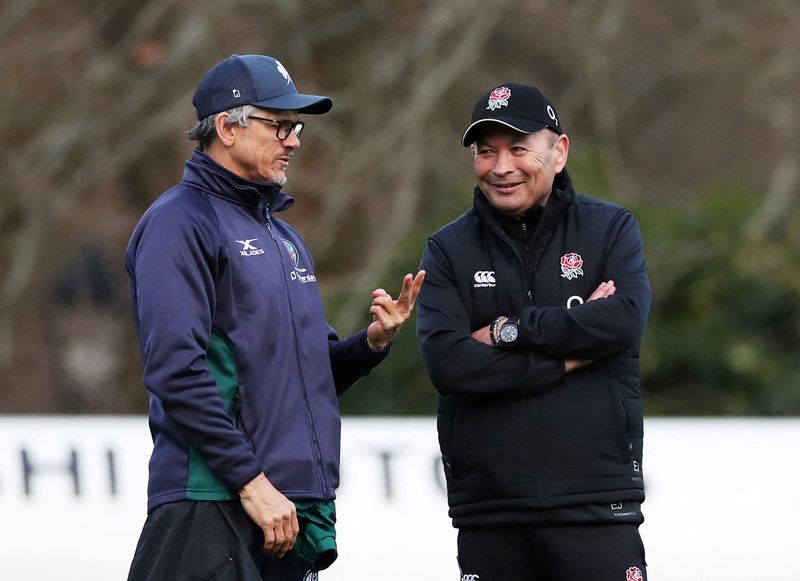
Les Kiss has wasted little time establishing his philosophy as Australia's new rugby coach, signalling a pragmatic willingness to look beyond domestic shores for talent that could transform the Wallabies' fortunes. At his maiden press conference in Sydney this week, the 61-year-old former Queensland Reds director outlined an approach that explicitly breaks from the restrictive stance adopted by his predecessor Joe Schmidt, pledging to cast his net internationally in the search for World Cup success.
The timing of Kiss's declaration carries particular significance for Australian rugby, which has fallen to eighth in the world rankings following a dispiriting run that has seen the Wallabies lose nine of their last eleven matches. This dramatic decline in competitive standing has prompted serious questions about whether traditional selection philosophies adequately serve the team's ambitions, and Kiss's comments suggest he believes a more expansive approach to recruitment may hold part of the answer.
Australia's governing body, Rugby Australia, has historically constrained coaches' ability to select players based overseas, implementing the rule to encourage talent retention within the domestic competition. Schmidt respected these limitations throughout his two-year tenure, using his discretionary picks for overseas-based players with considerable restraint. Kiss, however, has made clear that pragmatism will override institutional convention if the circumstances warrant it, stating plainly that he will not hesitate to pursue offshore talent when the competitive advantage justifies the departure.
The incoming coach has already begun preliminary discussions with several players operating in foreign competitions. Most notably, he has maintained contact with Jordan Petaia, a versatile back currently recovering from injury in Japan, demonstrating that Kiss views overseas-based talent as worthy of serious consideration rather than as a secondary option. This proactive engagement suggests the coaching staff intends to identify and develop relationships with capable performers regardless of their current location, positioning the Wallabies to move quickly should key players become available.
In assembling his inaugural squad for the two-test series against Eddie Jones's Japan next month, Kiss largely maintained continuity with Schmidt's playing group, retaining virtually all available players who featured in the Nations Championship matches held on Australian soil. However, this conservative first selection should not be misinterpreted as ideological conservatism. Rather, it reflects both the limited pool of fit personnel currently available and Kiss's strategic decision to establish himself gradually while assessing the squad's capabilities in his opening fixtures.
The philosophical foundation Kiss intends to build appears rooted in a distinctly Australian identity and approach to the game. Rather than importing a foreign tactical model, he has emphasised the importance of embracing an authentically Australian spirit characterised by creativity, innovation, and competitive intensity. This framing suggests Kiss believes Australia's rugby problem is not fundamentally one of tactical sophistication but rather one of intensity, execution, and access to sufficient world-class personnel to compete with the elite nations.
The squad announcement and Kiss's public comments also illuminate the ongoing experiment with centre Joseph Suaalii, the A$5 million-valued recruit controversially poached from Australia's National Rugby League. Since his eye-catching debut during last year's Northern Hemisphere tour, Suaalii has delivered only intermittent flashes of brilliance in the gold jersey, generating considerable debate about his optimal position. Kiss has confirmed that he will follow Schmidt's approach by persisting with Suaalii in the outside centre position, indicating faith in the 22-year-old's development even as questions persist about whether his skillset ultimately suits fullback more naturally.
The broader implications of Kiss's recruitment philosophy extend beyond immediate squad selection to fundamental questions about Australian rugby's future direction. By signalling flexibility on overseas recruitment, Kiss is implicitly acknowledging that the domestic Super Rugby competition, even with recent competition restructuring, may not consistently produce sufficient elite-level talent to sustain a genuinely competitive international programme. This represents a significant acknowledgment of the challenges facing Australian rugby, where funding constraints and player drain have created genuine depth limitations.
For Southeast Asian rugby observers, Kiss's approach carries particular relevance given the region's emerging role as a destination for elite athletes and the increasing interconnectedness of Pacific rugby networks. If Kiss successfully recruits and integrates overseas-based players into a competitive World Cup campaign, it could validate similar approaches across the region and demonstrate that rugby success in the modern era requires genuinely transnational thinking and recruitment networks.
The immediate test of Kiss's philosophy will arrive against Japan, where the Wallabies face an increasingly organised opponent under Eddie Jones's stewardship. These matches will provide Kiss with crucial information about the squad's current capabilities and, more importantly, clarify which areas might require supplementation through overseas recruitment. A convincing performance would validate the existing group and justify retention-focused strategy; conversely, a disappointing result could accelerate Kiss's willingness to activate his overseas recruitment network.
Kiss's tenure begins against a backdrop of genuine institutional pressure and heightened expectations. The Wallabies have not delivered a World Cup triumph since 1999, and the intervening years have featured repeated cycles of optimism followed by crushing disappointment. By explicitly rejecting the constraints that characterised his predecessor's approach, Kiss has positioned himself as willing to embrace unconventional solutions to perennial problems. Whether this pragmatism translates into tangible success on the field remains uncertain, but his willingness to think differently about recruitment suggests Australian rugby's leadership has finally recognised that traditional approaches alone are insufficient.

