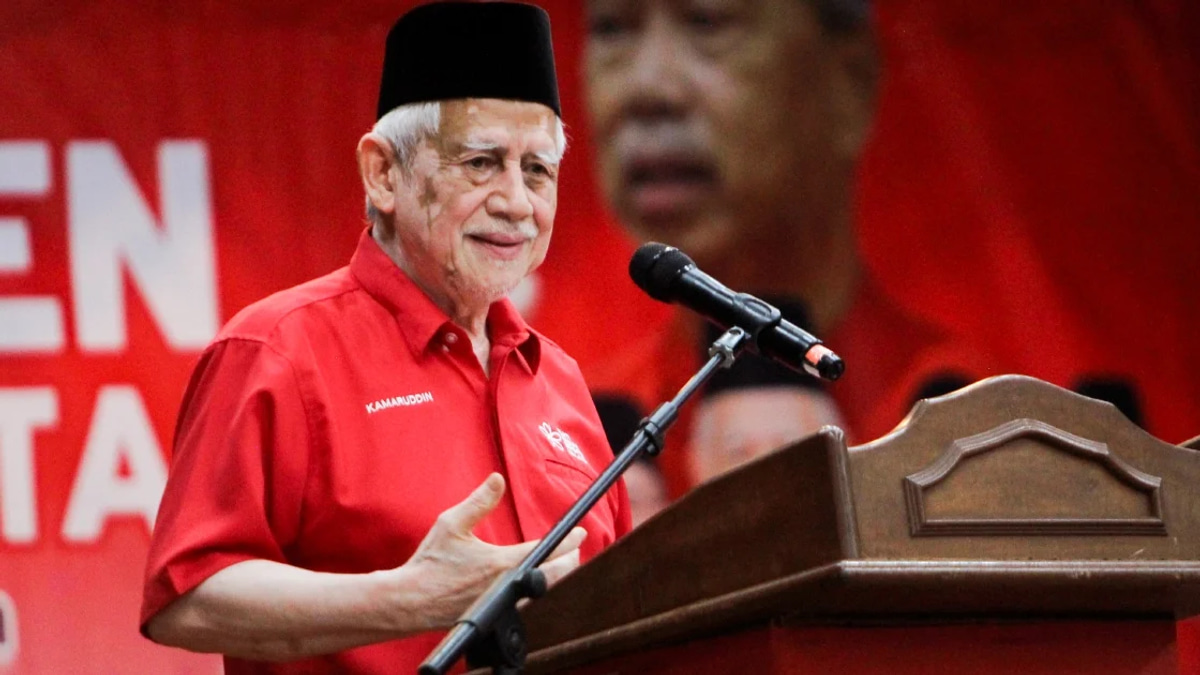
The newly formed Wawasan party appears positioned to replicate the political playbook of Bersatu by centering its electoral strategy on Malay and Muslim demographics, according to prominent political analyst James Chin. This strategic orientation signals an emerging pattern in Malaysian politics where alternative parties seek to capture a specific slice of the Malay-Muslim voter base by offering a different ideological or stylistic option from established players in that space.
Chin's assessment suggests that Wawasan intends to target a particular niche within the broader Malay-Muslim electorate—specifically urban, educated voters who harbour reservations about supporting Islam-focused political movements like PAS. This represents a calculated attempt to fill a political void between the Malay-centric positioning of mainstream parties and the explicitly religious framing of PAS, which dominates much of the Islamic political discourse in Malaysia.
The distinction is significant for understanding contemporary Malaysian politics. While Bersatu under Muhyiddin Yassin has successfully mobilised Malay voters with a nationalist rather than overtly religious message, Wawasan appears to be adopting a similar but distinct approach. The new party would target professionals, business owners, and younger urbanites from Malay-Muslim communities who seek political representation that doesn't require them to align with parties they perceive as theocratic or overly restrictive in their social policy positions.
This strategic segmentation reflects deeper fractures within Malaysia's Malay-Muslim voting bloc. Historically treated as a monolithic entity, this demographic has increasingly diversified in its political preferences and values. Urban Malay professionals often maintain different priorities—economic opportunity, moderate governance, meritocracy—compared to their rural counterparts or PAS supporters, who may prioritise Islamic law and religious policy implementation.
Bersatu's own trajectory demonstrates the viability of this model. Since its formation, the party has successfully positioned itself as a Malay-Muslim party without the religious extremism that some voters associate with PAS, while maintaining cultural and religious credentials that distinguish it from multiracial coalitions. Wawasan appears to be planning a similar calibration, targeting the middle ground where Malay identity and Islamic faith remain important but are not the exclusive lens through which political decisions are evaluated.
The emergence of Wawasan also reflects the instability within ruling coalitions and the constant realignment of Malaysian politics. Each new party that launches typically seeks an underserved demographic—a constituency that existing parties either neglect or alienate. For Wawasan, this appears to be urban Malays and Muslims uncomfortable with PAS's trajectory toward greater Islamisation or those disillusioned with Umno's traditional approach but unwilling to join Bersatu or multiracial alternatives.
Regionally, this pattern mirrors developments elsewhere in Southeast Asia where Malay-Muslim political movements have fractionalised into multiple competing entities, each claiming to represent the authentic interests of that community. Thailand, Indonesia, and Brunei have all experienced similar political splits where religious or ethnic parties splinter into competing factions claiming different interpretations of what their core constituency actually needs.
For Malaysian politics more broadly, the replication of Bersatu's model by Wawasan suggests a continued fragmentation of the Malay-Muslim political landscape. Rather than consolidation around one or two dominant parties, this community may increasingly be represented across multiple platforms, each with slightly different appeals and messaging. This could complicate future coalition-building and governance, as no single party can claim overwhelming support from Malay-Muslim voters.
The implications for national politics are substantial. With Malay-Muslim voters divided among Umno, PAS, Bersatu, and now potentially Wawasan, each command smaller absolute numbers than they might collectively represent. This fragmentation could paradoxically strengthen multiracial coalitions by making any single Malay-majority bloc insufficient for government formation, thereby necessitating broader political alliances. Conversely, it could enable kingmaker scenarios where smaller parties exercise disproportionate influence in determining which coalition forms government.
Chin's analysis also underscores how Malaysian political entrepreneurs continue to identify and exploit gaps in voter preference. Rather than creating fundamentally new political philosophies, emerging parties typically operate as variations on existing themes, offering marginally different packaging of similar ideological content. Wawasan's expected focus on Malay-Muslim voters reflects this tendency—it's not proposing a radical reimagining of Malaysian politics but rather a recalibration of where Malay-Muslim interests are best served within the existing system.
The success or failure of Wawasan will ultimately depend on its ability to convincingly distinguish itself from Bersatu while remaining credible within the Malay-Muslim community. Too much differentiation risks alienating the core constituency; too little risks appearing as merely another variant of an existing option. The party will need to articulate a compelling vision that addresses specific grievances or aspirations unmet by current alternatives, whether through economic policy, governance approach, or social positioning.
As Malaysian politics continues its fluid realignment, the potential launch of Wawasan represents another chapter in the ongoing negotiation between Malay identity, Islamic faith, and electoral competition. Whether it succeeds in establishing a durable political presence or remains a marginal player will depend on factors beyond mere strategic positioning—grassroots organisation, leadership quality, and the evolution of voter preferences in the coming electoral cycles.