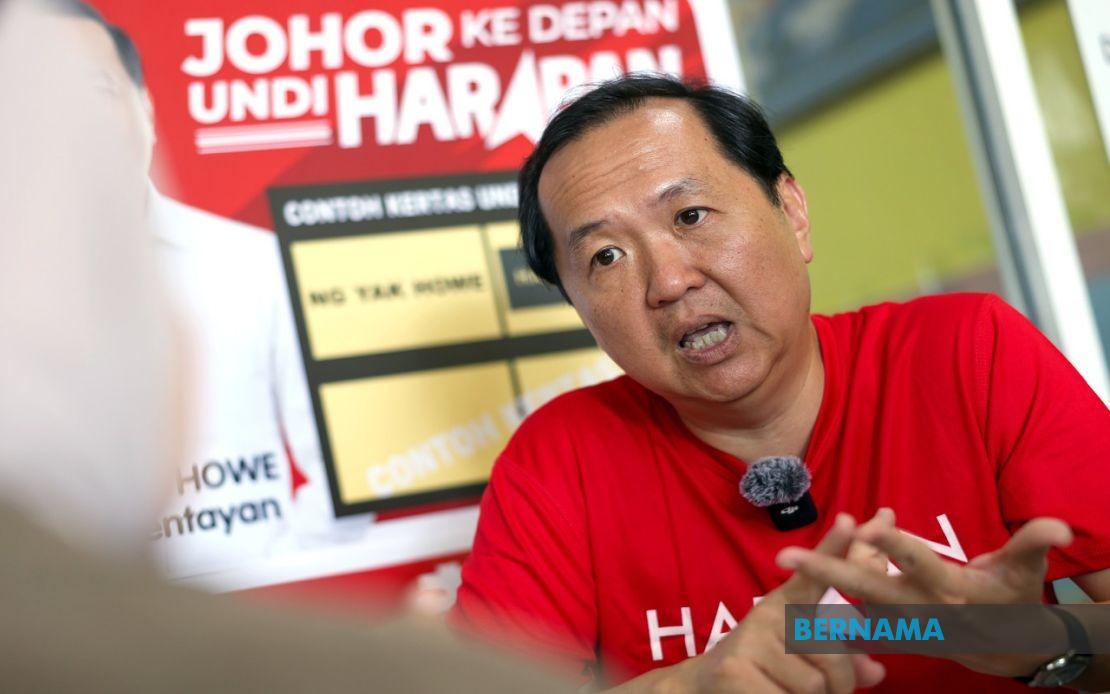
Muar's historic town centre faces a mounting challenge as residents increasingly abandon inner-city living for suburban developments, leaving commercial premises shuttered after business hours. Pakatan Harapan's Ng Yak Howe, the incumbent Bentayan state assemblyman, has identified this urban decay as the defining issue in his bid for a third consecutive term, pledging a comprehensive revival strategy that prioritises attracting younger demographics back to the area's core. His campaign focus reflects broader challenges facing Malaysian towns competing against purpose-built shopping malls and residential enclaves in their outskirts.
Ng's constituency encompasses over half of Muar town centre, positioning him strategically to address what residents perceive as a gradual abandonment of the commercial district. The phenomenon he describes—vibrant daytime activity giving way to eerie quietness once offices close—mirrors patterns seen across Malaysia's secondary cities, where aging town centres struggle to compete with modern, air-conditioned suburban alternatives. This hollowing out has real consequences, not merely aesthetic but economic, as property values decline, shop owners relocate, and local businesses dependent on foot traffic lose viability.
The Bentayan assemblyman's approach combines both regulatory support and grassroots stimulus measures. Working in tandem with Bakri Member of Parliament Tan Hong Pin, Ng has championed consumer incentive schemes including cash vouchers and lucky draw promotions designed to direct spending toward local enterprises rather than distant shopping complexes. These initiatives target the estimated 18 per cent of vacant commercial premises in the town centre, attempting to reverse a trend that, if unchecked, could render the area economically redundant within a generation.
Ng's background as a former quality assurance engineer with over a decade of industrial experience suggests an approach grounded in process improvement and measurable outcomes rather than purely symbolic gestures. His quarter-century involvement in politics indicates sustained commitment to the constituency rather than the transient attention of newcomers to electoral politics. Such credentials matter to voters assessing whether candidates possess the technical capacity to implement stated policies beyond campaign rhetoric.
The Bentayan seat presents a competitive three-cornered landscape typical of contemporary Malaysian state elections. Ng faces Barisan Nasional candidate Chua Lee Huat in what effectively constitutes a straight contest before 34,205 registered voters, suggesting neither camp anticipates significant third-force disruption. The demographic composition of Bentayan voters—drawn from a mix of established residents, traders invested in town centre viability, and younger families seeking improved amenities—means urban development messaging resonates as a substantive policy platform rather than peripheral concern.
Broader context matters here. The Johor state election, with 172 candidates contesting 16 seats on July 11 and early voting on July 7, occurs within Malaysia's volatile post-2020 political environment where state-level contests frequently reshape national coalitions. PH's performance in traditionally significant constituencies like Bentayan carries implications extending far beyond local town planning. A strong showing would signal continued support for PH's governance model, while losses might indicate voter fatigue or specific criticism of performance on bread-and-butter issues affecting daily commercial activity.
The revival strategy Ng articulates addresses what economists term the "third place" problem—the absence of conducive public spaces between home and workplace where communities naturally congregate. Shopping malls provide consumption but not genuine social infrastructure; suburban housing developments isolate residents. Revitalised town centres theoretically restore this social function while supporting small enterprises unable to afford premium mall tenancy. Whether Muar's specific initiatives achieve this transformation remains contingent on execution beyond campaign season.
Critical to success will be coordination across municipal, state, and federal levels. Ng's partnership with Bakri's Member of Parliament suggests awareness that revitalisation requires vertically integrated policy coherence—securing funding, reducing business licensing friction, perhaps redesigning parking and pedestrian infrastructure. Malaysian towns have occasionally succeeded in such rejuvenation projects, though success stories remain comparatively rare, often requiring sustained political will across electoral cycles.
The incumbent's third-term aspiration reflects confidence grounded in constituency service reputation rather than revolutionary policy innovation. Voters in Bentayan will ultimately assess whether his town centre revival platform represents realistic stewardship of local economic interests or optimistic campaign messaging disconnected from implementation capacity. For Muar residents concerned about property values, shopkeeper friends facing closure, and younger people deterred by perceived urban decline, the election offers opportunity to signal whether current direction deserves continuation or merits recalibration through alternative leadership.

