Jonathan Vaughters, the former professional cyclist who now leads the Cannondale-EF team, has entered the debate over early-morning doping controls at the Tour de France with a blunt assessment: the practice would have dismantled the systematic cheating that plagued professional cycling for decades. His defence of the contentious testing regime comes as riders continue to protest the disruptive impact of unannounced 2am checks conducted during this year's race.
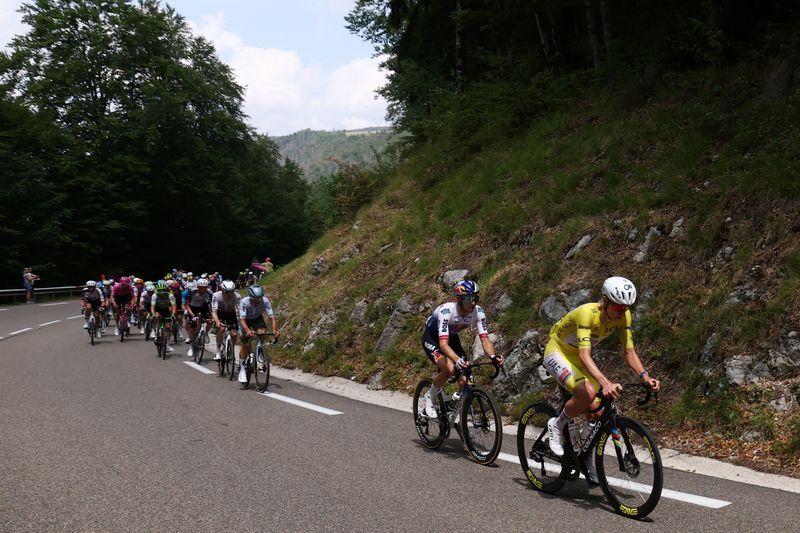
The pre-dawn testing initiative became a flashpoint during the 15th stage when race leader Tadej Pogacar and two-time Tour champion Jonas Vingegaard were among the athletes awakened for surprise anti-doping checks. The surprise inspections sparked immediate pushback from competitors and their teams, who argued that yanking riders from sleep hours before challenging mountain stages undermines fairness and poses safety risks. The cycling community fractured into competing camps: some viewing the practice as heavy-handed, others seeing it as necessary enforcement.
Vaughters took to social media to defend the methodology with reference to its scientific basis. He pointed out that testing at 2am specifically targets micro-dosing of peptides including erythropoietin and human growth hormone, substances that can vanish from the bloodstream within hours of administration. Vaughters argued that predictable daytime-only testing windows had historically enabled riders to time their pharmaceutical manipulation to avoid detection. His support carries weight precisely because he stood at the centre of cycling's darkest chapter and emerged as an unlikely advocate for transparency.
The specificity of his argument reveals a fundamental tension in modern anti-doping strategy. Substances like EPO and testosterone work effectively at lower doses, allowing athletes to enhance performance while remaining undetectable through conventional sampling windows. The International Testing Agency, which manages doping controls for the Union Cycliste Internationale, faces the dilemma of balancing rider welfare against enforcement effectiveness. An agency statement acknowledged that night testing disrupts sleep and recovery but maintained that certain circumstances justify departure from standard protocols.
Vaughters' personal credibility on this issue derives from his complex history within the sport. He raced professionally through the late 1990s and early 2000s, an era saturated with performance-enhancing substances. As a teammate of Lance Armstrong at the U.S. Postal Service team, Vaughters participated in what would later be exposed as cycling's most methodical doping operation. He subsequently admitted to using EPO during his career and later became a prosecution witness when the U.S. Anti-Doping Agency investigated Armstrong's systematic deception.
The repercussions of that era still define professional cycling's institutional memory. Armstrong's eventual stripping of seven Tour de France titles in 2012 represented one of sport's most spectacular falls from grace, but the damage extended far beyond one individual. An entire generation of results became suspect, sponsors retreated, and the sport's credibility suffered what many regarded as permanent injury. When Vaughters eventually established what became Cannondale-EF, he explicitly positioned the team as antidote to that history, branding it around values of clean competition and transparency.
His current argument carries the weight of someone who understands both sides of cycling's moral equation. Had rigorous nighttime testing existed during his racing years, Vaughters contends, the sport would have been spared 25 years of scandal, fraud, and institutional humiliation. That counterfactual reflects his assessment that early detection would have fundamentally changed cycling's trajectory by making systematic doping exponentially more difficult to sustain.
Yet the practical objections from contemporary riders remain substantial. Vingegaard, who underwent a 2am test, reported losing approximately 40 minutes of sleep before a mountainous stage on which he subsequently crashed and fractured his collarbone. The injured rider's misfortune became a focal point for critics questioning whether marginal gains in anti-doping enforcement justify material risks to athlete safety and performance. Pogacar, tested at 5am, managed only four hours of sleep before competing. Stage winner Remco Evenepoel characterised the entire enterprise as inhumane.
The phraseology of objections reflects deeper unease about bodily autonomy and proportionality. Testing at 2am exists in a grey zone between rigorous enforcement and harassment. Athletes must balance civic responsibility to preserve sport's integrity against personal interests in adequate rest before high-stakes competition. The International Testing Agency's position that nighttime testing occurs only in limited and justified circumstances attempts to straddle this divide, but implementing such distinctions consistently proves difficult.
For Southeast Asian readers, this debate extends beyond cycling into broader questions about how sporting bodies balance integrity with fairness. The region has developed growing professional cycling talent and cycling culture, particularly across Thailand, Malaysia, and Indonesia. As local and regional races attract international participation, the regulatory frameworks established by the International Testing Agency and national authorities carry direct implications for competition standards and athlete treatment. Vaughters' intervention suggests that cycling will continue navigating the tension between preventing sophisticated doping and protecting competitors' welfare.
The fundamental tension Vaughters illuminates remains unresolved. Anti-doping authorities face genuine challenges detecting micro-dosing of short-lived substances through conventional protocols. Simultaneously, riders reasonably expect adequate sleep before physically demanding competition. Neither imperative disappears simply because the other exists. What separates rigorous enforcement from institutional overreach often depends on evidence of effectiveness and careful calibration of methods. Vaughters' claim that 2am testing would have prevented decades of scandal remains ultimately counterfactual, though the logic about peptide detection windows reflects sound pharmacological understanding.

