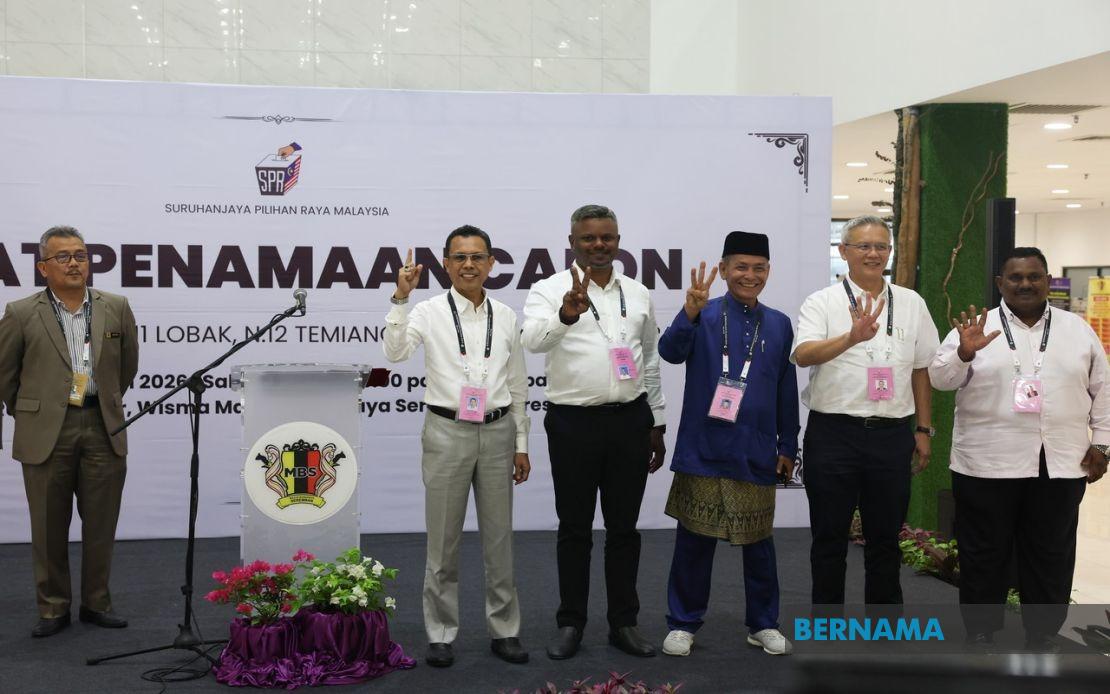
Incumbent Nilai assemblyman and DAP National vice chairman J. Arul Kumar is bracing for one of the most competitive races of the upcoming 16th Negeri Sembilan state election, with four challengers vying to unseat him in what has become a five-cornered contest. The crowded field in this traditionally significant constituency underscores the volatility of Malaysian state politics, where traditional boundaries between opposition and government coalitions have increasingly blurred. The nomination list, finalised on July 18 at Wisma Bandaraya Seremban, confirms that Arul Kumar will defend his seat against Berjasa's Zamani Ibrahim, Barisan Nasional's Datuk Lai Chien Kong, Bersatu's Datuk V. Saravana Kumar, and independent candidate Omar Mohd Isa, according to returning officer Datuk Masri Baharuddin.
The Nilai contest reflects broader patterns reshaping state politics across Negeri Sembilan, where the fragmentation of political support among multiple coalitions has intensified competition and made predicting outcomes increasingly difficult. Arul Kumar's position as both an assemblyman and prominent party figure gives him organisational advantages, yet the emergence of multiple challengers suggests that his political dominance in the seat cannot be taken for granted. The presence of candidates from Berjasa, a smaller coalition partner, alongside Bersatu and independent contenders, indicates that voters are being offered a genuine range of political choices rather than the conventional straight fights that characterised earlier election cycles.
Beyond Nilai, several other state seats are witnessing similarly contested races that will determine the composition of the 36-member Negeri Sembilan state assembly. In Sikamat, political secretary to the Menteri Besar Nor Azman Mohamad carries Pakatan Harapan's banner in a three-way tussle involving Perikatan Nasional's Datuk Razali Abu Samah and Bersatu's Datuk Tun Faisal Ismail Aziz. The withdrawal of independent candidate Bujang Abu at the last minute simplified this contest, though the presence of three major political entities suggests that none can claim a clear advantage. Nor Azman's appointment as political secretary indicates the Menteri Besar's confidence in his ability to retain the seat, yet his reliance on this official title also highlights how personality and incumbency advantages have become increasingly important in determining electoral outcomes.
Lenggeng presents a three-way battle where Pakatan Harapan's Zarinna Abu Zarin challenges incumbent Barisan Nasional assemblyman Datuk Mohd Asna Amin alongside Bersatu's Zool Amali Hussin. This configuration suggests that neither Barisan Nasional nor Pakatan Harapan can rely on a straight fight, and both will need to manage voter fatigue while mobilising their respective support bases against the new Bersatu entrant. The seat exemplifies how state elections have evolved beyond the binary competition that dominated Malaysian politics for decades, with third parties increasingly able to influence outcomes by fragmenting vote shares.
Lobak, by contrast, appears destined to be the most straightforward contest in this election cycle, pitting incumbent Chew Seh Yong of Pakatan Harapan directly against Dr P. Kumar representing Perikatan Nasional in a two-cornered duel. This direct confrontation between the two major coalitions offers voters a cleaner choice and may see higher engagement from both camps attempting to maintain or overturn the seat. The absence of Bersatu or independent candidates suggests that party discipline and coalition loyalty remain stronger in this particular constituency.
Temiang and Ampangan both feature three-cornered contests, indicating a consistent pattern across Negeri Sembilan where power is dispersed among multiple political groupings. In Temiang, Pakatan Harapan's Ho Weng Wah, who serves as political secretary to the Transport Minister, faces Barisan Nasional's Datuk Leaw Kok Chan and Bersatu's Fazly Hamid. Ampangan showcases Yayasan Negeri Sembilan director Muhammad Nazri Kassim representing Pakatan Harapan against Perikatan Nasional's Datuk Dr Mohamad Rafie Malek and Bersatu's Noor'azah Harun. These contests highlight how political appointments and corporate leadership positions have become intertwined with electoral politics, with candidates leveraging their professional standing to build credibility with voters.
The election campaign itself is occurring against a backdrop of significant political repositioning at the national level. Bersatu's emergence as an independent force rather than purely an extension of Barisan Nasional signals that the political landscape has fractured beyond the traditional coalition frameworks. For Malaysian voters, particularly in Negeri Sembilan, this multiplicity of choices offers genuine opportunities for political expression but also complicates the calculation of voting intentions, as coalition partners at state level may not align with national preferences.
The Election Commission's scheduling reflects standard procedures for state elections, with early voting set for July 28 and polling day scheduled for August 1. These dates provide adequate preparation time for candidates and party machinery to conduct campaigning, though the compressed timeline between nomination and polling day means that campaigns will be intensely focused. For Negeri Sembilan's voters, the election offers an opportunity to assess how state governments have performed and to express preferences regarding local development priorities, potentially diverging from national political positions.
The Nilai seat, given Arul Kumar's prominence as a national DAP figure, will undoubtedly attract significant attention from party leadership and political observers seeking to gauge Pakatan Harapan's electoral strength. A loss in this traditionally important constituency could signal broader difficulties for the coalition, while a victory—particularly against a crowded field—would constitute an endorsement of both Arul Kumar personally and Pakatan Harapan's governance record. The five-cornered contest means that Arul Kumar's ability to consolidate support among Pakatan Harapan's electoral base while also attracting independent or swing voters will be crucial to his prospects.
For Southeast Asian observers monitoring Malaysian political developments, the Negeri Sembilan election illustrates how even within a relatively stable democratic system, coalition politics continues to evolve and fragment. The willingness of voters to support independent candidates and the challenge posed by parties like Bersatu demonstrates that voter preferences remain fluid and that political parties cannot assume permanent support bases. These dynamics will likely influence national politics beyond August 1, as results from Negeri Sembilan provide indicators of broader electoral sentiment across Malaysia's urban and semi-urban constituencies.

