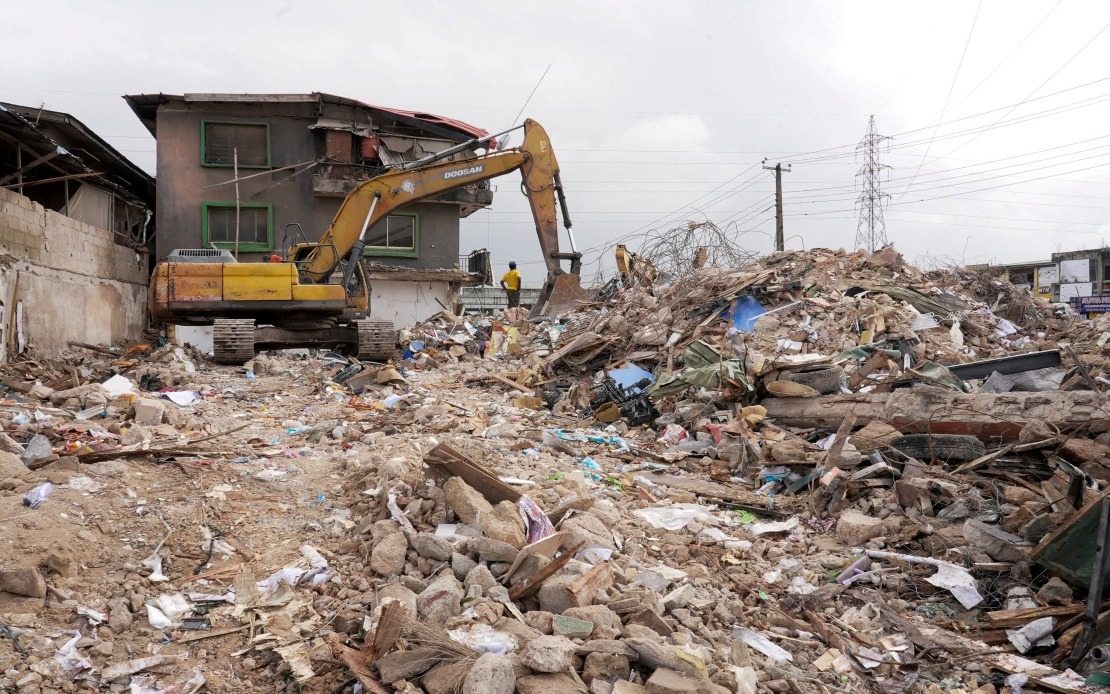
A three-storey shopping complex in Alakija, a satellite town along the busy Lagos-Badagry Expressway in Nigeria's southwestern Lagos state, collapsed on Thursday morning, leaving nine people dead and forcing a major coordinated rescue effort. Authorities confirmed on Friday that rescue operations had concluded after teams successfully extracted 27 survivors from beneath the rubble, with all identified victims either recovered or evacuated from the site.
The disaster unfolded as shop owners and customers had begun their daily commercial activities within the complex. Preliminary reports indicate that most of those trapped were merchants and patrons conducting business at the time of the structural failure, though neighbouring residents also found themselves caught in the collapse. The speed of the collapse meant that many were pinned beneath debris with little warning, creating an urgent rescue scenario that required immediate intervention.
Olufemi Oke-Osanyintolu, permanent secretary of the Lagos State Emergency Management Agency, reported that rescue teams operated continuously from Thursday through early Friday to locate and extract trapped individuals. The multi-agency response involved personnel from various government departments and emergency services, demonstrating the scale and complexity of the operation required to safely remove victims from unstable wreckage. Such coordinated efforts are essential in urban collapse scenarios where structural integrity remains uncertain and the risk of secondary collapses poses a constant threat to rescue workers.
Those extracted from the debris sustained injuries of varying severity, with all transported to medical facilities for treatment and assessment. The hospital system in Lagos, while stretched by the sudden influx of trauma cases, managed the emergency admissions. The diversity of injuries ranging from minor to critical underscores the random nature of structural collapse—some victims escaped relatively unscathed while others endured life-threatening trauma from falling masonry and twisted metal.
In a noteworthy contribution to the rescue effort, the China Civil Engineering Construction Corporation, which operates a railway project in the vicinity, mobilised equipment and personnel to assist in clearing debris and locating survivors. This involvement highlights how major infrastructure projects operating in urban areas can provide critical resources during emergencies, though it also raises questions about whether construction firms should maintain permanent standby capacity for disaster response in densely populated zones.
Authorities have initiated a formal investigation into the cause of the collapse, which remains undetermined at this stage. Determining the root cause will require structural engineers to examine the remaining debris, assess construction records, and interview witnesses. The investigation period typically involves careful documentation of every detail that might explain the sudden failure of what should be a stable commercial structure.
For Malaysia and the broader Southeast Asian region, this incident carries sobering implications. Building collapses in Nigeria occur with distressing regularity, with engineers and safety experts consistently pointing to structural deterioration, non-compliance with building codes, and the use of inferior construction materials as primary culprits. These same risk factors are present across Southeast Asia, where rapid urbanisation, inadequate enforcement of building standards, and cost-cutting measures in construction create vulnerability in the built environment.
Malaysia has experienced its own high-profile building failures, most notably the 1993 collapse of the Merdeka Square car park which killed 48 people. While the country has since implemented stricter building codes and inspection regimes, complacency remains a risk. The Lagos incident serves as a reminder that structural safety requires constant vigilance, proper maintenance of aging buildings, and rigorous enforcement of construction standards regardless of economic pressures.
The frequency of building collapses in Nigeria reflects insufficient regulatory oversight and inadequate penalties for violations of construction standards. Developers operating under tight budgets sometimes opt for substandard materials or cutting corners on foundational work, decisions that can have catastrophic consequences years later. The economic incentives are clear—saving money on materials or labour during construction—but the human cost is equally evident when structures fail unexpectedly.
Southeast Asian countries should use incidents like this Lagos collapse as case studies for strengthening their own building safety frameworks. Regular structural audits of commercial buildings, particularly older structures that predate current building codes, can identify weaknesses before catastrophic failure occurs. Investment in training inspectors and engineers to recognise structural defects represents a comparatively inexpensive prevention measure compared to the costs of disaster response and recovery.
The rescue operation in Alakija, while successful in saving 27 lives, could not prevent the nine deaths that occurred. This outcome, though better than it might have been, underscores that rescue is always a response to tragedy rather than its prevention. True safety comes from getting construction right the first time through proper design, appropriate materials, skilled workmanship, and rigorous inspection rather than relying on emergency services to save people from collapsed buildings.
For commercial property owners and occupants across Southeast Asia, the Lagos collapse highlights the importance of regular building inspections and awareness of structural condition. Tenants and shopkeepers should know the maintenance status of buildings they occupy, and management should prioritise safety over short-term cost savings. The human toll of structural failure extends far beyond immediate casualties to include psychological trauma, lost livelihoods, and community disruption that can persist for years.

