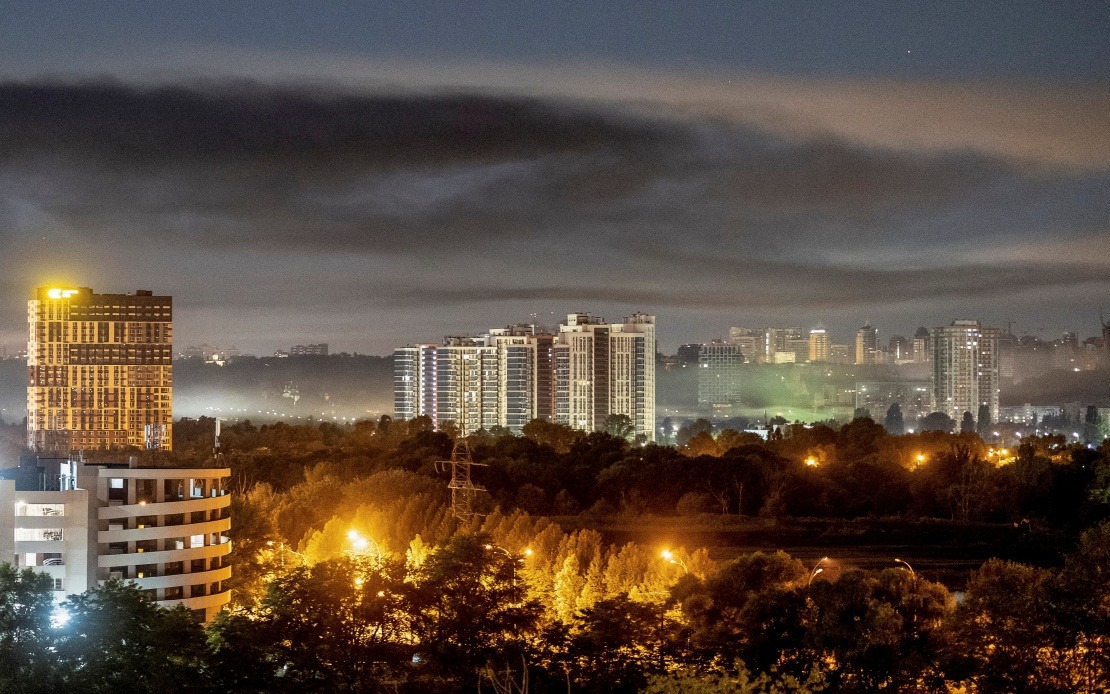
Ukraine's State Emergency Service reported on Saturday, August 1, that at least nine civilians lost their lives and 23 more sustained injuries following a sustained Russian ballistic missile assault on the capital, Kyiv. The coordinated strikes devastated multiple residential and commercial areas, spreading casualties and destruction across five separate districts within the city, underscoring the ongoing intensity of hostilities in the eastern European conflict.
The attack represents another chapter in a protracted campaign of aerial bombardment targeting Ukraine's largest population centre. Moscow has maintained a strategy of striking critical infrastructure and populated areas, particularly in Kyiv, as part of its broader military operations that intensified following the 2022 invasion. Such strikes reflect the persistence of ground-level conflict despite numerous diplomatic overtures and international mediation efforts.
For regional observers, particularly in Southeast Asia, the Kyiv situation illustrates how protracted conflicts in distant theatres can reshape global geopolitics and economic patterns. The ongoing war has disrupted grain exports, elevated energy prices, and created international supply chain disruptions that have cascading effects across Asia-Pacific economies, including Malaysia. Understanding the human toll—measured in casualties like those in Saturday's attack—provides essential context for comprehending the broader consequences of modern warfare.
The targeting of civilian areas raises humanitarian concerns that resonate internationally. The deliberate or indiscriminate nature of such strikes often triggers responses from human rights organisations and United Nations bodies, though accountability mechanisms remain contested and slow-moving. For Malaysian policymakers monitoring global security trends, the Kyiv attacks exemplify challenges in implementing international humanitarian law during contemporary conflicts where conventional distinctions between military and civilian zones blur significantly.
The destruction of infrastructure across five districts complicates the already strained situation of Kyiv's residents. The capital, home to approximately three million people, has endured successive waves of bombardment that have tested urban resilience and civil defence systems. Power generation facilities, water treatment plants, and transportation networks have repeatedly been targeted, forcing authorities to implement emergency protocols and humanitarian relief operations that struggle to meet growing demand.
Ukraine's State Emergency Service, responsible for coordinating disaster response and civil protection, faces mounting operational pressures as attacks continue. The agency's capacity to conduct search-and-rescue operations, provide emergency medical care, and document casualties depends on resources already stretched thin by months of sustained conflict. Each incident like the August 1 strikes compounds logistical challenges and exposes the limits of civilian infrastructure designed for peacetime rather than wartime conditions.
The ballistic missile strikes specifically indicate sophistication in Russia's delivery systems and targeting capabilities. Unlike drone or cruise missile attacks that proceed slowly and invite air defence interception, ballistic missiles travel at hypersonic speeds that provide minimal warning and response time. This capability forces Ukrainian air defence systems into reactive postures, prioritising protection of critical military and civilian infrastructure while necessarily accepting some civilian casualties as an unavoidable cost of sustained conflict.
International observers have documented patterns in Russian targeting that suggest either deliberate strikes on civilian areas or reckless disregard for civilian presence. The August 1 attack's distribution across five districts suggests either multiple simultaneous targets or a wider area bombardment strategy. Such patterns inform ongoing documentation by international criminal courts and Ukrainian investigative bodies that are compiling evidence for potential war crimes prosecutions, a process that extends accountability discussions far beyond the immediate military context.
The casualty figures—nine killed and 23 injured—represent individual human tragedies with multiplier effects throughout families and communities. In demographic terms, losses of this magnitude, repeated across dozens of incidents monthly, accumulate into substantial population displacement and mortality that reshape urban demographics and social structures. For humanitarian organisations operating in Ukraine, each attack necessitates revised assessments of civilian vulnerability and adjusted strategies for protection and assistance.
Regionally, the conflict's persistence influences how Southeast Asian nations approach non-aligned foreign policies and engagement with both Western and Russian spheres. Malaysia and comparable nations navigate expectations to condemn Russian actions while maintaining pragmatic relationships with Moscow across energy, defence, and economic domains. The Kyiv attacks thus carry symbolic weight beyond the immediate humanitarian dimensions, signalling to global audiences the human cost of decisions made in Moscow, Washington, and European capitals.
Looking forward, the pattern of escalating missile attacks on Kyiv suggests neither combatant anticipates near-term resolution through negotiation. Ukraine's determination to defend its territory faces Russian capacity to inflict civilian casualties through aerial bombardment, creating a grinding dynamic where military progress on the ground occurs incrementally while civilian populations absorb consistent harm. For international stakeholders including Malaysia, monitoring such developments informs assessments of global stability, humanitarian challenges, and longer-term implications for international law and security architecture.

