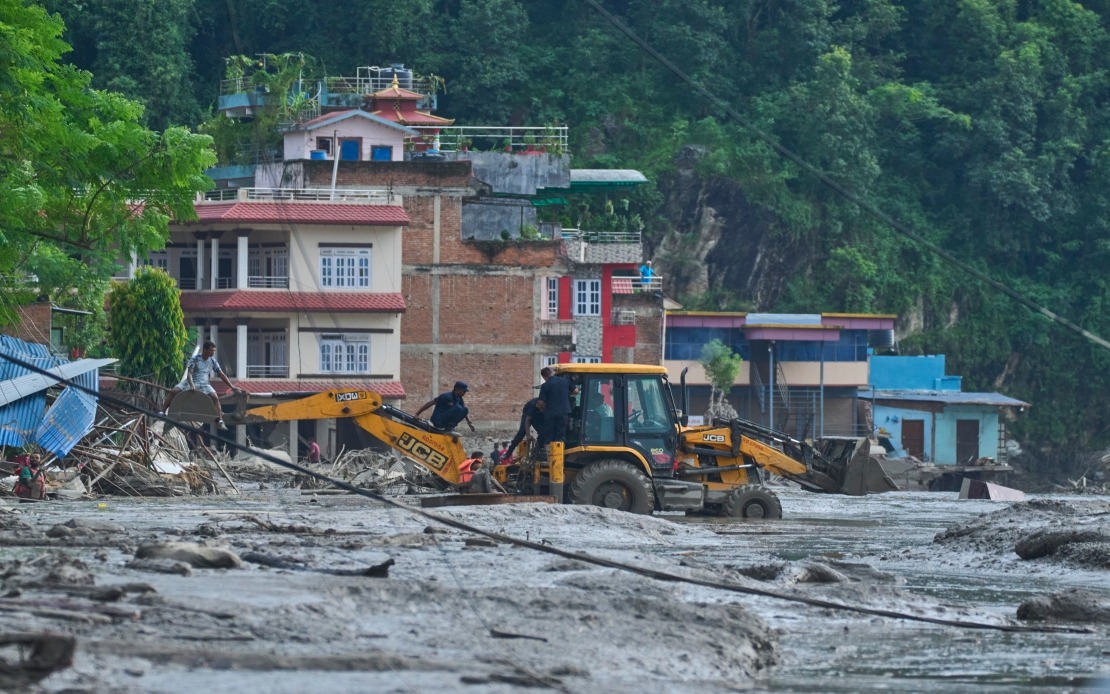
A devastating flash flood in Nepal's remote Rasuwa district has left nine South Korean workers unaccounted for, prompting Seoul's government to launch an immediate emergency response coordinated from the highest levels of state leadership. The catastrophe struck on Wednesday near the Nepal-Tibet border region, where the affected individuals were stationed at a hydropower plant construction site. Among those missing are six employees from Doosan Enerbility Co., a major South Korean plant builder, and three workers representing Korea South-East Power Co., a state-controlled power generation enterprise involved in the infrastructure project.
The scale of the humanitarian crisis extends well beyond the South Korean contingent, with initial reports indicating that the uncontrolled water surge has claimed more than 160 lives across the broader region. Hundreds of additional people remain unaccounted for, with foreign nationals comprising a substantial portion of the missing. The flash flooding represents one of the most severe weather-related disasters to strike Nepal this year, underlining the vulnerability of construction operations in mountainous terrain during monsoon season. Approximately 200 foreign workers had been present at the construction site before evacuation procedures commenced, demonstrating the significant international workforce involvement in Nepal's energy infrastructure development.
South Korea's response has been swift and comprehensive, reflecting the government's determination to locate and assist its citizens. President Lee Jae Myung issued direct instructions for all relevant state agencies to mobilize available resources and coordinate rescue activities with urgency. Foreign Minister Cho Hyun convened an emergency meeting on Wednesday to oversee the governmental response, emphasizing the need for multi-agency coordination across diplomatic, security, and emergency management channels. The foreign ministry confirmed that a specialized joint rapid response team comprising officials from the foreign service, national police, and fire and rescue authorities would depart for Nepal on Thursday, with scheduled arrival in Kathmandu later that same day.
Beyond the nine confirmed missing workers, the situation affecting South Koreans in the region remains fluid. Ten additional Doosan Enerbility employees had been trapped in the flood-affected area but were subsequently located and confirmed to be alive, though still awaiting safe evacuation. Their rescue represents a partial relief amid the broader emergency, yet their ongoing situation underscores the challenging conditions facing rescue operations in the aftermath of such a catastrophic event. The coordinated evacuation of approximately 200 foreign workers from the construction site demonstrates the site management's capacity to mobilize personnel, though the nine individuals who went missing during or immediately after the flood event represent a critical gap in the emergency response chain.
The diplomatic dimension of Seoul's response reflects the formal protocols that govern international crisis management. Foreign Minister Cho Hyun committed to direct engagement with Nepal's foreign ministry to facilitate cooperation at the governmental level, recognizing that successful rescue operations require seamless coordination between national authorities. This commitment to work closely with Nepalese government and local authorities signals Seoul's understanding that external support must operate within frameworks that respect Nepali sovereignty and operational command structures. The emphasis on supporting affected families and ensuring the broader safety of South Korean nationals still within Nepal reflects the holistic approach expected of governments managing international emergencies.
The private sector actors involved in the construction project have not remained passive. Both Doosan Enerbility and Korea South-East Power have established their own emergency response mechanisms and are preparing field teams for deployment to the accident site. These corporate initiatives complement governmental efforts, creating a multi-layered response architecture that combines state resources with private sector capabilities and local knowledge. The coordination between government agencies and these major South Korean companies demonstrates how emergency response in the modern era requires alignment across public and private institutional actors, each bringing distinct resources and expertise to crisis situations.
The geographical context of this disaster carries particular significance for regional observers. The Rasuwa district's location in difficult terrain near the Nepal-Tibet border presents extraordinary challenges for rescue operations. Access routes may be compromised, communication infrastructure disrupted, and weather conditions unstable, all complicating the logistics of locating missing persons and extracting them to safety. Hydropower projects in such remote areas represent important economic infrastructure for Nepal, yet they inherently expose workforces to environmental risks associated with mountainous hydrology during monsoon periods. The incident raises questions about construction safety protocols and weather-related contingency planning at such high-altitude, water-dependent facilities.
For Malaysia and other Southeast Asian nations, this incident carries relevance beyond direct sympathy for South Korean citizens. The event illustrates broader patterns of regional workforce deployment in infrastructure megaprojects, where multinational teams work in challenging environments across the Hindu-Kush Himalayan region. Malaysian companies and workers similarly engage in construction and energy projects throughout Nepal and neighboring countries, often facing comparable environmental hazards and logistical complications. The South Korean government's rapid mobilization provides a case study in crisis management protocols that regional governments might contemplate as frameworks for protecting their own nationals working abroad.
The incident also highlights the human cost of rapid industrialization and infrastructure development across South Asia. While hydropower projects promise economic benefits and energy security for developing nations, the workers who construct these facilities bear substantial personal risk. The disaster serves as a reminder that construction timelines and profit considerations must be balanced against worker safety, particularly in environments where natural hazards are pronounced and emergency response capabilities may be limited. For South Korea, Nepal, and the international community observing the unfolding situation, the priority remains focused on locating the missing individuals and ensuring the safety of those still affected by the flooding.

