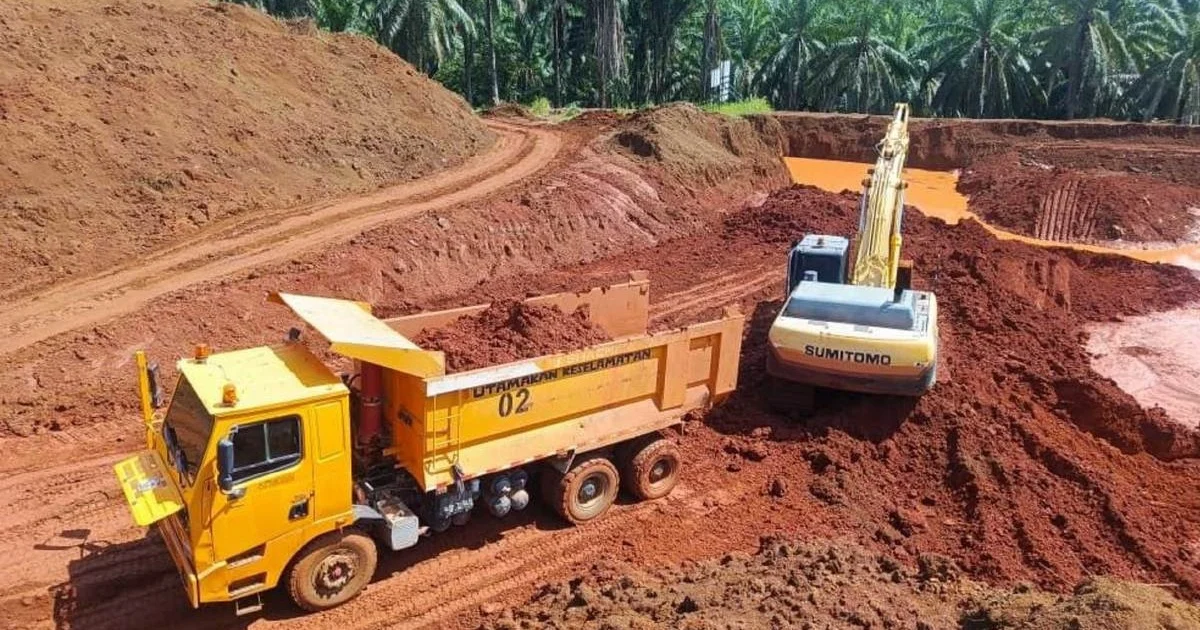
Enforcement agencies in Kuantan have dismantled an illegal bauxite mining operation, culminating in nine arrests and the recovery of assets valued at approximately RM3.75 million. The operation targeted a site within a Felda plantation in the Bukit Goh area, signalling renewed efforts to clamp down on unauthorised extraction activities in Pahang.
The haul recovered during the raid included some 10,000 tonnes of bauxite-bearing soil—the raw mineral material extracted from the earth before processing. Beyond the ore itself, authorities also secured heavy mining equipment and several lorries that had been deployed at the operation, all components essential to sustaining an underground extraction enterprise. The combined estimated value of the confiscated items underscores the commercial scale at which this illegal mining network was functioning.
Bauxite mining has long presented a regulatory challenge across Southeast Asia, particularly in Malaysia where vast deposits exist in Pahang and Johor. The mineral serves as the primary ore from which aluminium is extracted, making it economically valuable but environmentally contentious. Illegal operations circumvent environmental safeguards, tax obligations, and safety protocols that legitimate miners must observe, creating unfair competitive advantages while inflicting ecological damage through uncontrolled excavation and soil degradation.
The selection of the Felda plantation as a mining site demonstrates how such operations exploit land designated for agricultural development. Felda—the Federal Land Development Authority—manages vast tracts across Peninsular Malaysia, and encroachment by illegal miners represents both a security breach and a threat to the livelihoods of smallholder farmers who depend on these lands. The discovery suggests surveillance gaps or corruption within enforcement mechanisms that should prevent such incursions.
Felda lands are theoretically protected under multiple regulatory frameworks, yet illegal mining persists, indicating either insufficient patrol capacity or potential complicity from officials. The presence of heavy machinery and substantial stockpiles of extracted material indicates the operation had been functioning for some duration, raising questions about how such activity escaped earlier detection. Neighbouring communities or farm managers likely witnessed extraction activity, suggesting either poor reporting channels or reluctance to come forward.
The nine individuals detained now face investigation and potential prosecution under relevant federal and state mining regulations. Malaysia's legal framework prohibits unauthorised mining without proper federal and state licenses, with penalties ranging from fines to imprisonment depending on the scale and nature of the violation. Prosecution of the operators represents a deterrent signal to others considering similar ventures, though enforcement consistency remains inconsistent across Malaysia's states.
From an economic perspective, illegal mining operations deprive the federal government and state authorities of royalties and licensing fees that legitimate mining enterprises pay. These revenues fund infrastructure development and environmental remediation programmes. When illegal operators extract bauxite without paying dues, they create fiscal losses while externalising environmental costs onto surrounding communities—a classic example of market failure requiring strict regulatory intervention.
The environmental implications extend beyond immediate site degradation. Bauxite extraction typically requires stripping topsoil and excavating to significant depths, destroying forest cover if present and fragmenting habitats. In Felda areas specifically, soil disturbance can compromise the agricultural productivity of surrounding land through dust contamination and changes to water drainage patterns. Unlike licensed operations required to implement rehabilitation protocols, illegal mines often leave abandoned pits and eroded landscapes.
For Malaysian readers, this case reflects broader concerns about enforcement capacity across sectors. The Ministry of Natural Resources and the Pahang State Department of Mines face competing demands against limited resources, leaving gaps that criminal operators exploit. Neighbouring Singapore and Thailand have achieved stricter control through integrated agency coordination and digital tracking systems—models that Malaysian authorities are gradually adopting but have yet to implement comprehensively nationwide.
The recovery of RM3.75 million in assets demonstrates that substantial criminal enterprises can operate within Malaysian territory with dedicated enforcement action yielding tangible results. However, dismantling a single operation does not address systemic vulnerabilities. Subsequent investigations should determine whether the detained individuals were operators or hired workers, and crucially, identify any corruption or negligence among enforcement personnel that enabled the operation to function.
Looking ahead, success against illegal bauxite mining requires sustained commitment involving coordinated action between federal and state authorities, enhanced intelligence gathering, community reporting mechanisms, and meaningful prosecution of both operators and any complicit officials. The Kuantan operation demonstrates that such networks exist and operate at scale—a sobering reminder that Malaysia's mineral wealth continues attracting illegal extraction despite regulatory frameworks designed to prevent it.

