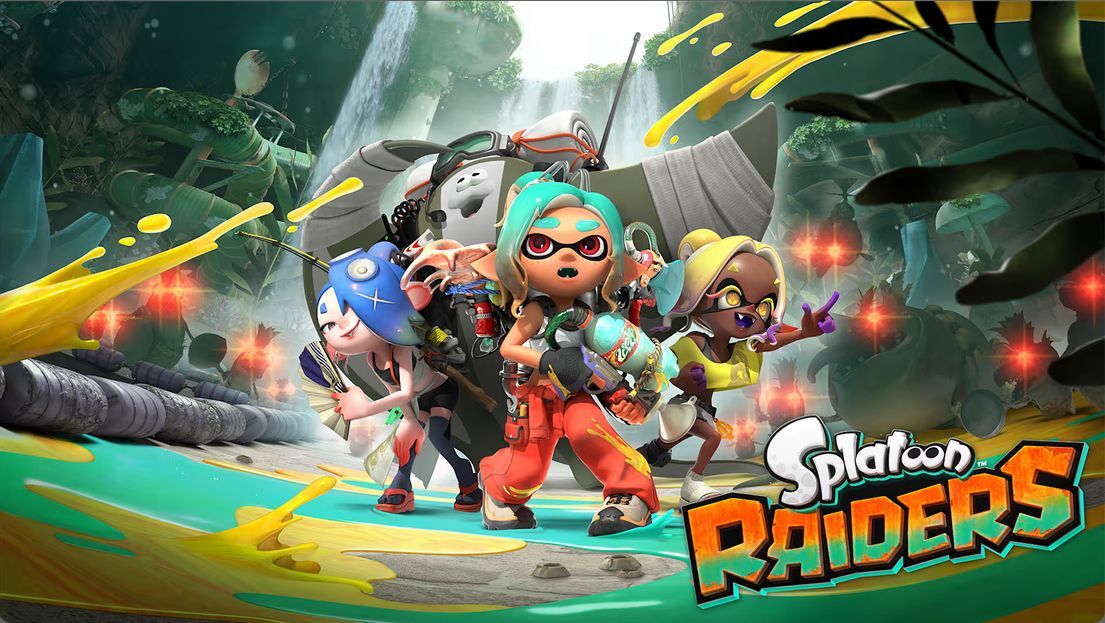
Evaluating most Nintendo productions requires a shift in critical perspective—treating the experience less as a narrative-driven interactive story and more as an expertly crafted play space. The mechanics function smoothly, the core loop satisfies, but certain elements feel fundamentally broken. This particular title embodies that contradiction, excelling at creating joy through straightforward systems while struggling to develop anything more substantial beneath its colourful surface.
The game's design philosophy prioritizes accessibility and immediate gratification, which works splendidly for younger players and those seeking casual entertainment. However, this approach becomes increasingly apparent as one progresses, revealing the limitations of a structure built entirely around childlike wonder. The developers have crafted something undeniably entertaining, yet it remains fundamentally shallow—a hallmark of Nintendo's recent tendency to prioritise approachability over complexity.
Progression opens familiar weapon categories and equipment options for those versed in the franchise's conventions. The variety exists on paper, offering different tactical approaches to problem-solving. Yet the game rarely demands players exploit these distinctions meaningfully. Instead, arsenal diversity feels more cosmetic than functional, allowing players to tackle identical challenges using whichever tools they prefer without significant gameplay ramifications.
Single-player content has consistently proven to be Nintendo's weakness in this franchise, and this iteration does nothing to reverse that troubling pattern. The campaign structure relies heavily on volume rather than nuance, pushing players through escalating waves of enemies rather than introducing intellectually demanding scenarios. This fundamental design choice underpins the entire experience, determining how weapons, abilities, and level design interact.
When the formula functions optimally, it produces genuine spectacle—enemies flood from every direction in anarchic abundance, forcing players to navigate pure controlled chaos. Individual foes move predictably and present minimal tactical threat, but their sheer numbers create pressure that transforms simple mechanics into frantic, engaging moments. The appeal is visceral rather than intellectual, demanding reflexes and spatial awareness rather than strategic forethought.
This encounter design possesses inherent limitations that become impossible to ignore. Most raid sequences occupy expansive, minimalist arenas—stripped-down iterations of the franchise's previous multiplayer spaces—rather than elaborate environmental puzzles. Challenge emerges not from navigating spatial complexity but from surviving overwhelming enemy density. Players spend more time managing raw numbers than solving positional dilemmas or exploiting environmental features creatively.
The protagonist's movement capabilities and special abilities promise intriguing possibilities for sophisticated spatial encounters and verticality-based challenges. Yet the game squanders this potential, constraining these tools primarily to enemy management. Boss encounters that pit your character's remarkable agility against colossal adversaries within elaborate arenas surface only occasionally, offering tantalizing glimpses of what the experience might achieve with greater ambition. Instead, the developers default to numerical excess, treating encounters as stress tests for survival rather than showcases for dynamic movement and precision control.
The supporting cast radiates infectious enthusiasm and personality, bringing welcome liveliness to an otherwise straightforward campaign. Character interactions, however, suffer from single-note personality expression. Every supporting character exists in a perpetual state of excitement, differing only in intensity rather than disposition. This emotional monotony means encounters with these companions become charming initially but grow tiresome through repetition. There is no emotional arc, no character development, no reason to invest in relationships beyond their immediate gameplay function.
Small surprises occasionally interrupt the main objectives—secondary challenges that provide momentary interest before dissolving into irrelevance. Clearing each level removes these minor frustrations, and the game quickly returns to its default state of maximalist bombardment and visual spectacle. The developers compensate for limited strategic depth with relentless abundance: endless collectibles, numerous treasure caches, and constant visual stimulation that prevents extended moments of reflection.
The experience functions perfectly adequately as a well-designed recreational space—competently engineered jungle gyms and monkey bars that entertain without demanding much. This accessibility proves valuable for certain audiences. Yet this same quality renders the package insignificant from a broader artistic or innovative perspective. Nintendo has created something that works as intended, never aspiring beyond providing temporary amusement through established formulas.
What emerges is a paradox: the game is thoroughly competent and undeniably enjoyable, yet feels insubstantial as meaningful interactive entertainment. The polished mechanics, vibrant aesthetic, and sheer volume of content create an impression of depth that largely evaporates upon closer examination. For those seeking accessible fun and uncomplicated satisfaction, it delivers reliably. For those hoping Nintendo might push the franchise toward greater ambition or complexity, this represents a missed opportunity.

