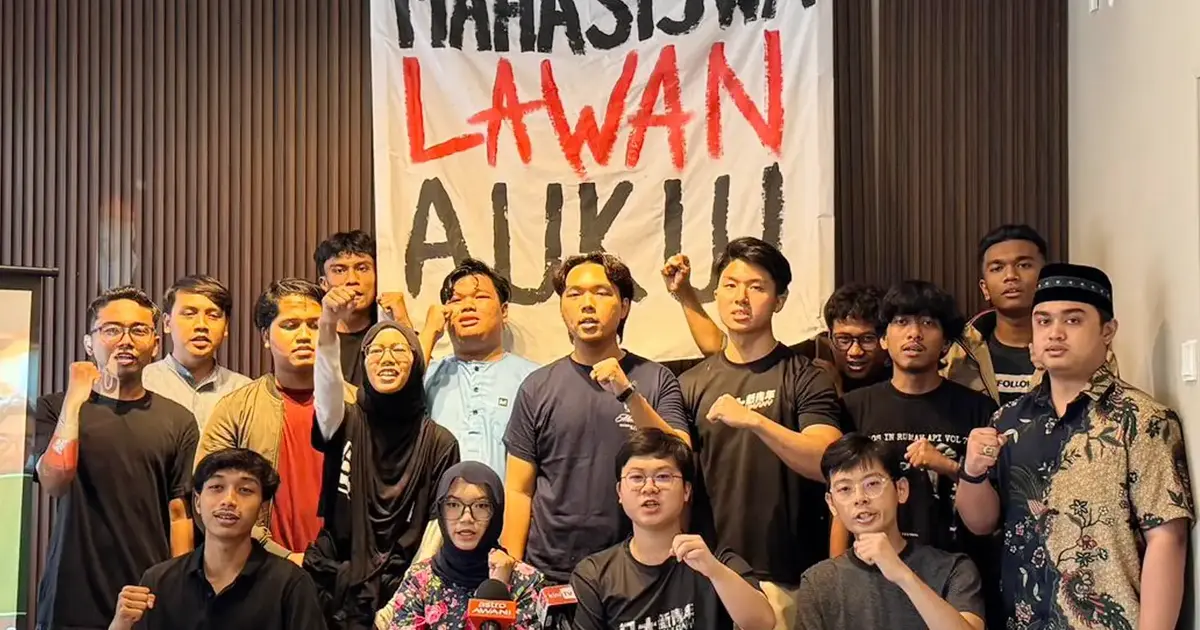
Prime Minister Anwar Ibrahim has made clear that his administration will not pursue legislation designed to constrain student activities, in a significant statement following the government's decision to abolish the University and University College Lecturers Act (AUKU). The declaration addresses growing concern within academic circles and among student advocates that restrictions removed through the repeal might be replaced by alternative legal mechanisms.
The AUKU legislation, long controversial among educators and student organisations for its stringent provisions on campus expression and assembly, was repealed as part of broader democratic reforms undertaken since the 2022 change in government. The act had been criticised internationally and domestically as an impediment to academic freedom and student participation in university governance. Anwar's explicit statement that no successor legislation limiting students will be introduced represents a formal commitment to maintaining the freedoms gained through AUKU's removal.
This position reflects a philosophical shift in how the government views the relationship between tertiary institutions and state oversight. Rather than replacing one restrictive framework with another, the administration appears committed to allowing universities greater autonomy in managing their communities. For Malaysian educators who have spent years advocating against the AUKU constraints, the undertaking signals official recognition that student participation, when properly channelled, contributes positively to institutional and societal development.
The timing of Anwar's statement is strategically important, as it preempts potential moves by conservative voices within government, parliament, or civil society to introduce measures that would effectively reinstate restrictions under different nomenclature. Legal scholars have noted that oppressive legislation often persists through rebranding, making the prime minister's proactive declaration valuable as a policy anchor against such shifts. By explicitly opposing new restrictive laws, Anwar creates political difficulty for anyone seeking to introduce alternative constraints.
For Southeast Asia's higher education landscape, Malaysia's trajectory holds significance. The region has experienced ongoing tension between demands for academic freedom and governmental preferences for social stability. Thailand, Vietnam, and other regional neighbours maintain substantial controls over student activism, making Malaysia's apparent liberalisation noteworthy. If Anwar's government sustains this commitment, it could position Malaysian universities as relatively more open environments, potentially attracting regional students and academics seeking less regulated academic spaces.
The practical implications of this stance extend beyond symbolic value. Students at Malaysian universities will likely gain greater capacity to organise campus political activities, establish clubs reflecting diverse ideological perspectives, and engage in discourse on national issues without fear of legal penalties specifically targeting their status as students. This expansion of space should encourage fuller participation in university life and democratic processes more broadly.
However, Anwar's statement does not imply complete absence of regulation. Universities remain subject to general laws applicable to all citizens—provisions on sedition, security, and public order continue in force. Student activists cannot assume immunity from laws governing everyone; rather, they cannot face legal jeopardy simply by virtue of being students exercising associational or expressive rights. The distinction matters substantially for understanding the practical scope of expanded freedoms.
The abolition of AUKU also reflects evolving thinking within Malaysia's political establishment about higher education's purpose. Universities function most effectively as institutional partners with society when they maintain sufficient independence to pursue knowledge and critique existing arrangements. Excessive state control typically stifles the innovation, rigorous debate, and critical examination that drive intellectual progress. By declining to replace AUKU with successor restrictions, the government implicitly acknowledges that trusting universities with greater autonomy serves national interests.
International observers, including human rights organisations that previously highlighted AUKU as a limitation on Malaysian freedoms, will likely view this commitment favourably. Educational bodies monitoring academic freedom globally have long cited AUKU as an example of problematic legislation; its removal without replacement enhances Malaysia's standing on this dimension of governance. For the government's international reputation and its ability to attract foreign academics and students, this positioning carries measurable advantage.
University administrators now face clearer ground rules for managing campus life without fear that student activities will trigger legislative crackdowns. This institutional certainty should encourage administrators to develop internal policies balancing legitimate interests in maintaining order with respect for student participation and expression. The shift from external legal restrictions to institutional governance frameworks represents maturation in how tertiary education operates within democratic systems.
Among Malaysian student leaders and academic freedom advocates, Anwar's statement will be carefully monitored for consistency through policy implementation. Assurances require validation through actual practice—whether enforcement agencies refrain from targeting student activities, whether campus regulations reflect the spirit of expanded freedom, and whether budget and organisational support flows to student-led initiatives. The coming years will test whether this rhetorical commitment translates into sustained institutional change.
The government's position also reflects demographic and political calculation. Malaysia's student population represents a significant constituency increasingly engaged in political participation, particularly following recent elections demonstrating youth voter influence. By signalling openness to student activism and democratic engagement, Anwar's government positions itself as aligned with younger voters' expectations regarding freedom and participation, a strategic consideration as Malaysia approaches future electoral cycles.

