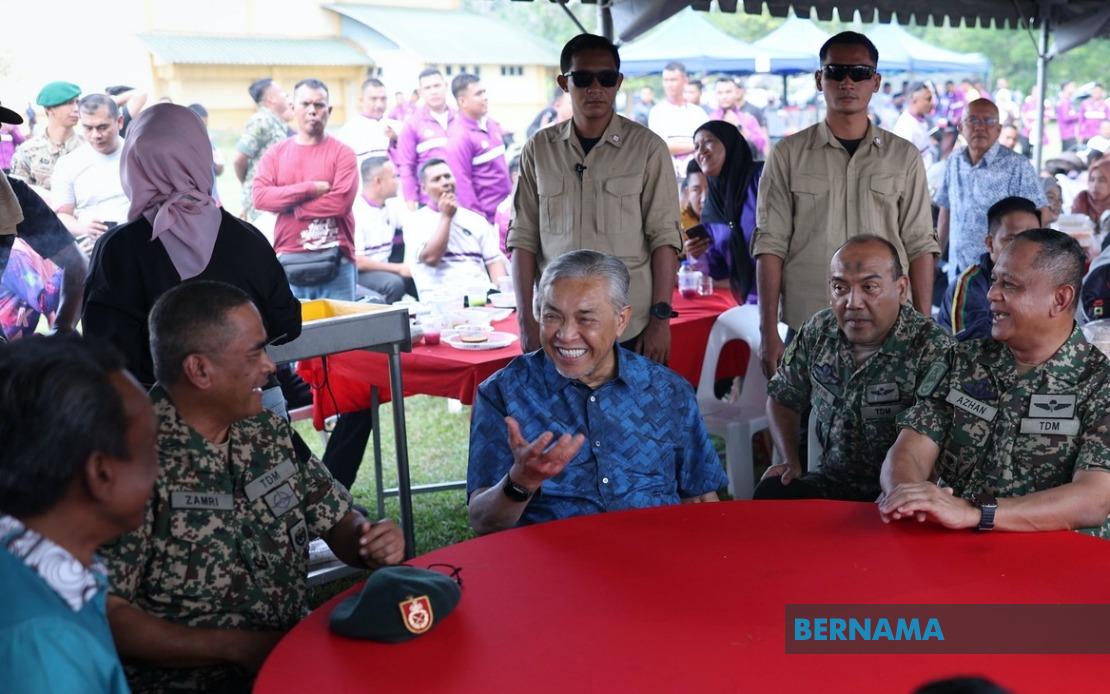
Deputy Prime Minister Datuk Seri Dr Ahmad Zahid Hamidi has made clear that irrespective of rank or position, anyone whose name surfaces in connection with wrongdoing documented by the Royal Commission of Inquiry into Tabung Haji will face appropriate legal proceedings. Speaking at the Malaysian Armed Forces Southern Zone Family Day Carnival in Gemas on Friday, the UMNO president and Barisan Nasional chairman rejected the notion of preferential treatment in the application of the law, signalling the government's intent to proceed with formal disclosure of the controversial report.
The Tabung Haji inquiry has emerged as a pivotal accountability exercise, with expectations mounting for its full release to the public. Ahmad Zahid's reaffirmation of the rule of law principle reflects growing political pressure to demonstrate governmental commitment to transparency, particularly as the report's contents threaten to implicate high-level officials. His remarks underscore a deliberate repositioning by the administration ahead of formal Cabinet consideration of the disclosure, attempting to preempt criticism that the government might shield connected figures from scrutiny.
The Deputy Prime Minister articulated a structured approach to addressing any breaches identified in the commission's investigation. Should the report reveal instances of power abuse, procedural irregularities, breaches of fiduciary duty, or corrupt practices, the government has indicated it will initiate criminal investigations through established channels, including police reports and commercial crime divisions. This methodical framework suggests authorities are preparing for potential prosecutions, though Ahmad Zahid's comments stopped short of identifying any specific individuals or confirming the severity of findings.
Prime Minister Datuk Seri Anwar Ibrahim, who doubles as Finance Minister, has separately expressed optimism that the Cabinet will endorse making the Royal Commission report public. Anwar's confidence signals administrative readiness to release findings that were previously withheld, a decision informed by careful institutional recalibration. The government's earlier hesitation in publishing the report stemmed from concern that disclosure might undermine public confidence in Tabung Haji, the statutory body responsible for managing Islamic pilgrimage savings for Malaysian Muslims—a function of considerable national and religious significance.
The shifting calculus on disclosure reflects tangible improvements in Tabung Haji's operational and financial standing. According to Anwar, the institution has undergone substantial strengthening and attained international recognition, developments that ostensibly reduce the risk of reputational damage from revelations of past mismanagement. This institutional rehabilitation provides political cover for releasing potentially damaging findings, allowing the government to frame transparency as sustainable rather than destabilizing.
The timing of the Tabung Haji report release intersects critically with Negeri Sembilan's state election campaign, scheduled for polling on August 1st. Opposition critics have argued that the government deliberately delayed publication to shield the ruling coalition from electoral liability, a charge Ahmad Zahid has dismissed. The Deputy Prime Minister expressed confidence that Negeri Sembilan voters possess sufficient political maturity to render voting decisions independently of the report's contents, suggesting the government views the inquiry's findings as unlikely to shift electoral behaviour despite potential incriminations of BN-aligned figures.
The royal commission mechanism itself represents a longstanding instrument of Malaysian governance for investigating institutional failures and misconduct. The Tabung Haji inquiry belongs to this tradition, tasked with examining the pilgrimage savings institution's governance lapses and administrative irregularities. The depth and nature of these irregularities remain partially obscured pending official release, though media reporting and civil society commentary have previously hinted at investment losses, management deficiencies, and concerns over accountability frameworks within the organization.
Regional observers have followed the Tabung Haji situation with interest given its implications for Islamic finance governance and institutional accountability across Southeast Asia. Malaysia's handling of the inquiry and subsequent enforcement actions will establish precedent for how governments in the region address high-profile institutional failures affecting vulnerable populations. The pilgrimage savings system serves millions of Malaysian Muslims, rendering questions of governance especially sensitive and politically freighted.
Ahmad Zahid's public commitment to legal accountability carries particular weight given his own history with institutional scrutiny. The Deputy Prime Minister faced extensive legal proceedings related to corruption charges in prior years, affording him direct insight into the political and reputational consequences of high-level accountability investigations. His willingness to pledge adherence to legal process without exception signals either genuine institutional confidence or strategic repositioning to neutralize opposition accusations of selective justice.
The government's anticipated release of the Royal Commission report will likely precipitate sustained political debate over implementation. Even if the Cabinet endorses transparency, disagreement may persist regarding the pace and mechanism of disclosure, whether complete findings or redacted versions are released, and how quickly enforcement authorities respond to implicated parties. Civil society organisations and opposition politicians will scrutinise both the report's substance and the government's subsequent follow-through on accountability commitments articulated by Ahmad Zahid and other senior officials.
Looking forward, the intersection of institutional reform, electoral politics, and accountability mechanisms will define how effectively Malaysia's government can reconcile transparency demands with institutional stability. Ahmad Zahid's public reassurance that no individual transcends legal consequence represents a necessary but insufficient commitment to public confidence. The substance of the Royal Commission findings, the identity of implicated parties, and the demonstrable progression toward actual legal consequences will ultimately determine whether the government's transparency pledge translates into meaningful institutional accountability or settles into rhetorical positioning ahead of electoral contests.

