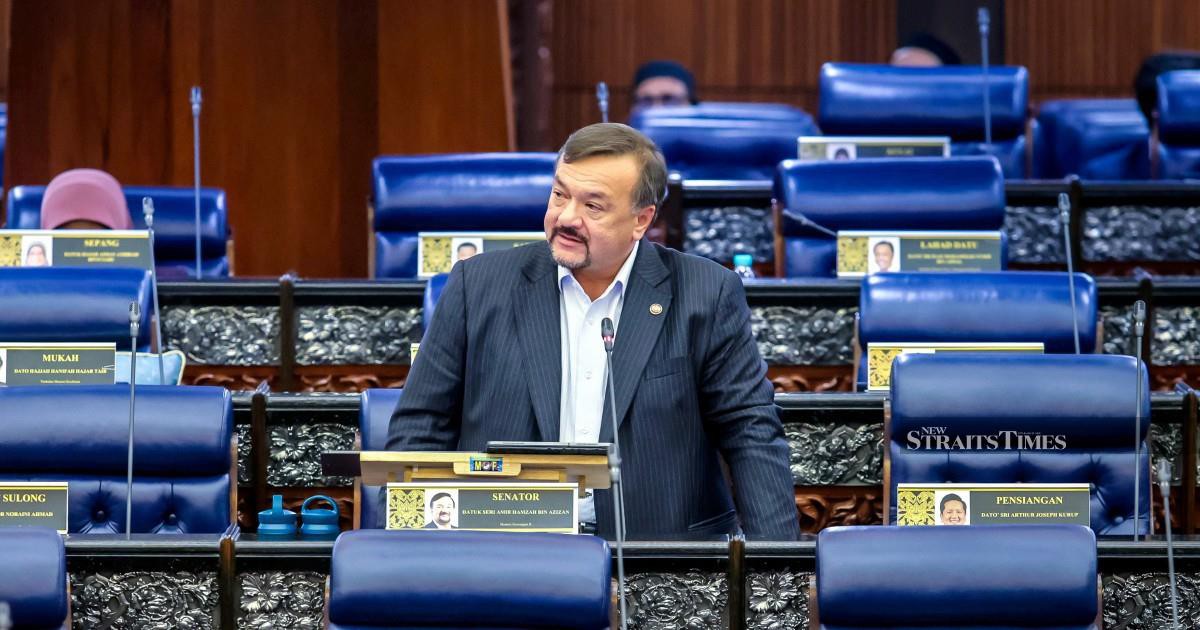
Amir Hamzah has declared that Malaysia's government will extend no protection to anyone implicated in wrongdoing at Tabung Haji as the institution faces intensifying scrutiny over its historical investment and financial stewardship practices. The statement represents a significant undertaking to pursue accountability without regard to the status or position of any parties involved in questionable decisions at the Islamic pilgrimage fund.
Tabung Haji, which manages savings and pilgrimage arrangements for Malaysian Muslims seeking to perform the Hajj, has become the focal point of public concern over its financial health and governance standards. The institution's difficulties in recent years have prompted calls for comprehensive reviews of how the organisation deployed its capital and managed the assets entrusted to it by hundreds of thousands of Malaysian account holders. These concerns span multiple years and involve complex investment strategies that generated substantial losses for the fund.
The pledge of impartial investigation carries particular weight in Malaysia's governance context, where influential figures and senior officials have sometimes been spared from full accountability in previous institutional failures. By explicitly rejecting any protective measures for wrongdoers, the government appears to be signalling that internal pressures or political sensitivities will not obstruct the inquiry. This approach is intended to restore public confidence in the integrity of Malaysian public institutions and demonstrate that accountability applies uniformly across all levels of society.
The investigation into Tabung Haji's operations represents part of a broader effort to strengthen oversight of Malaysia's religious and social institutions. These bodies hold enormous significance not merely as financial entities but as repositories of public trust among Malaysia's Muslim majority. Their proper stewardship directly impacts the financial security and social wellbeing of millions of Malaysians who depend on them for essential services and savings products.
Financial mismanagement at institutions of Tabung Haji's scale carries consequences that extend throughout the broader economy and social fabric. Account holders who have contributed consistently throughout their lives face potential diminishment of resources they anticipated using for performing the Hajj, one of Islam's five pillars. The ripple effects encompass entire families and communities whose financial planning relied on the soundness of the institution's investment decisions.
The transparency of these investigations will be particularly important for Malaysian Muslims who maintain deep emotional and spiritual connections to Hajj performance. Their trust in financial institutions depends partly on demonstrable governance standards and accountability mechanisms. When those standards appear compromised, the resulting loss of confidence extends beyond the specific institution to affect perceptions of regulatory competence across the financial sector.
For Malaysia's broader institutional development, the handling of the Tabung Haji inquiry signals how seriously the government regards corporate governance and financial accountability in sensitive sectors. Southeast Asian financial institutions have faced periodic challenges in maintaining sufficient controls over executive decision-making and investment strategies, particularly when managers possessed broad discretion and limited oversight. How Malaysia responds to institutional failures can influence standards throughout the region and affect international investor confidence in the country's regulatory environment.
The government's unequivocal stance against shielding wrongdoers suggests that investigations will proceed based on evidence rather than the seniority or political connections of those potentially implicated. This approach contrasts with perceptions in some quarters that Malaysian institutions have sometimes prioritised harmony or internal relationships over strict accountability. Such patterns, whether real or perceived, have occasionally undermined public confidence in institutional integrity.
The comprehensiveness of the investigation will prove essential to determining precisely where responsibility lies for historical financial decisions. Tabung Haji's challenges resulted from accumulated investment losses, strategic decisions about asset allocation, and management approaches that did not sufficiently insulate the fund from market volatility or poor returns. Establishing clear accountability requires examining the decision-making processes, information available to decision-makers, and the oversight mechanisms that either succeeded or failed to constrain problematic choices.
As the investigations proceed, Malaysian account holders and broader public observers will be watching for concrete evidence that accountability extends to all responsible parties regardless of rank. The credibility of the government's commitment will ultimately depend on the visible outcomes of these inquiries and any consequences that follow. Strong institutional accountability serves long-term national interests by reinforcing the reliability of public institutions that many Malaysians depend upon for financial security and religious observance.

