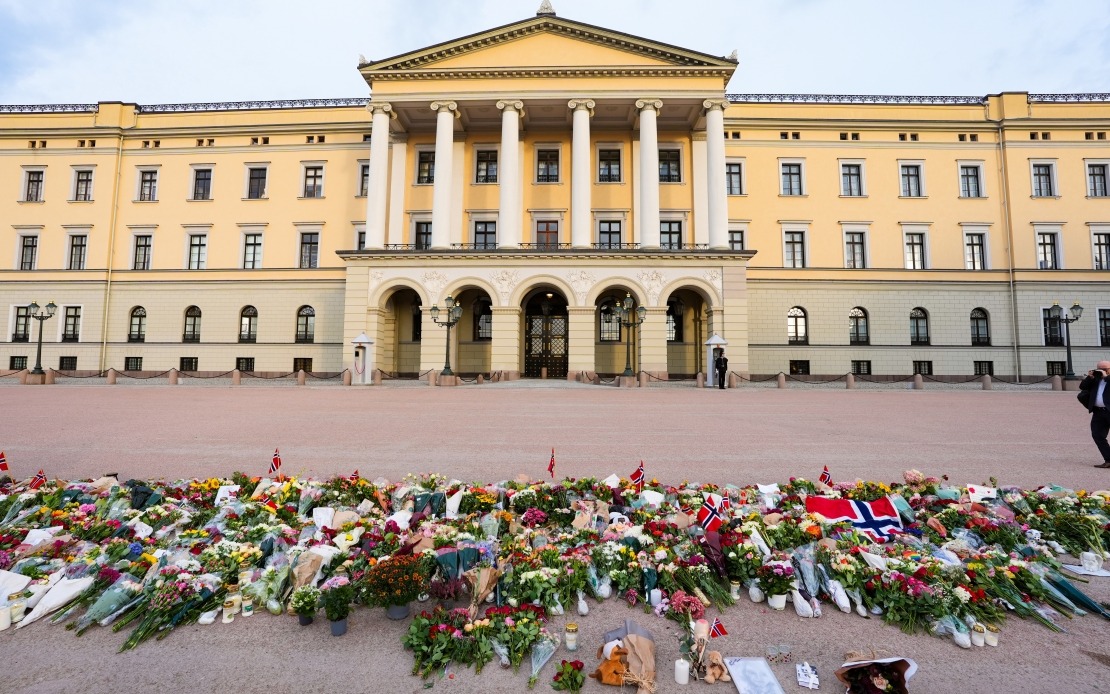
Norway entered a new era of royal governance on Friday with the death of King Harald V, who passed away peacefully at the National Hospital in Oslo at 6.35 am local time. The 89-year-old monarch, who had reigned for over three and a half decades, was Europe's longest-serving current head of state at the time of his death. The Royal Palace's announcement of his passing came shortly after the royal flag was lowered to half-mast above the Oslo residence, a ceremonial gesture marking the end of an extended chapter in Norwegian constitutional history.
The king's final illness was relatively swift in its conclusion, though his medical challenges had accumulated in recent weeks. Harald was admitted to hospital on August 17 for medical evaluation, at which point physicians detected hemolytic anemia, a condition affecting red blood cells that had led to fluid retention in his body. The palace disclosed that he had been undergoing cortisone treatment to manage this blood disorder, a therapy that while necessary, can complicate recovery in elderly patients facing secondary infections. According to Norwegian public broadcaster NRK, his condition deteriorated after he developed a bacterial infection that entered his bloodstream, ultimately overwhelming his system despite ongoing medical care.
Crown Prince Haakon has immediately assumed the Norwegian throne under the country's established constitutional succession framework. Unlike many European monarchies, Norway's transition of power is remarkably straightforward—there are no formal coronation ceremonies, and the new sovereign succeeds immediately upon his predecessor's death. The government is scheduled to convene an extraordinary Council of State at the Royal Palace, where officials will formally receive the new monarch. Following this meeting, Haakon's regnal name will be announced, completing the ceremonial aspects of the succession.
Under the Norwegian Constitution, the new king must subsequently take a formal oath before parliament, a requirement that underscores the constitutional limits of the Norwegian monarchy within its parliamentary democracy. This process, expected to unfold in the coming days, will represent a significant moment for Norwegian democracy and the institution of the crown. The nation has demonstrated its commitment to orderly succession and institutional continuity, with no disruption to governance anticipated during this transition period.
Harald's long tenure began on January 17, 1991, when he ascended to the throne following the death of his father, King Olav V. His 35-year reign coincided with Norway's emergence as one of Europe's most prosperous nations, driven substantially by North Sea oil revenues and sophisticated economic management. During his decades as reigning monarch, Harald witnessed and participated in Norway's integration into continental European affairs, though the kingdom notably remained outside the European Union while maintaining close ties through the European Economic Area agreement. His longevity as a working sovereign provided continuity and stability during periods of significant social and technological transformation across the Nordic region.
The passing of King Harald V represents a generational shift not only for Norway but for European monarchy broadly. At 89, he had become a living embodiment of post-World War II European stability and democratic values. Norwegian monarchs, in common with their Scandinavian counterparts, maintain relatively informal relationships with their populations compared to more formal European courts, and Harald exemplified this approachable style throughout his reign. His public persona—characterized by accessibility and engagement with Norwegian society—helped sustain strong public support for the institution throughout periods when other European crowns faced questioning about their relevance.
Crown Prince Haakon, who now becomes King Haakon, represents a younger generation of European monarchs more attuned to modern governance challenges and public expectations. His succession occurs at a time when Norway faces complex questions regarding energy transition, Arctic geopolitics, and its relationship with neighbouring Nordic states. The new monarch brings his own perspective to these challenges, shaped by his upbringing in a relatively informal royal household and his education that included time abroad.
For Malaysia and Southeast Asian observers, the Norwegian succession demonstrates the operational stability of constitutional monarchies integrated within parliamentary democracies. Norway's system, like Malaysia's own constitutional monarchy, emphasizes the separation between ceremonial headship and executive power. The orderly transfer of authority, with no constitutional disruption, illustrates how such systems can function smoothly across generational transitions. The emphasis on formal oaths before parliament and the explicit constitutional framework governing succession reflect principles of governance increasingly valued across the region.
The death of King Harald concludes a remarkable period in Norwegian history. His reign witnessed the country transform from a relatively modest North Atlantic nation into one of the world's wealthiest per capita, largely through prudent management of hydrocarbon resources. Throughout this transformation, Harald maintained his position as a unifying national symbol, representing continuity and stability. His passing marks the end of an era characterized by exceptional longevity and continuity in leadership, qualities that contributed significantly to Norway's prosperity and social cohesion during decades of global change.

