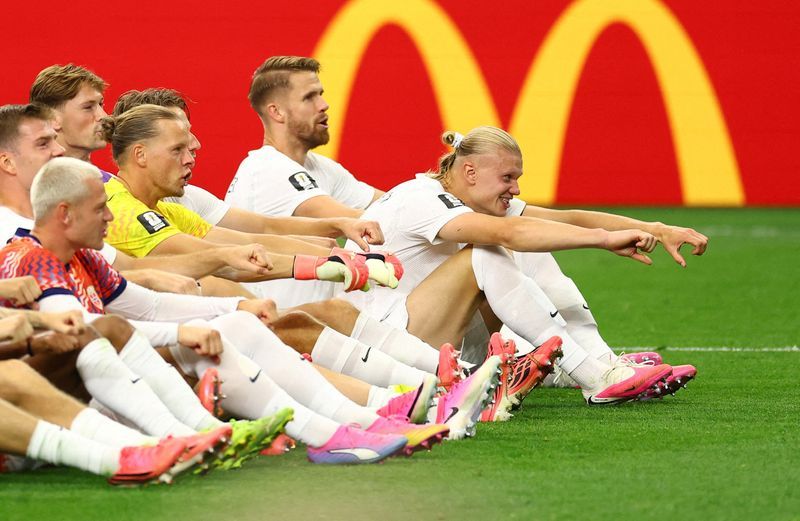
Norway's remarkable return to the World Cup finals after 28 years came to a poignant conclusion in Miami on Saturday, when they fell 2-1 to England in extra time during the quarter-final round. Yet despite the bitter exit, Stale Solbakken's squad has fundamentally reshaped perceptions of Scandinavian football on the global stage, departing the tournament with genuine accomplishment and the conviction that they belong amongst the world's strongest teams.
The Norwegian contingent arrived at this summer's tournament having orchestrated an unconventional pre-tournament ritual—a photoshoot honouring their Viking heritage that would become emblematic of their entire campaign. Rather than theatrical posturing, the gesture captured something genuine about the national character: a willingness to embrace tradition while competing with modernist intensity. That duality proved genuine across their run, as Erling Haaland and colleagues methodically dismantled conventional expectations of what a team returning from such prolonged absence could accomplish.
Progressing from their group stage proved the minimum requirement for a squad boasting Haaland's goal-scoring prowess and the calm orchestration of captain Martin Odegaard. The knockout phases, however, revealed genuine competitive substance. Their 2-1 victory over Ivory Coast in the last 32 showcase Haaland's dual strike, establishing early momentum. Yet the subsequent demolition of Brazil—a 2-1 victory that left observers genuinely contemplating an implausible run toward the championship—demonstrated that Norwegian football has evolved decisively beyond its historical reputation as a direct, physical approach.
The defeat to England exposed the physical toll of their extraordinary journey. Haaland and Odegaard, upon whom the tactical system fundamentally relied, visibly fatigued as the match extended into extra time. Jude Bellingham's two goals ultimately settled the contest, but the manner of Norway's collapse—surrendering a one-goal advantage—suggested exhaustion rather than tactical breakdown. This represents an important lesson for future tournaments: maintaining depth and managing workload becomes critical when competing against Europe's deepest talent pools.
Within Norway itself, the tournament has validated a broader transformation in the nation's football culture. Bodø/Glimt's sustained excellence in European club competitions over recent seasons indicated structural improvements across the domestic game, yet international tournament performance carries different weight. The World Cup appearance, combined with victories over illustrious opponents, demonstrates that Norwegian youth development systems are producing players capable of competing at the highest level rather than merely participating.
The iconic "Viking row" celebration adopted by Norwegian supporters transcended mere sporting ritual, becoming the tournament's most recognizable fan expression. American audiences, in particular, embraced the towering Haaland's enigmatic personality and self-aware humour, transforming Norwegian football into compelling narrative within North American sports consciousness. This cultural penetration extends Norwegian football's commercial reach while genuinely elevating the national team's profile beyond traditional European football markets.
Solbakken's measured post-match reflection—suggesting that "the summer of '26 has been fairly OK"—exemplifies the understated confidence characterizing the managerial and playing cohort. This temperament, neither arrogant nor defeatist, reflects a broader Nordic composure that refuses melodrama whilst maintaining steely determination about competitive objectives. Such psychological resilience may ultimately prove as valuable as tactical acumen when Norwegian football attempts to sustain this momentum through qualifying cycles ahead.
The tournament has fundamentally shifted internal perceptions within Norwegian football. Previously, the national team carried historical baggage—perceived limitations, self-imposed ceilings regarding competitive ambition. Solbakken himself emphasized this psychological breakthrough: multiple squad members now comprehend, viscerally, that they can meaningfully compete against and occasionally overcome the sport's traditional superpowers. This confidence shift possesses enormous implications for recruitment, player development, and tactical ambition in subsequent competitions.
From a Southeast Asian perspective, Norway's tournament arc offers valuable lessons regarding the relationship between geographical isolation, domestic league quality, and international competitiveness. The Scandinavian model—emphasizing youth development infrastructure, maintaining competitive domestic competition, and resisting the temptation toward permanent reliance on foreign expertise—contrasts notably with some regional approaches. Norwegian football's success suggests that sustained investment in systematic player development yields measurable international returns across multiple generation cycles.
The broader Scandinavian football renaissance remains incomplete, yet Norway's performance provides compelling evidence that the region is producing genuinely competitive international sides rather than occasional surprise participants. With Haaland approaching his peak earning years, Odegaard maturing as a footballer, and Solbakken establishing the cultural foundation for sustained excellence, Norwegian football stands positioned to challenge consistently in future international competitions. The quarter-final exit carries disappointment, yet the tournament fundamentally repositioned Norway within global football hierarchies—not as returning participants grateful for inclusion, but as legitimate competitors capable of matching anyone across ninety minutes.
As Norwegian football digests this experience, the focus naturally shifts toward consolidating these gains rather than immediately pursuing championship silverware. The squad has demonstrated compatibility and tactical coherence; the infrastructure supporting elite player development has proven functional; domestic league products can translate successfully to world-class competition. Whether this represents a temporary peak or the foundation for sustained excellence will depend upon how effectively Norwegian football channels these experiences into long-term strategic planning.

