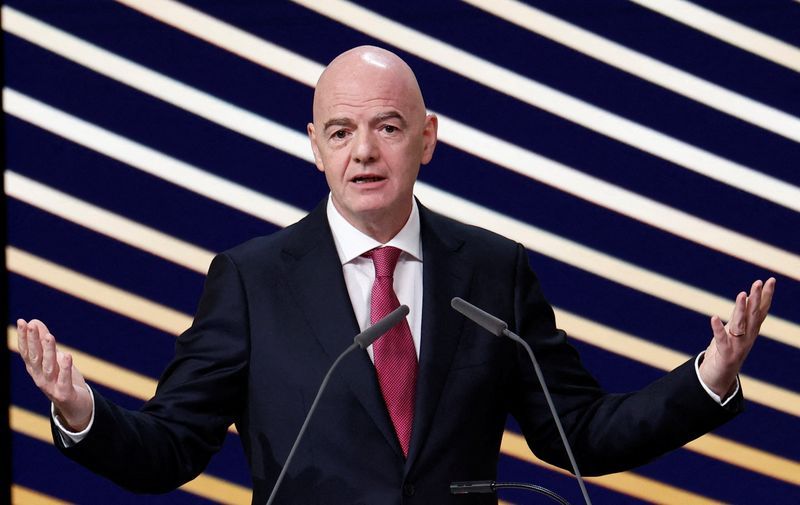
The Oceania Football Confederation has given its blessing to FIFA's decision to shelve a contentious private investment proposal, positioning itself as a supporter of the embattled administration of President Gianni Infantino. However, this apparent unity masks a widening fracture within international football, with New Zealand—the region's sole representative at this year's World Cup—publicly withdrawing endorsement for Infantino's anticipated reelection campaign at the FIFA Congress next year. The divergence illustrates the deepening fault lines in global football governance as major confederations scrutinise the FIFA leadership's conduct.
Infantino finds himself under intense pressure heading into next year's FIFA Congress elections. Three of football's largest continental bodies—the Union of European Football Associations (UEFA), the Asian Football Confederation (AFC), and the Confederation of North, Central American and Caribbean Association Football (CONCACAF)—have collectively called for a comprehensive examination of his tenure and openly criticised his stewardship of the abandoned private investment initiative. This coordinated pushback from multiple regional powerhouses represents a significant challenge to his authority and raises fundamental questions about FIFA's strategic direction and internal governance.
The failed scheme in question, formally known as the FIFA Forward Enterprise (FFE), represented an ambitious if controversial attempt to inject private capital into world football's governing body and major tournaments. The proposal carried substantial financial incentives for participating member associations, with initial packages valued at $20 million available to the global membership. The scheme had been constructed with escalating rewards, promising to double these amounts to $40 million for those associations willing to formally endorse and sign onto the arrangement. This tiered financial structure appeared designed to create both carrot-and-stick incentives for buy-in across FIFA's sprawling membership base.
The Oceania Football Confederation, which comprises just eleven full members and operates as the smallest of FIFA's six continental confederations, has determined that the region has meaningfully benefited from FIFA's institutional support and strategic direction over the past decade. This assessment, articulated through the OFC Executive Committee's formal statement following a meeting on Wednesday, suggests that Oceania sees tangible value in remaining closely aligned with FIFA's existing leadership structures. The confederation's measured response emphasises progress in football development and frames the withdrawal of the FFE proposal as an opportunity rather than a failure—an exercise in institutional reflection and refinement.
New Zealand's position stands in sharp contrast to this regional solidarity. Despite being isolated geographically and competitive within Oceania, the New Zealand Football Association has determined that withdrawing its support for Infantino represents a necessary stance. The organisation's leadership has explicitly linked its decision to broader concerns about institutional trust and cohesion within international football. In a statement articulating this shift, New Zealand Football noted that governance decisions and actions undertaken within FIFA have generated what they characterise as a breakdown in trust and heightened division among member associations worldwide. This framing suggests that New Zealand views the private investment debacle not merely as a policy miscalculation but as symptomatic of deeper governance problems.
New Zealand Football has further indicated its intention to advocate for an independent examination of how the FIFA Forward Enterprise scheme was conceptualised, developed, and ultimately abandoned. This call for external scrutiny—separate from FIFA's own internal review mechanisms—signals particular scepticism about the governing body's capacity for genuine self-examination. The emphasis on independence underscores New Zealand's view that FIFA's credibility has been sufficiently damaged that member associations can no longer rely solely on internal accountability structures. Such an approach mirrors the concerns being raised by UEFA, AFC, and CONCACAF, each of which has likewise questioned whether Infantino retains sufficient confidence from the wider football community to continue leading the organisation.
FIFA convened an emergency session in Morocco last week to address the escalating crisis triggered by confederation rebellions and the public airing of governance disputes. During this gathering, the organisation issued an apology to its entire 211-member association base, acknowledging that mistakes had been made in how the FFE proposal was initially conceived, presented, and managed. Despite this contrition, FIFA's leadership simultaneously signalled complete confidence in Infantino, suggesting that internal power structures remain supportive of his continued tenure even as external criticism mounts. This combination of institutional apology with reaffirmation of presidential backing creates an awkward political dynamic that may struggle to reassure critics.
The geographical and economic dimensions of this leadership contest deserve particular attention for Malaysian observers. Southeast Asian football associations must navigate their own institutional interests within broader FIFA structures. Malaysia and its regional neighbours operate within the AFC framework, one of the confederations that has formally called for a review of Infantino's leadership. The tensions playing out at the global level inevitably create ripple effects through regional governance, influencing how confederations allocate resources, enforce regulations, and structure development programmes. The private investment scheme's failure also raises questions about how FIFA intends to fund football development in less wealthy regions going forward, particularly given the withdrawal of the enhanced grant structure that had been promised.
The withdrawal of the FFE proposal removes an estimated additional $20 million in funding opportunities that member associations had been anticipating. For smaller confederations and developing football programmes, this represents a meaningful financial reversal. The OFC's measured support for FIFA's review process may partly reflect recognition that even a flawed private investment scheme offered resources that pure central government funding cannot easily replace. This financial dimension adds urgency to understanding what alternative funding mechanisms FIFA may propose, and whether the institutional reforms demanded by UEFA, AFC, and CONCACAF might ultimately improve the allocation and transparency of such resources.
Infantino's reelection next year now appears significantly more contested than his previous campaign. The combination of public criticism from multiple continental confederations, the high-profile withdrawal of support from New Zealand despite its relative smallness, and global media attention to governance failures has weakened his political position substantially. The convergence of European, Asian, and North American confederations—representing vast majorities of FIFA's membership—suggests that his path to reelection may require significant political manoeuvring and potentially substantive concessions regarding governance reforms. Whether he can successfully navigate these pressures while maintaining the support of smaller confederations like Oceania remains perhaps the defining question in global football governance heading into next year's Congress.

