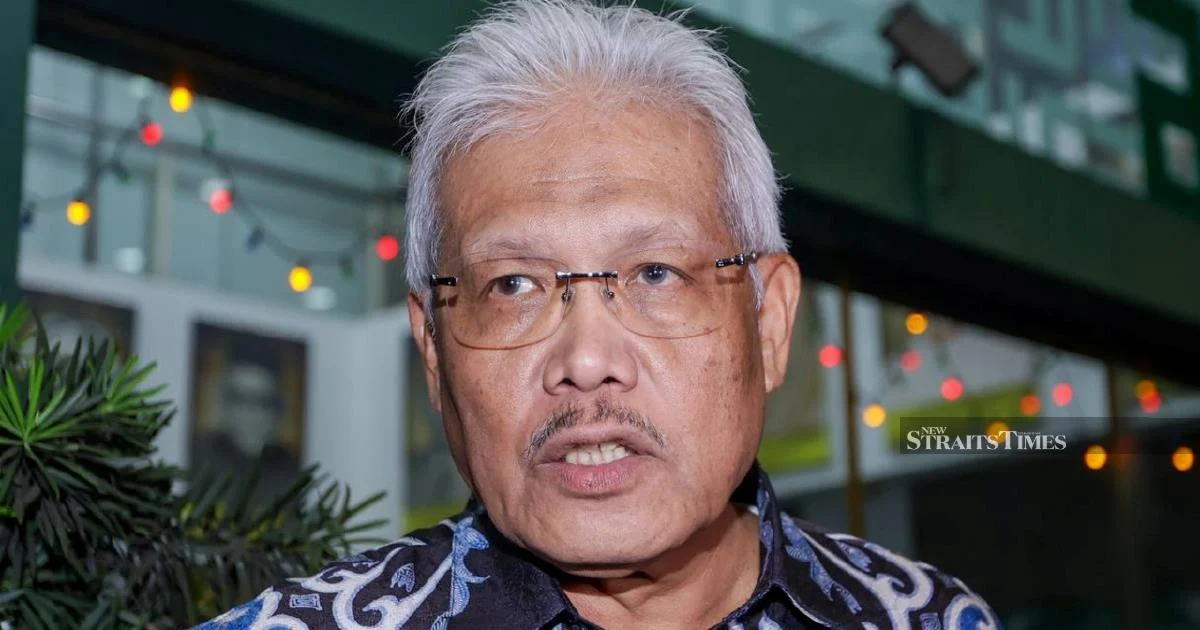
The Dewan Rakyat Speaker will receive formal notification of Datuk Seri Hamzah Zainudin's appointment as the official opposition leader before parliament returns to session, according to an announcement made in Kota Baru. This procedural step represents the final administrative confirmation of a leadership transition within Malaysia's parliamentary opposition structure, formalising what has become a significant institutional change in the country's legislature.
The timing of this notification underscores the procedural rigour of Malaysia's parliamentary system, wherein major leadership transitions must be formally documented and communicated to the legislative authority. While the political reality of Hamzah's position may already be understood across the halls of Parliament, the formal submission of this document constitutes the official recognition required by parliamentary standing orders and constitutional conventions.
For Malaysian observers of political developments, this announcement carries particular significance given the shifts that have characterised opposition politics in recent years. The designation of opposition leader carries statutory recognition in the Malaysian system, entitling the holder to certain parliamentary privileges, increased speaking time, and the right to table motions and conduct formal inquiries on behalf of the opposition coalition. These powers make the role substantively different from simply being the most senior opposition politician.
Hamzah's elevation to this formal position reflects broader repositioning within opposition ranks following electoral outcomes and coalition adjustments. The timeline for submitting this notification before the next parliamentary sitting suggests that the relevant parties have already concluded internal deliberations and achieved consensus on the leadership arrangement. Such clarity is essential for the smooth functioning of parliamentary business, as the Speaker needs confirmed information about opposition representation to organise legislative procedures properly.
The mechanics of this notification process reveal how Malaysia's Westminster-influenced system maintains institutional order despite significant political change. Rather than leaving leadership questions ambiguous or subject to dispute, the formal notification requirement creates an authoritative record that enables the Speaker and parliamentary officials to recognise and work with clearly identified opposition leadership structures. This procedural formality protects the integrity of parliamentary operations.
For Southeast Asian democracy watchers, Malaysia's approach to institutionalising opposition leadership contrasts with systems where such recognition might be more ad hoc or subject to contestation. The requirement to formally notify the Speaker reflects an institutional commitment to acknowledging legitimate opposition roles within the legislature, even as broader political competitions intensify. This separation between the formal institutional position and the underlying political contest helps Parliament function as a deliberative body rather than purely as an arena for partisan combat.
The opposition leader designation also carries implications for how parliamentary business will be conducted in coming sessions. Opposition-tabled motions, ministerial questioning procedures, and the allocation of debates will all reference the formally recognised opposition leadership. Having this matter resolved and documented before the next sitting prevents procedural confusion and ensures that opposition members can immediately engage in their legislative functions with full recognised authority.
Within the Malaysian context, where coalition politics and shifting alliance patterns have become increasingly prominent, the formalisation of opposition leadership provides a stabilising institutional anchor. Even as political partnerships recalibrate, the clear identification of who holds the opposition leader position helps maintain predictable parliamentary operations. This becomes especially important when Malaysia's multi-ethnic composition and diverse political geography mean that opposition coalitions must maintain internal coherence to function effectively.
The submission of this notification before the next parliamentary sitting also reflects practical scheduling considerations. Parliament operates on a calendar-based schedule with recesses for state assembly sessions and other legislative business. By ensuring the notification is in place before reconvening, the institution avoids starting a new session with outstanding definitional questions about representation. The Speaker and other parliamentary officials can then proceed with planning debate schedules, allocating parliamentary resources, and making procedural decisions with confirmed information about who represents the opposition.
Looking ahead, this formal confirmation of Hamzah's opposition leadership provides a degree of certainty that Malaysia's political system requires to function effectively. While opposition politics remains inherently competitive and evolving, the institutional architecture surrounding the opposition leader role ensures that whoever holds this position operates within clearly defined frameworks. This balance between accommodating political change and maintaining institutional stability represents a key feature of Malaysia's parliament, which must navigate between Westminster traditions and the country's distinct constitutional and political context.


%22%2F%3E%3C%2Fpattern%3E%3C%2Fdefs%3E%3Crect%20width%3D%22100%25%22%20height%3D%22100%25%22%20fill%3D%22url(%23phhvi2g)%22%2F%3E%3Crect%20width%3D%22100%25%22%20height%3D%22100%25%22%20fill%3D%22url(%23phhvi2p)%22%2F%3E%3Ctext%20x%3D%2250%25%22%20y%3D%2250%25%22%20text-anchor%3D%22middle%22%20dominant-baseline%3D%22central%22%20fill%3D%22rgba(255%2C255%2C255%2C0.95)%22%20font-family%3D%22Georgia%2C%20'Times%20New%20Roman'%2C%20serif%22%20font-weight%3D%22700%22%20font-size%3D%22136%22%20letter-spacing%3D%22-0.02em%22%3EPAS-Bersa%E2%80%A6%3C%2Ftext%3E%3C%2Fsvg%3E)