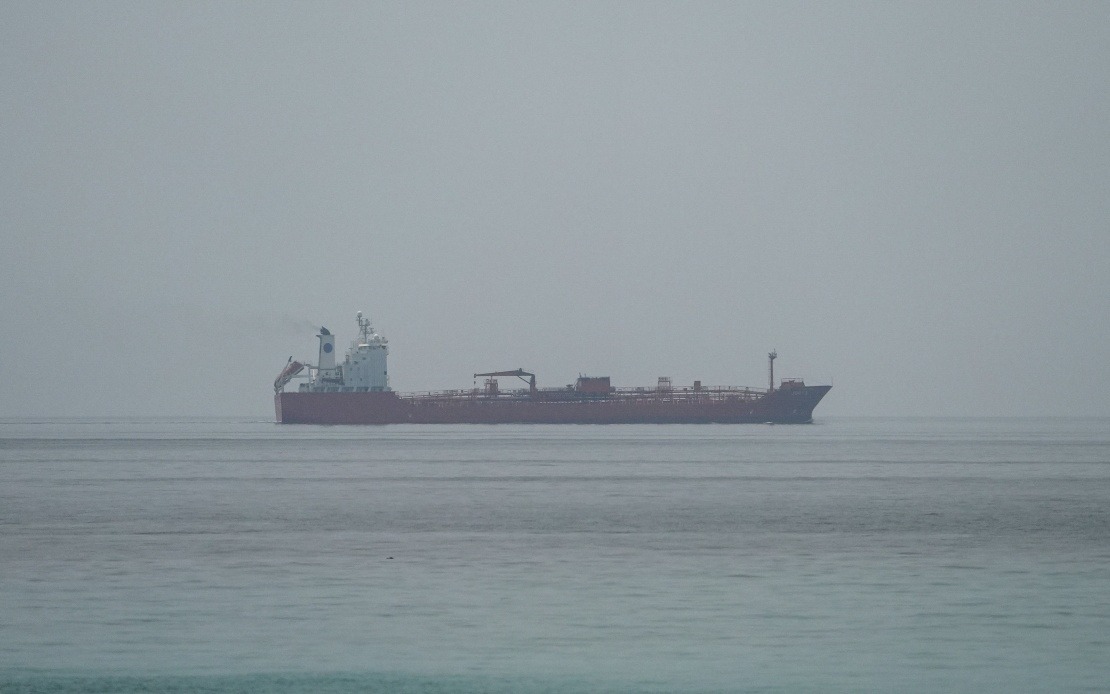
Oman has thrown its weight behind the recently concluded memorandum of understanding between Iran and the United States, declaring that future navigation arrangements through the Strait of Hormuz will remain free from any transit levies. The endorsement came during a joint ministerial gathering between the Gulf Cooperation Council and Washington held in Bahrain on Thursday, underscoring the strategic importance of the accord for regional stability and international commerce.
Foreign Minister Badr Albusaidi articulated Oman's position at the GCC-US consultative forum, emphasizing that as a nation with direct coastline access to the Strait of Hormuz, his country bears distinctive responsibilities toward maintaining secure maritime passage. He grounded this commitment in established international legal frameworks, particularly the UN Convention on the Law of the Sea, suggesting that any future arrangements governing the strait must align with accepted global maritime principles rather than impose unilateral restrictions or financial barriers.
The explicit guarantee against transit fees addresses longstanding regional anxieties about potential disruptions to one of the world's most critical energy and shipping corridors. Approximately one-third of globally traded seaborne crude oil transits through the Strait of Hormuz annually, making its security vital not only to Gulf economies but to global energy markets and supply chains extending into Asia-Pacific regions including Malaysia. Oman's assurance therefore carries implications well beyond the immediate parties to the agreement.
The Iran-US understanding, formally designated a 14-point memorandum, entered into force on June 18 following electronic signatures from Iranian President Masoud Pezeshkian and US President Donald Trump. Pakistan facilitated the negotiations that produced this framework, which encompasses multiple dimensions of regional conflict resolution. The agreement's scope extends beyond strait security to encompass cessation of hostilities affecting Lebanon, the restoration of the Hormuz waterway to unrestricted commercial use, and the lifting of the American naval blockade that had constrained Iranian maritime activities.
This diplomatic breakthrough emerges from a period of acute regional turbulence that had raised international concerns about potential wider escalation. In late February, coordinated US and Israeli military operations targeted Iranian positions, prompting Tehran to launch retaliatory strikes against Israel and against regional installations hosting American military personnel. These tit-for-tat escalations threatened to destabilize the Gulf region further and risked broader disruptions to global commerce and energy supplies.
The GCC and United States maintain established institutional frameworks for regular dialogue on matters spanning regional security architecture, political coordination, and economic partnership. These consultations have grown more intensive as developments in West Asia have evolved, reflecting the interconnected nature of Gulf security with broader international interests. Oman's participation and explicit commitment at this particular meeting signals unified Gulf positioning behind the Iran-US accord, potentially strengthening its durability and implementation prospects.
Oman's strategic positioning and diplomatic role warrant particular attention. The sultanate has historically maintained balanced relations with both Iran and the broader Gulf alliance, positioning itself as a potential mediator and voice for pragmatism in regional disputes. This moderating influence, demonstrated through Muscat's willingness to host preliminary negotiations and facilitate behind-the-scenes discussions, has become increasingly valuable in an environment prone to miscalculation and escalation cycles. Oman's formal endorsement of the memorandum carries weight precisely because it comes from a nation perceived as relatively neutral and committed to de-escalation.
For Malaysian policymakers and maritime stakeholders, Oman's assurance regarding free Hormuz transit offers reassurance about the security of vital shipping lanes and energy supplies. Malaysia's economy depends significantly on stable energy imports and uninterrupted shipping access through international waterways. Any sustained disruption to Hormuz navigation would reverberate through Southeast Asian supply chains, manufacturing competitiveness, and energy security. The accord thus represents not merely a regional Middle Eastern development but a matter touching Malaysian economic interests directly.
The memorandum's provision for lifting the US naval blockade on Iran also carries broader implications for international commerce. The blockade had constrained Iranian shipping capacity and disrupted certain supply chains dependent on Iranian goods and services. Its removal theoretically expands available shipping capacity and restores commercial pathways that had been restricted, potentially benefiting regional traders and logistics operators throughout Asia.
Oman's emphasis on grounding future Hormuz arrangements in international maritime law rather than unilateral action reflects broader efforts to enshrine the accord in established legal frameworks. This approach lends legitimacy to the understanding and suggests the parties intend to create durable, rules-based mechanisms rather than provisional agreements susceptible to rapid reversal. Such institutionalization could provide the stability necessary for long-term confidence in the arrangement's sustainability.
The agreement nevertheless remains subject to implementation challenges and potential pressures from parties opposed to normalization. Regional actors with interests in perpetuating tensions, as well as broader geopolitical actors concerned about shifting power dynamics, may attempt to undermine compliance. Oman's explicit reaffirmation of commitment to free transit thus serves both as a practical guarantee and as a signal of resolve from a key stakeholder to ensure the accord's success.
Looking forward, the extent to which the Iran-US understanding translates into sustained peaceful competition and reduced military tensions will depend partly on whether all parties maintain commitments articulated in forums such as the GCC-US ministerial meeting. Oman's vocal support positions the sultanate as a guardian of the agreement's maritime security provisions and as an interested party in ensuring the Strait of Hormuz remains a neutral, unrestricted waterway serving global commerce.

