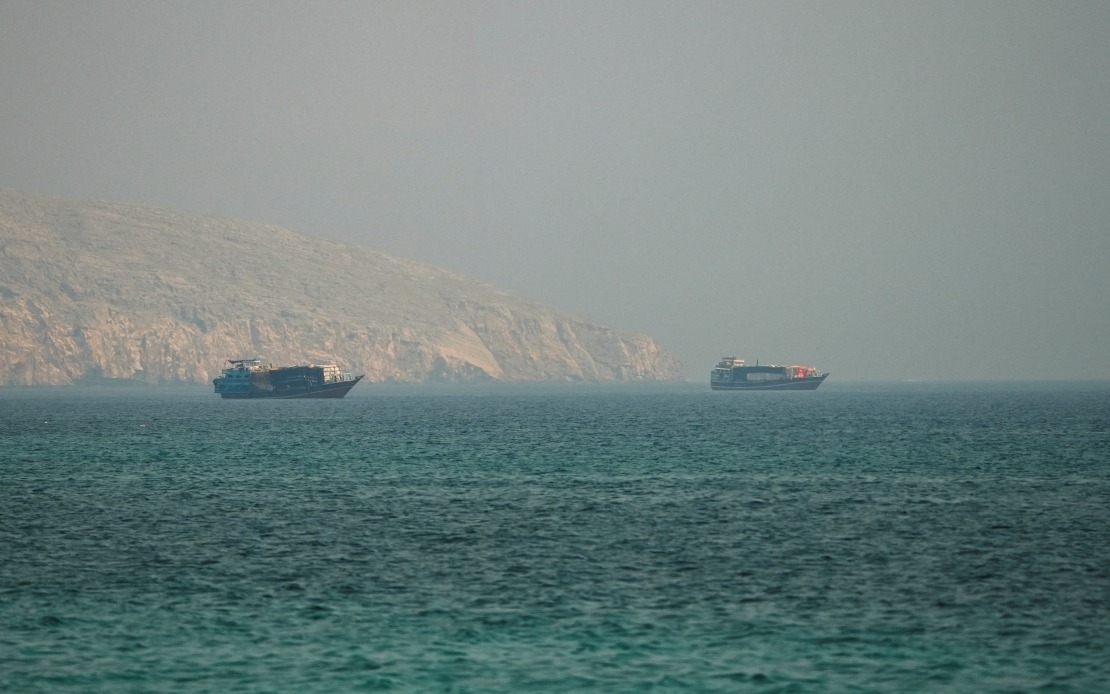
Oman has made clear its opposition to compulsory transit fees imposed on shipping through the Strait of Hormuz, instead championing a voluntary contribution system for navigational and maritime support services. The position was articulated by an Omani delegate during the International Maritime Organisation Council's 137th session held in London this week, signalling the sultanate's pragmatic approach to a contentious issue that has tested international maritime norms and regional stability.
The Omani stance represents a middle ground in a contentious debate. Rather than endorsing Iran's reported practice of extracting mandatory tolls from transiting vessels—a practice condemned by the United Arab Emirates and several other nations during the same IMO gathering—Oman is proposing a framework grounded in voluntary cooperation. This approach sidesteps the legal and sovereignty complications inherent in compulsory maritime taxation while creating revenue opportunities for entities managing the waterway.
Crucially, Oman's position remains anchored in established international maritime law. The country's representative emphasised the principle of transit passage, a foundational concept enshrined in the UN Convention on the Law of the Sea that guarantees vessels the right to traverse straits used for international navigation without undue interference. This principled stance matters because it places Oman on solid legal ground even as it navigates diplomatic sensitivities between Iran and Western nations.
The Omani proposal draws inspiration from existing models in Asian waters, particularly the Strait of Malacca and Singapore. These straits, through which vast quantities of global trade pass annually, operate systems where shipping companies voluntarily contribute to maintenance and safety initiatives rather than facing compulsory levies. The success of such arrangements in Southeast Asia demonstrates that legitimate revenue generation need not rely on coercive mechanisms. Malaysian and Singaporean readers will recognise the practical value of such voluntary frameworks in maintaining shipping routes while respecting international law.
Oman's willingness to explore voluntary arrangements carries significant implications for regional maritime governance. The Strait of Hormuz remains one of the world's most strategically critical waterways, with roughly one-third of global seaborne oil passing through its narrow channels. Any framework governing transit must balance the legitimate interests of coastal states with the imperative of maintaining open, predictable sea lanes upon which global commerce depends. Oman's proposal acknowledges both concerns without sacrificing either.
The timing of Oman's intervention during the IMO Council session underscores the serious international attention this issue commands. Several nations, including the UAE, have formally objected to Iran's reported imposition of transit tolls, viewing such practices as violations of international maritime law. By presenting an alternative framework grounded in voluntary participation, Oman simultaneously distances itself from Iran's approach while offering a constructive path forward that might alleviate some underlying concerns driving Tehran's actions.
Oman's diplomatic positioning reflects its broader strategic interests. As a regional actor with legitimate maritime concerns but without the confrontational posture of some neighbours, the sultanate has consistently advocated for dialogue and measured approaches to maritime security challenges. Its proposal for voluntary arrangements aligns with this moderate profile while positioning Oman as a potential convener rather than an enforcer in regional maritime disputes.
The Omani representative additionally committed the country to closer collaboration with the IMO and member states to safeguard shipping lanes, save lives at sea, and strengthen global maritime supply chain resilience. This language signifies Oman's readiness to participate constructively in international maritime governance structures, potentially offering its own experience and perspective as a solution-broker.
Iran's formal response, submitted during the same IMO session, acknowledged ongoing consultations with Oman regarding waterway management. Tehran stated it has maintained discussions about coordination measures grounded in international law and its own national regulations. This acknowledgment, while stopping short of endorsing the voluntary arrangement proposal, at least validates that dialogue between regional stakeholders continues on this fraught issue.
For Southeast Asian observers, the Omani initiative offers lessons about managing shipping routes that are economically vital yet geopolitically sensitive. Malaysia, as a littoral state of the Strait of Malacca, and Singapore, as a major maritime hub, have developed sophisticated frameworks for balancing revenue generation with freedom of navigation. Oman's proposal essentially seeks to adapt these proven models to the Persian Gulf context, suggesting that technical and financial solutions exist independent of military brinkmanship or legal posturing.
The broader challenge facing the international maritime community is establishing norms that allow coastal states legitimate means of funding security and maintenance initiatives without creating de facto toll systems that violate freedom of navigation principles. Oman's voluntary arrangement concept addresses this tension by maintaining the legal fiction of passage rights while creating practical mechanisms through which responsible operators can contribute to public goods.
The outcome of these diplomatic manoeuvres at the IMO will reverberate through global shipping markets. Any arrangement ultimately adopted will influence insurance premiums, routing decisions, and the economic viability of transit through the Strait of Hormuz. For container ships and tankers operating between Asia and Europe, clarity and predictability matter as much as cost. Oman's proposal seeks to deliver both by offering a transparent, non-coercive framework that neither party can plausibly characterise as unlawful interference with navigation.

