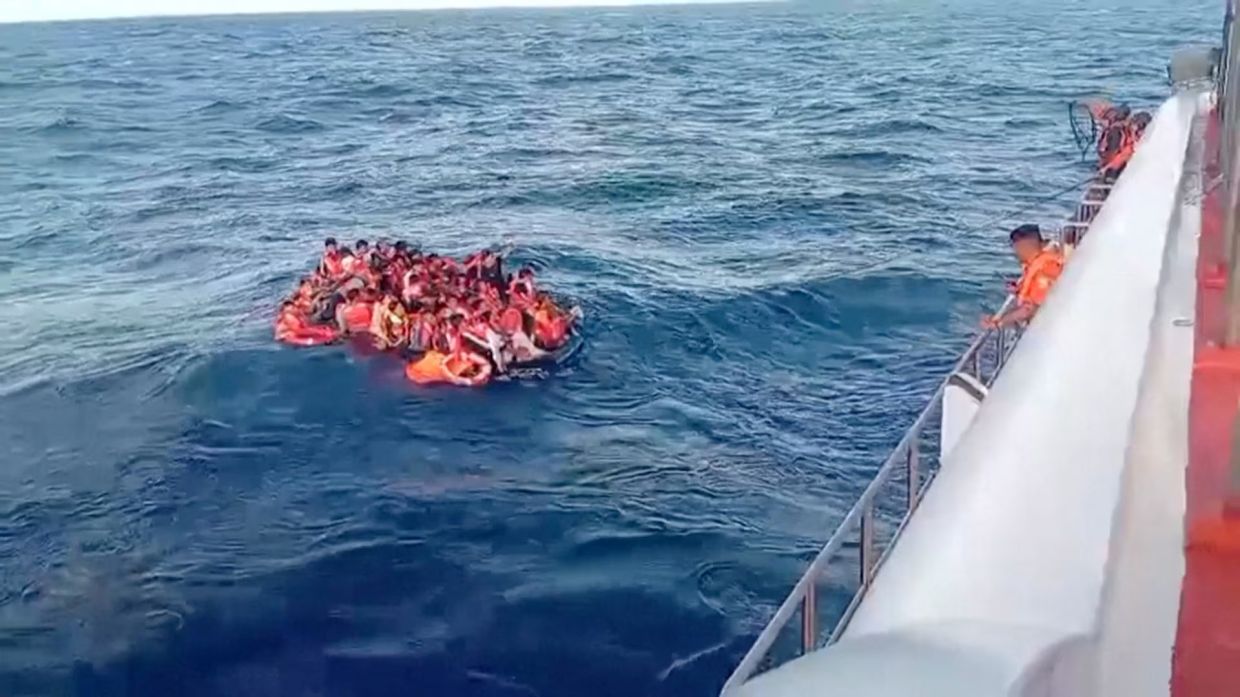
A catastrophic maritime incident unfolded off the coast of Bali early Wednesday morning when the passenger ferry Putri Yasmin erupted in flames while making its journey to the neighbouring island of Lombok. The emergency claimed at least one life and forced a dramatic rescue operation that ultimately brought 211 people to safety. Confirmation of the fatality came through official channels on Thursday, identifying the deceased as an Indonesian woman caught in the disaster.
The fire broke out at approximately 4:15 a.m., engulfing the vessel while it traversed the waters between two of Indonesia's most economically important islands. The timing of the incident—occurring in the pre-dawn darkness when visibility would be severely compromised—added considerable complexity to the rescue effort. Responding authorities mobilized a coordinated response that reflected the nation's maritime emergency preparedness, drawing together personnel from the National Search and Rescue Agency, the Indonesian Navy, maritime police, and nearby commercial vessels whose captains answered the distress call without hesitation.
The evacuation proceeded with notable efficiency given the scale and urgency of the situation. Survivors were transported to multiple ports, with some disembarked on Bali while others were taken to Lombok, reducing congestion at any single reception point and enabling swifter medical assessment and care distribution. Officials characterised the operation as having unfolded "safely and smoothly," suggesting that despite the emergency's severity, established protocols functioned as intended and inter-agency coordination proved effective under extreme pressure.
A significant discrepancy emerged during the aftermath, revealing troubling questions about passenger accountability and vessel documentation. The ship's manifest indicated only 131 people aboard, comprising 114 passengers and 17 crew members. However, investigators subsequently confirmed that additional unregistered passengers—those not listed on official documentation—had been travelling on the Putri Yasmin. The presence of undocumented travellers raises uncomfortable questions about compliance with maritime safety regulations and the adequacy of boarding verification procedures, issues that maritime authorities across Southeast Asia have grappled with for decades.
The investigation launched jointly by Indonesia's National Transportation Safety Committee and the Lembar Port Authority will focus on determining the exact origins of the fire and whether mechanical failure, human error, or maintenance deficiencies contributed to the catastrophe. Such inquiries are critical not merely for accountability but for identifying systemic weaknesses that could predispose other vessels to similar risks. The investigation will also assess the extent of material losses, encompassing not just the ferry itself but also vehicles and cargo that perished in the flames—an accounting that will help determine insurance liability and provide economic context to the disaster.
Indonesia's archipelagic geography—comprising more than 17,000 islands distributed across vast oceanic distances—makes ferry transport absolutely fundamental to the nation's internal connectivity and economic functioning. These vessels are lifelines for inter-island commerce, tourism logistics, and everyday transportation for millions of Indonesians who have no alternative means of crossing the waters separating their homes, workplaces, and markets. The reliance on this maritime infrastructure is not incidental but constitutive of how the nation operates as an integrated economic and social entity.
Yet this very dependence has historically coexisted with structural vulnerabilities. Safety enforcement across Indonesia's ferry fleet has long been characterised by inconsistency and insufficient rigour, with operators sometimes prioritising cost reduction over compliance with maritime safety standards. This problem is compounded by the archipelago's challenging climatic conditions, where sudden storms, unpredictable currents, and seasonal weather patterns create inherent hazards regardless of vessel condition. The combination of lax regulatory oversight and environmental unpredictability has conspired to make Indonesian waters statistically dangerous for passenger transport.
The Putri Yasmin incident represents merely the most recent in a recurring pattern of maritime tragedies that have punctuated Indonesia's history. Previous ferry disasters—some claiming hundreds of lives—have prompted temporary policy reviews and safety initiatives, yet the underlying problems persist with stubborn regularity. The perpetual cycle suggests that technical solutions alone are insufficient; meaningful reform would require sustained political commitment to enforcement, investment in infrastructure and training, and willingness to impose penalties that genuinely deter non-compliance.
For Malaysia and other Southeast Asian nations with significant maritime sectors, the incident serves as a cautionary reminder of the risks inherent in archipelagic geography and the importance of maintaining robust safety cultures. The regional maritime economy depends on confident passenger confidence in ferry safety, and high-profile disasters erode that confidence and can depress tourism and trade across borders.
The tragedy also highlights the vulnerability of informal economy participants—the unregistered passengers who were aboard the Putri Yasmin represent a broader demographic of Southeast Asians for whom official documentation and formal economic participation remain impractical or unaffordable. These individuals are often the most exposed to maritime risks, yet the least likely to have access to information about safety records or the advocacy power to demand improvements.

