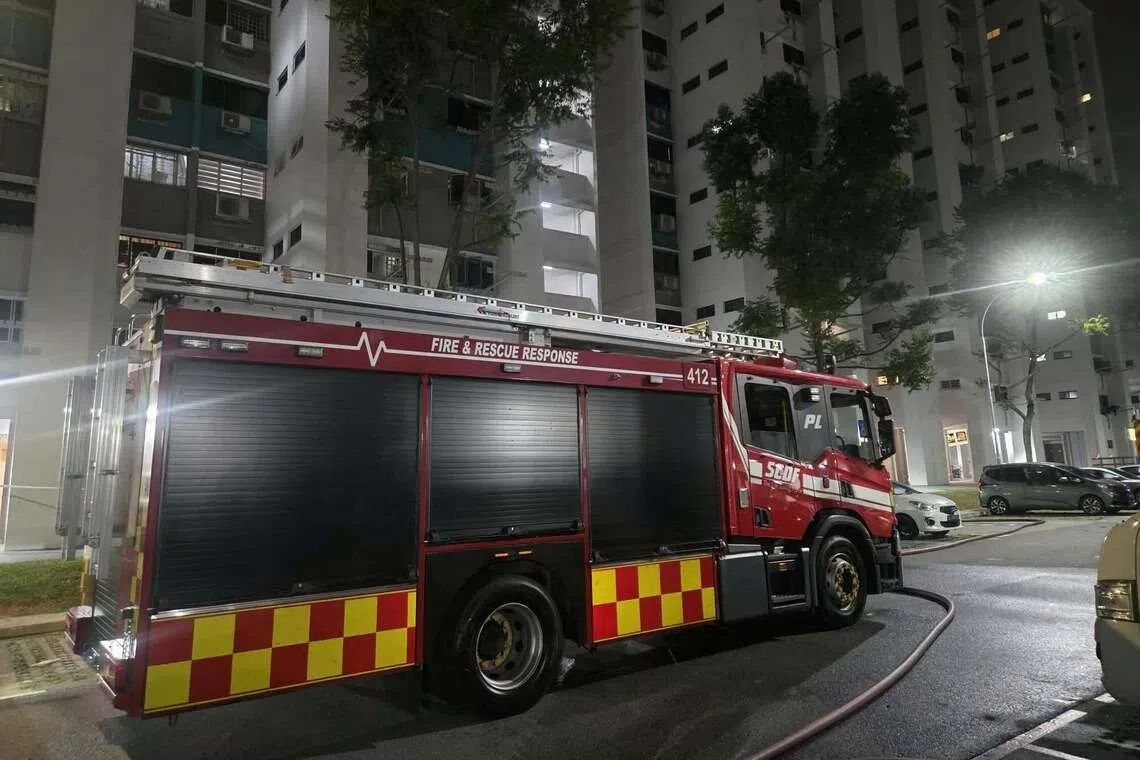
A fatal fire engulfed a residential unit in Singapore's Jurong East area in the early hours of August 16, claiming one life and displacing dozens of residents from their homes. The Singapore Civil Defence Force responded to the emergency at Block 339 Jurong East Avenue 1 at 3.55am after receiving an alert. Upon arrival, firefighters observed thick black smoke pouring from a third-floor unit, indicating an active and well-developed blaze.
The fire was localised to the living room of the affected unit. Acting swiftly, SCDF personnel forced entry into the flat and discovered an unresponsive individual lying in the living room area. Despite the immediate presence of paramedics at the scene, the person could not be revived and was pronounced dead. The identity of the deceased has not been disclosed, and authorities have not yet released the cause of death or circulating factors that may have contributed to the tragedy.
Beyond the fatal outcome, the incident necessitated the evacuation of 50 residents from surrounding units in the block. While the fire was contained to a single flat, the density of HDB housing and rapid smoke spread required precautionary clearance of nearby households to ensure public safety. No other casualties have been reported, and the extent of structural damage to the block remains under assessment.
The investigation into the fire's origin is ongoing, with the SCDF noting that determining the cause remains a priority. Preliminary findings typically examine potential ignition sources such as electrical faults, cooking accidents, smoking materials, or unattended appliances. Given the time of occurrence—the pre-dawn hours when residents are typically sleeping—investigators will also consider whether the deceased had opportunity to detect and respond to early warning signs.
This incident represents a troubling escalation in residential fire fatalities in Singapore's public housing sector. Within a span of just three weeks, at least four fatal fires have struck HDB flats, a pattern that has raised concerns among safety officials and residents alike. The clustering of these incidents suggests potential systemic vulnerabilities in fire prevention or early detection, warranting closer examination of fire safety measures across the public housing stock.
The first of these tragedies occurred on July 28 at Block 39 Circuit Road, where a 70-year-old man perished in a morning fire. Three days later, on July 31, another blaze tore through an eighth-floor unit at Block 309 Clementi Avenue 4, killing a 65-year-old male resident and injuring two firefighters who were battling the flames. The Clementi fire demonstrated the physical toll these incidents exact even on trained emergency responders.
Another significant incident unfolded on August 3 at Block 684 Race Course Road, where a fifth-floor fire sent five residents, ranging in age from 55 to 88 years old, to hospital for treatment. The situation deteriorated when the 88-year-old victim succumbed to injuries on August 5, two days after the initial fire. This death underscores how fire-related trauma can claim lives even days after the initial incident, as complications and injuries sustained during evacuation or smoke inhalation take their toll.
The concentration of these fatalities within HDB blocks raises critical questions about building maintenance, fire safety infrastructure, and resident awareness. Many HDB units, particularly in older blocks, may lack modern fire suppression systems or updated electrical wiring, creating heightened risk environments. Additionally, the early morning timing of several incidents—when residents are asleep and reaction times are delayed—presents a particular vulnerability, as individuals may be overcome by smoke before they can evacuate.
For Malaysian readers, the Singapore situation carries direct relevance given the similarities in urban housing density and public residential architecture across Southeast Asia. Malaysia's own high-rise residential blocks, particularly older DBKL, Petaling Jaya, and state-owned housing schemes, face comparable fire safety challenges. The sequence of incidents in Singapore should prompt local authorities to audit fire prevention measures, ensure functional early warning systems, conduct regular maintenance of electrical infrastructure, and enhance public awareness campaigns regarding fire safety protocols.
The psychological and social impact on affected communities extends beyond immediate casualties. Residents of the Jurong East block and neighbouring HDB estates will likely experience heightened anxiety regarding building safety, while families of victims face profound grief. Such events often trigger broader public discourse about regulatory oversight and whether housing authorities are adequately prioritising resident safety over administrative efficiency.
Moving forward, the outcomes of SCDF's investigation will be crucial not only for Singapore but for the broader regional conversation about fire safety in densely populated public housing. Recommendations emerging from this inquiry could influence policy frameworks across Malaysia, the region, and establish benchmarks for emergency response protocols and preventative measures. The immediate priority remains completing the investigation and providing support to displaced residents and the bereaved, while longer-term focus shifts to preventing future tragedies through enhanced safety measures and public education.

