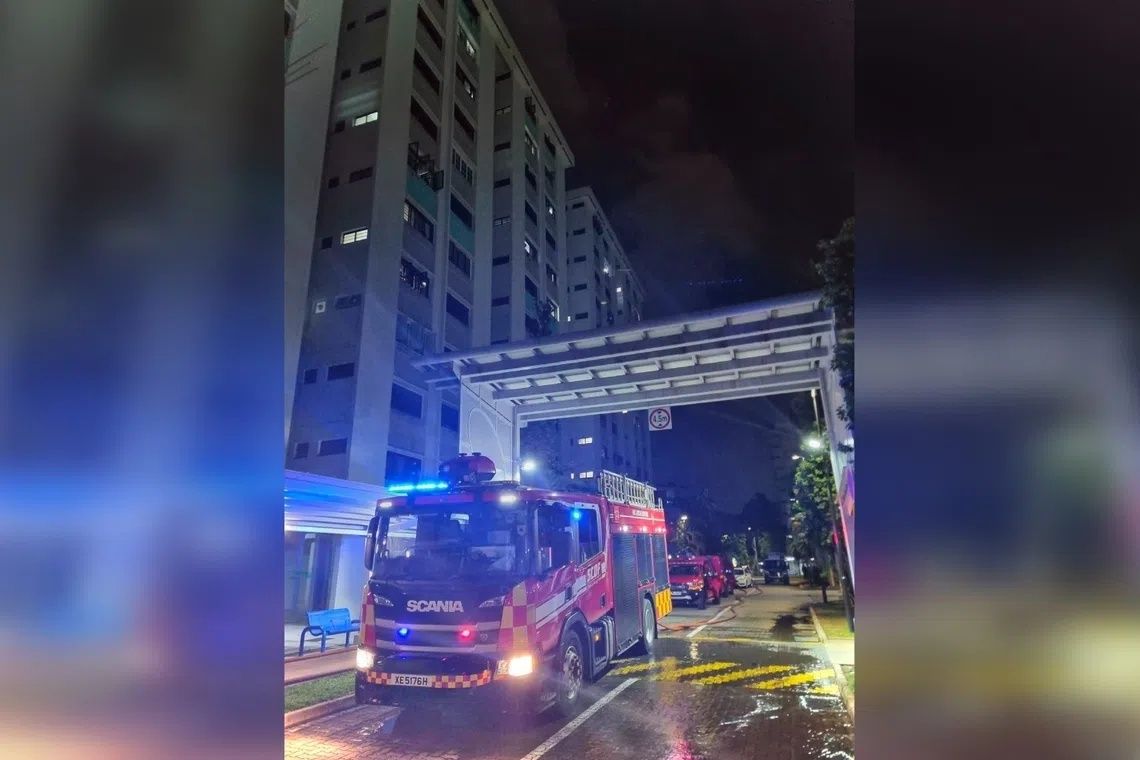
A fatal fire claimed one life at Block 309 Clementi Avenue 4 in Singapore late on Friday, July 31, marking another tragedy in the city-state's growing fire incidents. The Singapore Civil Defence Force (SCDF) responded to the blaze at approximately 11.10pm, discovering flames concentrated in the living room of an eighth-floor residential unit. Emergency responders were forced to breach the unit's entrance to gain access and initiate firefighting operations, ultimately deploying two water jets to extinguish the flames that had consumed items within the living room.
The victim, discovered unconscious in the kitchen during the rescue effort, was transported to Ng Teng Fong General Hospital but was pronounced dead shortly after arrival. According to Holland-Bukit Timah GRC Member of Parliament Sim Ann, who represents the affected area, the individual was believed to have been residing alone in the unit at the time of the incident. This detail carries particular significance, as isolated living arrangements often mean delayed discovery and response to emergencies, potentially reducing survival chances in such situations.
Beyond the fatal casualty, the firefighting operation itself proved hazardous for emergency personnel. Two SCDF firefighters sustained burn injuries while battling the blaze and were admitted to Singapore General Hospital for treatment. However, recovery proved swift for one of the injured responders, who was discharged the same day and is now recuperating at home. The other firefighter's status and recovery timeline were not immediately disclosed, though the relatively rapid discharge of one suggests the injuries, while serious enough to warrant hospitalization, were not life-threatening.
Responseses to the emergency extended throughout the residential complex. About 40 residents from the affected block were evacuated as a precautionary measure by both police and SCDF personnel. The evacuation operation proceeded smoothly, with Sim noting that the majority of displaced residents were able to return to their homes by 1.30am on August 1, demonstrating coordinated emergency management and minimal disruption to the wider residential community. The rapid clearance of the evacuation zone reflects established protocols in Singapore's densely populated public housing landscape.
Sim, who also serves as Second Minister for Foreign Affairs and Second Minister for Home Affairs, provided reassurance that structural damage remained confined. She indicated that overall damage to other units and common areas was limited, with repair efforts to shared property already underway. Additionally, residents whose homes and personal belongings sustained fire damage would receive assistance from government and town council support mechanisms, helping mitigate the immediate financial burden on affected households.
The incident occurred within a concerning broader context. The SCDF's annual statistics reveal an upward trajectory in fire-related casualties across Singapore. Between 2024 and 2025, the number of people injured in fires escalated from 80 to 94, representing a notable uptick in fire-related injuries. While fatalities showed a modest decline from seven in 2024 to six in 2025, this single Clementi death contributes to an overall increase in fire incidents, with total fires rising three percent from 1,990 to 2,050 cases year-over-year.
These statistics carry implications for Singapore's fire safety framework and public housing maintenance standards. The rising injury count, despite relatively stable or declining fatality rates, suggests that while emergency response systems successfully prevent deaths in many cases, the underlying causes of fires remain inadequately addressed. The incremental increase in total fire incidents points to growing fire risk factors within the urban environment, whether from aging infrastructure, cooking accidents, electrical faults, or other preventable causes.
Sim acknowledged the collective effort mobilized during the emergency response, expressing gratitude to the SCDF, police, residents' network volunteers, the People's Association, and town council staff. Such recognition underscores the community-based emergency management approach prevalent in Singapore's public housing ecosystem, where residents' networks and grassroots organizations play active roles in disaster response and resident welfare. This decentralized engagement model helps distribute emergency response responsibilities and builds community resilience.
The cause of the Clementi fire remains under investigation, with authorities yet to determine whether the blaze resulted from human error, mechanical failure, or other factors. Understanding the trigger will be crucial for informing future fire prevention campaigns and identifying whether specific risk categories warrant heightened attention. Pending findings may influence housing authority recommendations regarding electrical appliance use, fire extinguisher maintenance, or evacuation procedures in HDB flats.
For Malaysian observers, the Clementi incident offers instructive lessons relevant to the Southeast Asian region. As urbanization and high-density public housing become increasingly prevalent across Malaysia and the wider region, Singapore's experience demonstrates the evolving nature of fire risks in modern apartment complexes. The rapid response protocols and community evacuation procedures employed here represent best practices that Malaysian local authorities and housing developers might consider adopting or adapting to enhance residential fire safety standards.
The tragedy also highlights vulnerabilities faced by solitary residents, a demographic growing across Southeast Asia as migration and changing family structures reshape living patterns. Building management authorities across the region may need to develop enhanced monitoring systems or community check-in programs to ensure isolated residents receive timely assistance during emergencies, particularly in large residential complexes where individual units may go unnoticed during developing crises.
Looking forward, the recurring rise in fire incidents despite advanced emergency response capabilities suggests that prevention strategies require strengthening. Enhanced building code enforcement, mandatory fire safety equipment upgrades in aging public housing stock, and public education campaigns targeting preventable fire causes represent potential intervention points. Singapore's experience demonstrates that even sophisticated emergency response systems cannot fully mitigate the consequences of fires—prevention remains the most effective strategy for protecting lives and property in densely populated urban environments.

