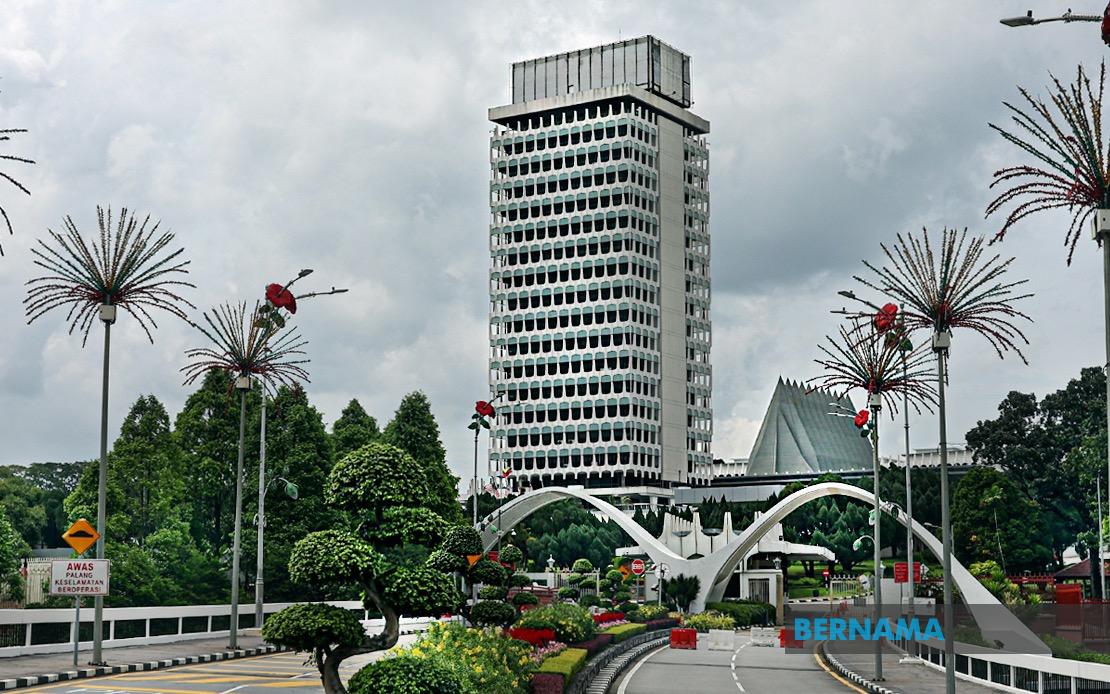
Malaysia's parliament meets today to scrutinise three major policy areas affecting citizens and businesses: the regulatory machinery underpinning the Online Safety Act 2025, safeguarding mechanisms within schools, and economic relief initiatives for small enterprises struggling with regional supply chain volatility. The sitting of the Dewan Rakyat will focus on how effectively the government is translating recent legislation into practical protections and support structures across digital, educational, and commercial spheres.
The development of subsidiary instruments under the Online Safety Act 2025 (Act 886) will feature prominently in discussions, with backbencher Rodziah Ismail from Ampang raising specific questions about the regulatory architecture being constructed. The Communications Ministry is expected to detail progress on ten subsidiary instruments—comprising regulations and guidelines—that will give substance to the act's broad provisions. These instruments will define regulatory objectives, establish key enforcement mechanisms, clarify the legislation's territorial and operational scope, and outline the current development timeline. This line of questioning reflects growing parliamentary interest in ensuring that regulatory frameworks do not languish in abstract formulation but are speedily operationalised to protect Malaysians from online harms including misinformation, harassment, and exploitation.
School safety remains a persistent concern across Malaysia's educational landscape, prompting Roslan Hashim from Kulim Bandar Baharu to demand fresh assurances from the Education Ministry. Beyond traditional hazard prevention, lawmakers are increasingly focused on comprehensive safety ecosystems encompassing accident prevention, anti-bullying initiatives, and broader threat mitigation. The query signals parliamentary anxiety that despite existing protocols, some schools may inadequately address emerging risks ranging from physical infrastructure inadequacies to psychological harm. The minister's response will likely detail current safety audits, intervention programmes, and resource allocation to create genuinely protective learning environments.
Economic resilience in the face of external shocks will command significant attention, as Datuk Andi Muhammad Suryady Bandy raises concerns about micro-traders and small enterprises bearing disproportionate burdens from the prolonged West Asia crisis. Rising logistics costs and fractured supply chains have squeezed margins for hawkers, street vendors, and micro, small and medium enterprises across Malaysia's informal and semi-formal economy. These businesspeople, who collectively employ millions and form the backbone of local commerce, lack the scale to absorb cost inflation that larger corporations can manage through diversification or hedging. Parliamentary focus on immediate relief measures reflects recognition that without targeted government support, entire segments of Malaysia's grassroots economy risk collapse, with cascading effects on employment and household income.
Regional infrastructure development will also receive scrutiny when Datuk Seri Dr Wee Ka Siong queries progress on the Johor Elevated Autonomous Rapid Transit project. The E-ART initiative represents a significant attempt to modernise Johor's transport capacity and establish a blueprint for rapid transit solutions elsewhere in Malaysia. Implementation delays or cost overruns would signal broader capacity challenges within government project management, while successful delivery could validate Malaysia's ability to execute complex infrastructure schemes. For Southeast Asian observers, the project's trajectory offers insights into Malaysia's technological ambitions and administrative capabilities in an era of elevated expectations for smart urban development.
Road safety infrastructure represents another domain requiring parliamentary oversight, though specific details of works minister questioning appear incomplete in available information. Nevertheless, the inclusion of transport safety queries underscores recognition that fatal accidents and congestion remain significant drains on productivity and public welfare across Malaysian highways, urban roads, and rural routes. Parliamentary pressure on implementation and enforcement mechanisms may drive greater urgency in completing safety improvements.
Healthcare fiscal sustainability in Sabah has prompted Datuk Shahelmey Yahya to request government assurances that budgetary discipline will not compromise medical service delivery or facility development in the state. This question reflects anxiety in resource-scarcer regions that austerity measures, however nationally justified, may disproportionately impact peripheral states with existing infrastructure deficits. The government's response will need to balance fiscal consolidation with territorial equity, assuring Sabahans that healthcare is not sacrificed on the altar of macroeconomic adjustment.
Cybersecurity implications of raising the minimum social media age to 16 will be examined through questions from Independent parliamentarian Riduan Rubin. Introducing age restrictions carries cascading effects for national cybersecurity posture, including altered attack surface areas, new enforcement complexities, and potential shifts in how minors access information. The Home Affairs Ministry will need to articulate how stricter age gating affects vulnerability assessment and whether existing cybersecurity infrastructure can accommodate the regulatory and enforcement changes such a policy would require.
Beyond question time, the parliament is scheduled to advance the Competition (Amendment) Bill 2026 through second reading, suggesting ongoing refinement of Malaysia's competition framework. The 16-day sitting extending to July 16 provides space for deliberation on substantive economic and social policy questions, underlining that despite headline-grabbing controversies, parliament continues processing technical legislation essential to institutional functioning and market discipline.
Today's parliamentary agenda illuminates the multiplicity of regulatory, social, and economic challenges facing Malaysia simultaneously. The convergence of digital safety, educational security, small business economics, transport modernisation, fiscal sustainability, and cybersecurity demonstrates that contemporary governance requires coordinated responses across once-siloed policy domains. Parliamentary scrutiny of these interconnected issues suggests deepening sophistication in how legislators understand system-wide interdependencies and the need for holistic policy approaches.

