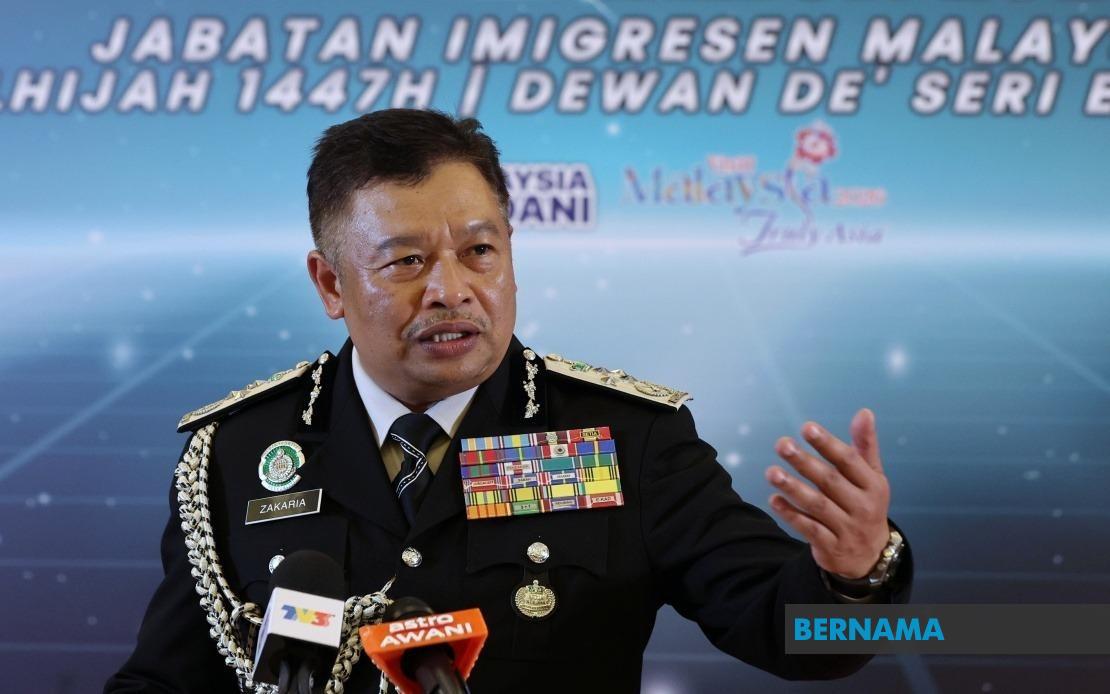
The Immigration Department has pinpointed just two airlines as the source of recurring system problems when handling Malaysian passports issued with validity periods exceeding a decade, according to immigration director-general Datuk Zakaria Shaaban. Speaking at a press conference in Putrajaya on August 13, Zakaria emphasized that the situation represents a localized technical challenge rather than a broader international refusal to accept Malaysian travel documents, a distinction that carries significant implications for travellers and the nation's diplomatic standing.
The clarification addresses widespread public concern that emerged following the department's abrupt announcement suspending the extended validity option for new passport applications. Zakaria stressed that the core 10-year validity period for Malaysian International Passports remains unchanged and has never been withdrawn from circulation. The suspension affects only the supplementary validity extension that had previously been offered to citizens, a policy developed to compensate applicants who still possessed remaining validity on their expiring passports at the time of renewal.
Understanding the mechanics of this issue requires examining how the extension scheme operated. When citizens applied to renew their passports while their existing documents still contained substantial time remaining, the Immigration Department would grant an additional six months of validity to prevent citizens from losing that unused time. This practice, while consumer-friendly, has now created complications with certain airline reservation and check-in systems that cannot properly process passports with validity extending beyond the standard 10-year mark. The technical incompatibility appears to be an oversight in how some airlines' global systems were programmed to handle passport data fields.
Zakaria acknowledged uncertainty about the full scope of the problem, noting that feedback received so far identified only two affected carriers, but cautioning that additional airlines might be experiencing similar difficulties without having formally reported the issue to Malaysian authorities. This cautious stance reflects the practical reality of international aviation operations, where system glitches often go unreported unless they create passenger-facing disruptions. The director-general notably refrained from naming the two problematic airlines, likely to avoid diplomatic friction and allow time for technical remediation behind the scenes.
Crucially, Zakaria rejected any suggestion that Malaysia's passports themselves were being rejected by foreign governments or international authorities. The systems in question are operated by private commercial airlines rather than immigration agencies or international aviation bodies. Many other carriers process extended-validity Malaysian passports without difficulty, demonstrating that the problem is neither widespread nor inherent to the passport document itself. This distinction matters considerably for Malaysia's international reputation and for citizens planning travel, as it suggests the disruption is temporary and technically solvable rather than indicative of any loss of confidence in Malaysian travel credentials.
The airline systems experiencing difficulties are used globally by carriers worldwide, suggesting the underlying issue originates from generic programming limitations rather than a Malaysia-specific problem. Zakaria explicitly stated the Immigration Department bore no responsibility for airline system architecture, a fair assessment given that carriers maintain their own technology infrastructure. This raises questions about industry standards and whether the International Civil Aviation Organization (ICAO) should establish clearer guidelines for how airline systems must accommodate passport validity variations across different nations.
In response to the disruption caused to citizens already holding passports issued with the extended validity period, the Immigration Department announced a free replacement programme. Malaysians possessing documents valid for 10 years and six months can request new passports at no charge, eliminating the financial penalty for holding the now-problematic extended-validity documents. This proactive measure demonstrates an effort to minimize citizen inconvenience while the department works with airlines and ICAO to resolve underlying system incompatibilities.
The suspension of extended validity issuance takes immediate effect and will remain in place until technical solutions are implemented and verified with both the affected airlines and international aviation authorities. This collaborative approach indicates the department recognizes it cannot unilaterally solve problems rooted in third-party technology systems. Coordination with ICAO, the UN aviation agency that sets international standards for travel documents, suggests the issue may eventually require industry-wide standardization to prevent similar complications with other nations' passports.
For Malaysian travellers and renewal applicants, the practical implications are significant. New passport applications will receive only the standard 10-year validity rather than the enhanced extension, effectively reducing the lifespan of new documents. Business travellers, expatriates, and frequent flyers accustomed to the extended validity will face earlier renewal requirements. The timing of this suspension also affects citizens planning international trips in coming months, who may find themselves unable to resolve passport validity issues at the last minute before departure.
The revelation provides important context for recent passport-related travel disruptions reported by Malaysian citizens, though Zakaria's insistence that only two airlines face documented problems suggests such incidents have been relatively contained. The department's transparency in acknowledging the specific nature of the technical problem demonstrates an attempt to restore public confidence after the initial suspension announcement, which some citizens had interpreted more catastrophically. Regional governments and fellow ASEAN nations with similar passport validity arrangements may themselves monitor this situation closely, as airline system limitations could potentially affect their travel documents if similar programming oversights exist.
Moving forward, the resolution timeline remains unclear, though the involvement of ICAO suggests formal coordination processes may extend negotiations beyond immediate technical fixes. The department will likely use this period to work with airlines toward system upgrades that can properly handle variable validity periods. For now, Malaysian citizens requiring passport renewals should plan for the standard 10-year validity and consider requesting free replacements only if they currently hold problematic extended-validity documents and face imminent travel complications.

