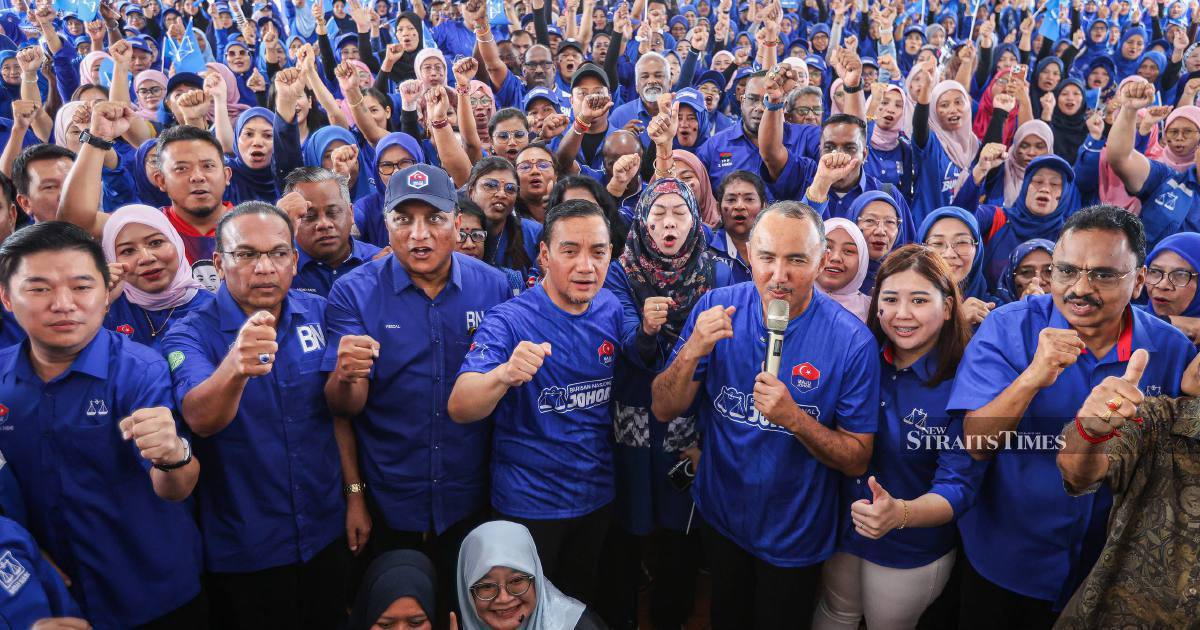
With the Johor state election campaign now in its decisive final week, caretaker Menteri Besar Datuk Onn Hafiz Ghazi has mounted a direct appeal to voters in Kluang to discount what he views as a calculated opposition strategy centred on divisive messaging and promises that cannot materialise. The plea reflects mounting concern within the ruling coalition about the electorate's vulnerability to messaging from rival parties as polling day approaches.
Onn Hafiz characterised the opposition approach as fundamentally rooted in three tactics: character assassination through slander, deliberate provocation designed to inflame sentiments, and the articulation of pledges lacking any realistic foundation. This framing positions the incumbent administration as the rational alternative to what it portrays as populist grandstanding. In Malaysian electoral contests, such appeals to voter discernment in the final campaign stretch have become a recurring feature, as parties attempt to crystallise public perception before ballots are cast.
The caretaker Menteri Besar's intervention takes on particular significance given that Johor, as Malaysia's second-largest state by both population and economic output, commands substantial political weight within the federation. Control of the state administration yields not only executive authority over substantial budgetary resources but also considerable symbolic importance within the broader Malaysian political landscape. The state has alternated between ruling coalition and opposition control in recent electoral cycles, indicating genuine competitiveness.
Onn Hafiz's warning about slander suggests the campaign has grown increasingly heated, with personal attacks potentially becoming more pronounced as election day nears. In Malaysian politics, such accusations often accompany suggestions that opposition figures are engaging in character assassination against incumbent leaders and their associates. The invocation of this charge serves simultaneously as a deflection and a call for elevated discourse, though both purposes remain contested by opposing camps.
The reference to unachievable promises taps into a broader Malaysian voter concern about the gap between campaign rhetoric and post-election delivery. The phrase carries implicit confidence that the ruling administration's own pledges rest on firmer fiscal and logistical ground than opposition commitments. However, voters across the political spectrum frequently harbour scepticism about the feasibility of all campaign promises regardless of source, making this particular line of argument rhetorically potent but empirically difficult to substantiate without detailed policy analysis.
Provocation, the third element Onn Hafiz identified, remains perhaps the most nebulous accusation in Malaysian electoral discourse. Opposition parties, meanwhile, typically characterise their communications as legitimate criticism of governmental performance rather than deliberate provocation. The interpretation of campaign messaging as provocative versus substantive often depends entirely on the viewer's existing partisan alignment, rendering such accusations difficult to adjudicate objectively.
The timing of this appeal matters considerably. Coming as the election enters its final seven days, Onn Hafiz's message targets voters still undecided or reconsidering their positions. Malaysian electoral research consistently demonstrates that late-campaign messaging carries disproportionate weight among this subset of the electorate. The statement therefore represents a strategic pivot toward consolidating support among persuadable voters by framing the choice not as a positive endorsement of ruling coalition achievements but as a rejection of opposition methods.
For Malaysian and Southeast Asian observers, the Johor election carries implications extending beyond the state itself. The result will be interpreted as a bellwether for national sentiment ahead of federal elections that must occur by mid-2025. Both the ruling coalition and opposition view Johor as a crucial testing ground where campaign strategies can be refined and voter appetite for various policy messages can be gauged. Opposition gains would bolster their national narrative, while incumbent consolidation would strengthen ruling coalition confidence heading toward nationwide polling.
Onn Hafiz's background as an Islamic conservative within the ruling coalition adds another layer to his appeal. His emphasis on responsible governance and rejection of false promises may resonate particularly with voters concerned about administrative competence and fiscal prudence. The messaging also aligns with broader ruling coalition communications emphasising stability and predictability against what they characterise as opposition instability.
The final week of any election campaign typically sees all parties deploying their most aggressive messaging, and this Johor contest appears no exception. Onn Hafiz's intervention reflects the competitive intensity surrounding the race and the genuine uncertainty about electoral outcomes. In an environment where polling advantages have narrowed compared to earlier in the campaign cycle, every persuadable voter becomes strategically valuable, and appeals to reject opponent tactics serve as one proven method for mobilising support among undecided electorates seeking rational grounds for decision-making in complex political environments.

