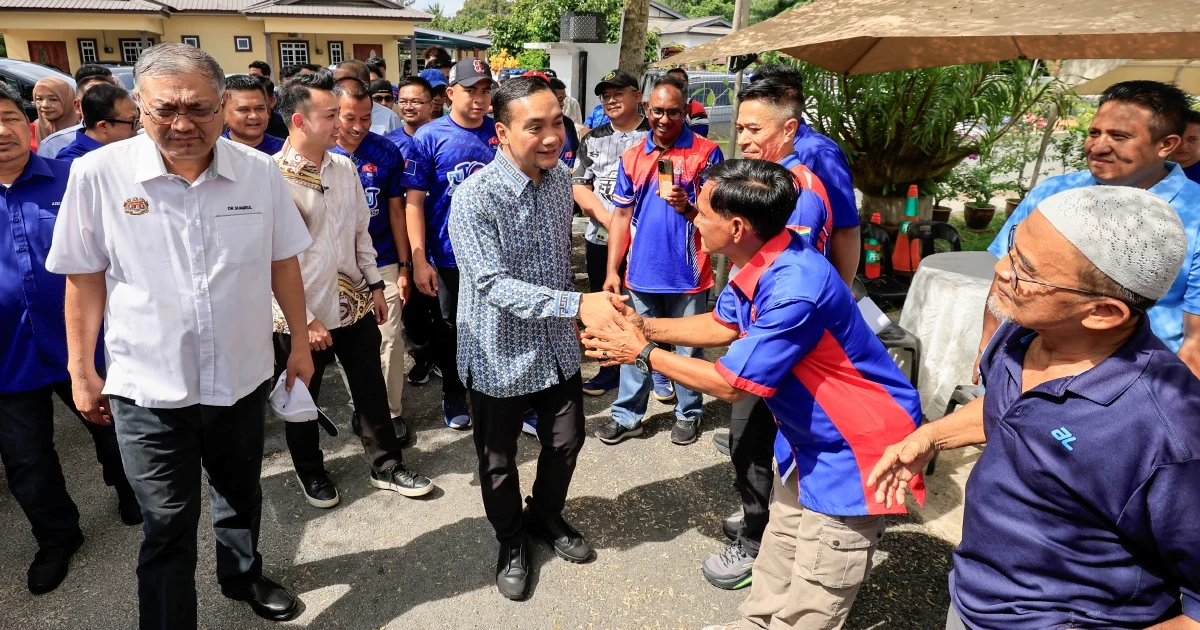
Johor Chief Minister Onn Hafiz Ghani has thrown his weight behind PAS's recent decision to instruct party members to campaign for Barisan Nasional candidates in constituencies not contested by Perikatan Nasional, characterising such tactical manoeuvres as a legitimate element of modern electoral politics. Speaking in Simpang Renggam, Onn Hafiz underscored that each political party maintains the prerogative to determine its own election strategy, reflecting the competitive yet pragmatic nature of Malaysia's multiparty democratic system. His comments effectively provide political cover for PAS as the Islamist party navigates complex coalition dynamics ahead of anticipated electoral contests, signalling that tactical repositioning should be viewed as ordinary political calculation rather than unexpected opportunism.
The broader context here reveals the intricate dance between Malaysia's major political blocs. PAS, traditionally aligned with PN, has increasingly demonstrated flexibility in electoral cooperation with BN, the country's long-dominant federal coalition. This shift reflects the evolving landscape where the once-clear ideological boundaries between these major political formations have become more permeable, driven by calculations about electoral viability and coalition sustainability. The party's directive essentially creates a loose understanding whereby PAS can support BN candidates strategically while maintaining its core PN alliance, a delicate balance that requires sophisticated political messaging to avoid accusations of inconsistency or betrayal from party grassroots.
Onn Hafiz's endorsement carries particular weight given Johor's significance in Malaysian politics. The state remains a crucial electoral battleground, and his explicit backing for flexible political strategies reflects Johor's pragmatic political culture, where winning elections often trumps rigid ideological adherence. Johor has historically been a stronghold for BN, but recent elections have demonstrated the state's increasing unpredictability, with PN making substantial inroads. The Chief Minister's comments thus implicitly acknowledge that no coalition can take Johor's support for granted, necessitating both strategic flexibility and coalition management among allies.
The PAS directive itself represents a sophisticated electoral strategy that acknowledges ground realities in Malaysia's constituency-based voting system. By instructing members to back BN candidates where PN is not contesting, PAS seeks to prevent opposition candidates from capitalising on split anti-incumbent votes. This approach maximises the chances of retaining seats within the broader alliance framework while avoiding direct internal competition that could weaken both PAS and BN in their respective areas of strength. For voters in affected constituencies, such arrangements mean that their electoral choices may be influenced by behind-the-scenes negotiations rather than open party competition.
The tactical cooperation between PAS and BN, mediated through such directives, reveals how Malaysian politics increasingly operates through fluid coalitions rather than rigid partisan blocs. Political observers note that such arrangements require careful management to maintain party discipline while respecting the autonomy that rank-and-file members expect. PAS must ensure that its base understands these moves as strategic necessity rather than ideological compromise, a communication challenge that affects party cohesion and member motivation during campaigns. The Islamist party's ability to maintain internal unity while pursuing such flexible strategies will be crucial to its electoral performance.
For BN, particularly UMNO, these developments represent both opportunity and vulnerability. On one hand, expanded support from PAS members in key constituencies could significantly boost BN's prospects in contested areas. Conversely, BN must avoid appearing dependent on rivals' support, as this could undermine its narrative of independent electoral strength and governing competence. The coalition's ability to frame such cooperation as natural alliance-building rather than desperation will influence how voters perceive BN's viability as a governing formation. This messaging dimension becomes increasingly important in an era where social media amplifies political narratives and allows rapid counter-framing by opposition forces.
Onn Hafiz's statement also reflects the growing sophistication of Malaysian political actors in discussing strategy publicly. Rather than denying or obscuring tactical arrangements, senior politicians increasingly acknowledge them as normal elements of competitive democracy. This transparency, when managed carefully, can actually strengthen rather than undermine political coalitions by portraying them as based on mutual interest rather than hidden backroom dealing. However, it also raises questions about what voters truly control through their electoral choices when major parties engage in extensive pre-electoral negotiations that determine candidate allocation across constituencies.
The regional implications of such strategies merit consideration for Southeast Asian political analysts. Malaysia's approach to managing coalition dynamics through tactical electoral cooperation offers lessons and warnings for other ASEAN democracies grappling with multiparty systems and coalition politics. The ability of parties to maintain structural alliances while pursuing flexible constituency-level cooperation demonstrates how sophisticated democratic systems can absorb internal contradictions, though at the cost of making electoral politics less transparent to ordinary voters. Such arrangements also highlight the continuing importance of elite negotiation in shaping electoral outcomes, even in democratic systems.
Looking forward, the sustainability of PAS-BN cooperation remains uncertain. While short-term electoral calculations may align these historically separate blocs, longer-term strategic interests could diverge, particularly if the Islamist party perceives greater opportunities for independent advance or if BN's fortunes decline significantly. The Malaysian electorate's response to such tactical arrangements will ultimately determine whether such strategies prove electorally beneficial or whether voters punish what they perceive as cynical political maneuvering. Onn Hafiz's remarks essentially provide political permission for such flexibility, but the ultimate verdict rests with voters making decisions in actual polling booths.

