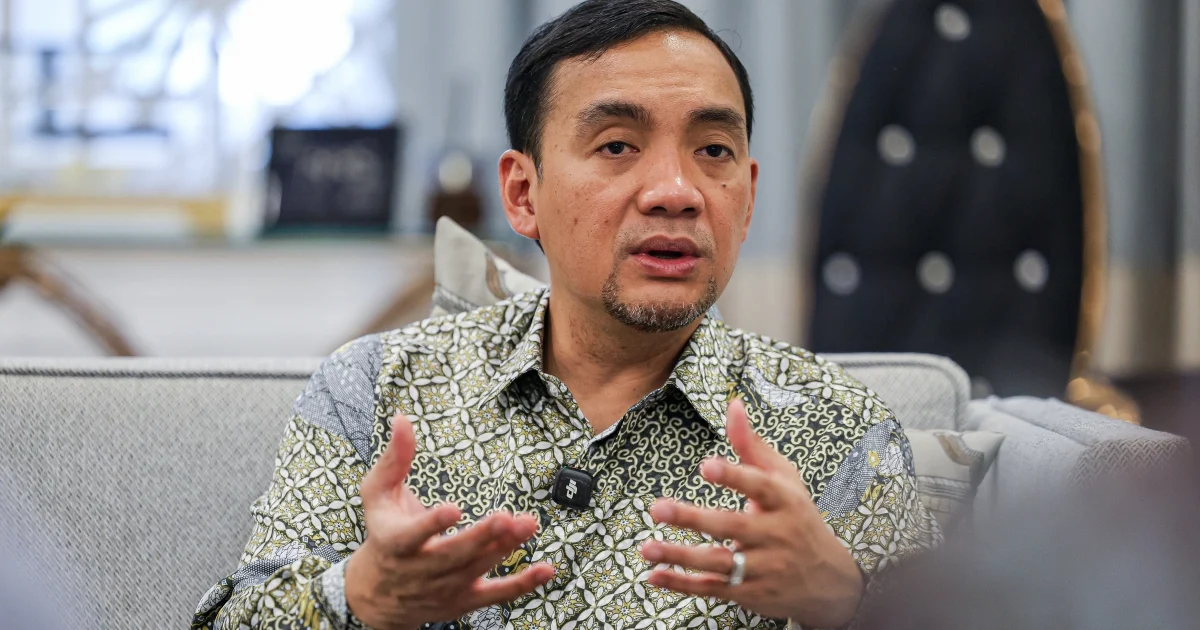
Caretaker Johor Menteri Besar Datuk Onn Hafiz Ghazi has rejected assertions that he attributed the dissolution of the state assembly to a directive from the palace, contradicting statements made by Datuk Dr Mohd Puad Zarkashi. The dispute centres on precisely what the executive conveyed regarding the impetus behind the parliamentary decision to wind up proceedings in the state legislature.
The denial underscores the delicate constitutional terrain surrounding the timing and rationale for calling fresh elections in Johor. In Malaysia's constitutional monarchy framework, the sovereign plays a ceremonial though occasionally pivotal role in state governance, and any suggestion that the ruler has "ordered" particular governmental actions carries substantial political weight. Such language can signal either deference to royal prerogative or conversely raise questions about the boundaries between executive autonomy and monarchical influence.
Onn Hafiz's rebuttal arrives amid the interregnum period following the assembly's dissolution, when the state operates under caretaker administration pending the conduct of fresh elections. During this transitional phase, the Menteri Besar retains responsibility for routine governance while newly formed political arrangements remain unresolved. The clarification of what prompted the dissolution thus carries implications not merely for constitutional propriety but for how stakeholders perceive the legitimacy of the electoral process itself.
The contention between the two figures reflects broader tensions that periodically surface in Malaysian politics regarding the respective spheres of the monarchy, the executive, and the legislature. While the Yang di-Pertuan Agong and state rulers possess constitutional powers to dissolve assemblies, the exercise of such prerogatives typically occurs at the behest of the chief executive minister, creating a nuanced interaction between formal legal authority and practical political initiative. Any ambiguity in this relationship becomes fodder for political disputation, particularly in contexts of electoral contestation or factional rivalry.
For Johor specifically, clarity about the dissolution's origins matters because the state has long served as a significant power base within the Malaysian federation, with its electoral fortunes rippling across neighbouring constituencies and influencing national coalitional mathematics. The credibility and perceived legitimacy of the electoral process rest partly on public understanding that decisions conform to constitutional norms rather than reflecting ad hoc palace intervention in routine administrative matters. When competing narratives emerge about whether authorities acted at royal instruction or on their own initiative, the resulting confusion can erode confidence in institutional propriety.
Onn Hafiz's position as caretaker administrator places him in an unusual vantage point whereby he must address such claims without the full apparatus of state governmental machinery behind him. Caretaker arrangements deliberately circumscribe the powers of the outgoing administration, yet questions about the antecedents of the dissolution inevitably implicate the individual who held executive office when the decision crystallised. His denial thus carries both personal and institutional dimensions, addressing not only his own credibility but also the characterisation of state institutions' relationship to palace authorities.
The disagreement also reflects how Malaysian political discourse frequently features competing interpretations of constitutional convention. While written provisions in the Federal Constitution and state constitutions establish formal procedures, the accumulated understandings about how these procedures operate in practice constitute constitutional convention. When figures of prominence offer divergent accounts of what occurred, they implicitly dispute whether actions conformed to conventional norms or deviated from established practice. Such disputes acquire particular salience when they touch upon the prerogatives of the monarchy, an institution many Malaysians regard as transcending routine partisan contestation.
Dr Mohd Puad Zarkashi's original assertion that the palace "ordered" the dissolution appears designed to emphasise the commanding nature of the directive, perhaps implying that alternative courses remained unavailable to state authorities. Onn Hafiz's rejection of this characterisation conversely suggests that the executive possessed discretion in timing and framing the decision. The semantic distinction between "ordering" and other forms of directive potentially conveys significant constitutional meaning, distinguishing between mandatory royal instruction and consultative processes culminating in executive choice.
For Malaysian voters in Johor preparing to cast ballots in the forthcoming elections, the substance of this disagreement illuminates the nature of state governance and whether they can be confident that electoral timing and administration reflect principled constitutional operation rather than palace instruction filtered through executive intermediaries. Public discourse in the weeks preceding elections naturally centres on campaign platforms and party competition, yet underlying questions about institutional legitimacy inevitably influence voter confidence in the electoral exercise itself. When Menteri Besar and other figures dispute the constitutional genealogy of fundamental decisions like assembly dissolution, attentive citizens notice and form assessments about governmental reliability.
The episode also demonstrates how Malaysian political narratives frequently involve retroactive interpretation of events rather than predetermined clarity about procedure and authority. Unlike systems where executive dissolution powers operate through formally announced conventions, Malaysian practice permits considerable discretion in how actors characterise decisions after the fact. This flexibility permits governors to maintain different interpretations of whether actions reflected palace direction, executive initiative, or collaborative understanding, with each interpretation generating distinct implications for constitutional theory and practice in Malaysia's evolving democratic system.

