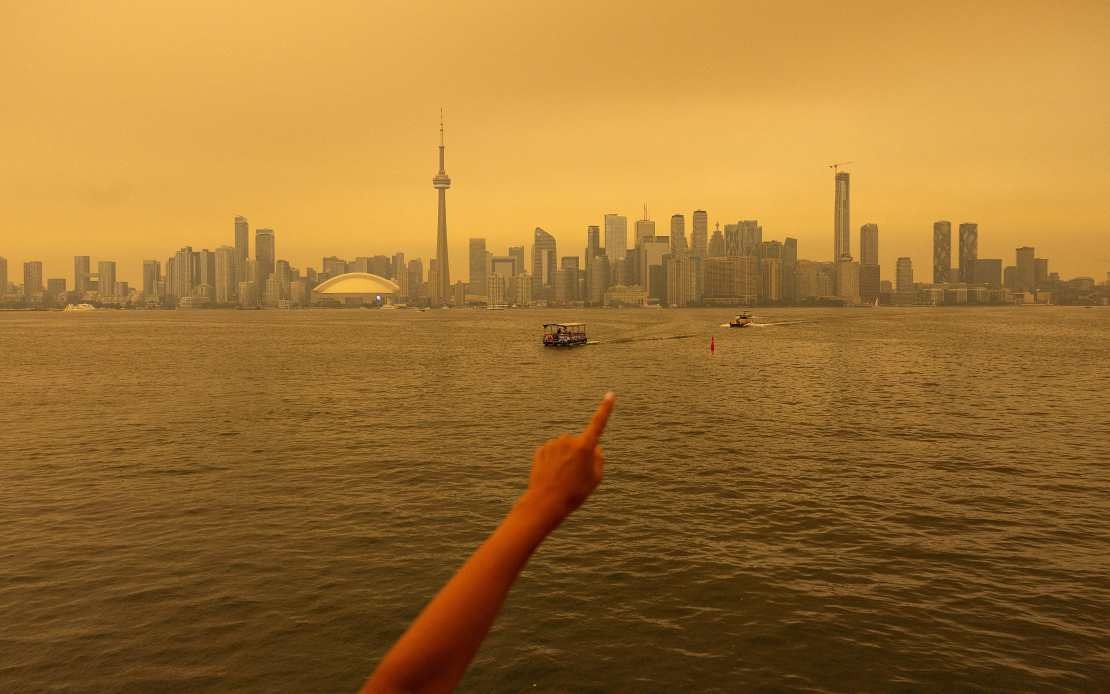
Wildfires spreading across northwestern Ontario have created an environmental crisis affecting Canada's two largest metropolitan areas, with smoke blanketing Toronto and Ottawa in hazardous conditions that show no signs of clearing. The situation has deteriorated rapidly over recent days, transforming urban skylines into hazy yellow landscapes and triggering widespread public health warnings across the region.
The scale of the air quality deterioration became starkly apparent on Wednesday morning when Toronto registered the poorest air conditions among major cities globally. Environment Canada classified the city's Air Quality Health Index as "very high risk," a designation that carries serious implications for vulnerable populations including children, elderly residents, and those with respiratory conditions. The Canadian capital, Ottawa, simultaneously issued its own air quality alerts as the combination of wildfire smoke and humid meteorological conditions created a perfect storm for trapping particulate matter in the lower atmosphere, preventing the smoke from dispersing naturally.
The humidity factor has proven particularly problematic in exacerbating the crisis. Warm, moist air in the region is preventing smoke particles from rising into the upper atmosphere where they would normally disperse and dissipate. Instead, the pollutants remain suspended at ground level, creating the distinctive yellow haze visible across both cities and reducing visibility to levels that impact daily life and transportation safety. Weather authorities have indicated this pattern will likely persist for several additional days, meaning residents should prepare for sustained exposure to hazardous air conditions.
The geographic extent of the wildfire crisis is remarkable, with more than one hundred active fire zones currently burning across northwestern Ontario. This unprecedented level of fire activity has forced emergency authorities to evacuate residents from multiple communities in the affected regions, with many families displaced from their homes with limited clarity about when they might safely return. The sheer number of simultaneous fires suggests conditions remain highly volatile despite firefighting efforts.
One particularly dramatic incident captured the intensity of the situation when a video showing a Canadian National freight train completely surrounded by raging wildfire went viral on social media platforms. The footage, filmed late Monday evening by a crew member aboard the locomotive near Armstrong, Ontario, showed towering flames on both sides of the tracks with an intense orange-red glow filling the train's cabin. The footage served as a stark visual reminder of how close the fires have come to critical infrastructure and how dangerous conditions have become for transportation workers in the region.
Canadian National confirmed the video's authenticity on Wednesday and provided reassurance that all crew members aboard the affected train had been evacuated safely before conditions deteriorated further. Following this incident, CN announced a temporary suspension of train operations throughout the impacted section of its network, a significant disruption to freight transportation and supply chains that rely on this crucial rail corridor. The decision reflects the genuine danger posed by active fire zones in proximity to rail lines.
The suspension of CN rail operations carries broader economic implications for Canadian commerce and for regional supply chains throughout North America. Freight trains operate as vital arteries for moving goods across vast distances, and interruptions disrupt manufacturing schedules, agricultural shipments, and consumer goods distribution. Businesses dependent on these routes face potential delays and additional costs, though these concerns understandably take secondary priority to immediate safety considerations and firefighting efforts.
For Malaysian and Southeast Asian observers, the Ontario wildfire crisis offers sobering perspective on the environmental challenges that advanced industrialized nations also face during extreme weather conditions. Climate change is intensifying fire seasons across multiple continents, and the experience of Canada's major cities choking under hazardous smoke provides a cautionary example of how quickly environmental conditions can deteriorate and affect millions of people. The region's response mechanisms, while comprehensive, demonstrate that even wealthy nations struggle to manage large-scale environmental crises.
The meteorological patterns driving the current situation warrant careful attention from climate scientists and weather forecasters throughout the region. The prevailing airflow and wind patterns that weather authorities have identified as contributing to smoke persistence across major population centers may shift in coming days, potentially providing relief. However, the underlying fire situation will require extended suppression efforts, and new fires may ignite as drought conditions persist across the region.
As residents in Toronto and Ottawa navigate hazardous air conditions, public health authorities have issued guidance recommending that vulnerable individuals remain indoors, utilize air filtration systems, and monitor air quality indexes before venturing outside. Schools and workplaces in the most severely affected areas are considering operational adjustments, and hospitals report increased visits from individuals experiencing respiratory distress. The full scope of health impacts will likely not be apparent for weeks or months as epidemiologists assess long-term exposure effects.
The wildfire crisis underscores the interconnected nature of environmental challenges and infrastructure vulnerability in the modern era. Transportation networks, urban air quality, and public health systems are all disrupted simultaneously when natural disasters strike, creating cascading effects that ripple through entire regional economies. Recovery from such events requires coordinated responses across multiple jurisdictions and sectors, a complexity that complicates response efforts even in well-resourced nations like Canada.

