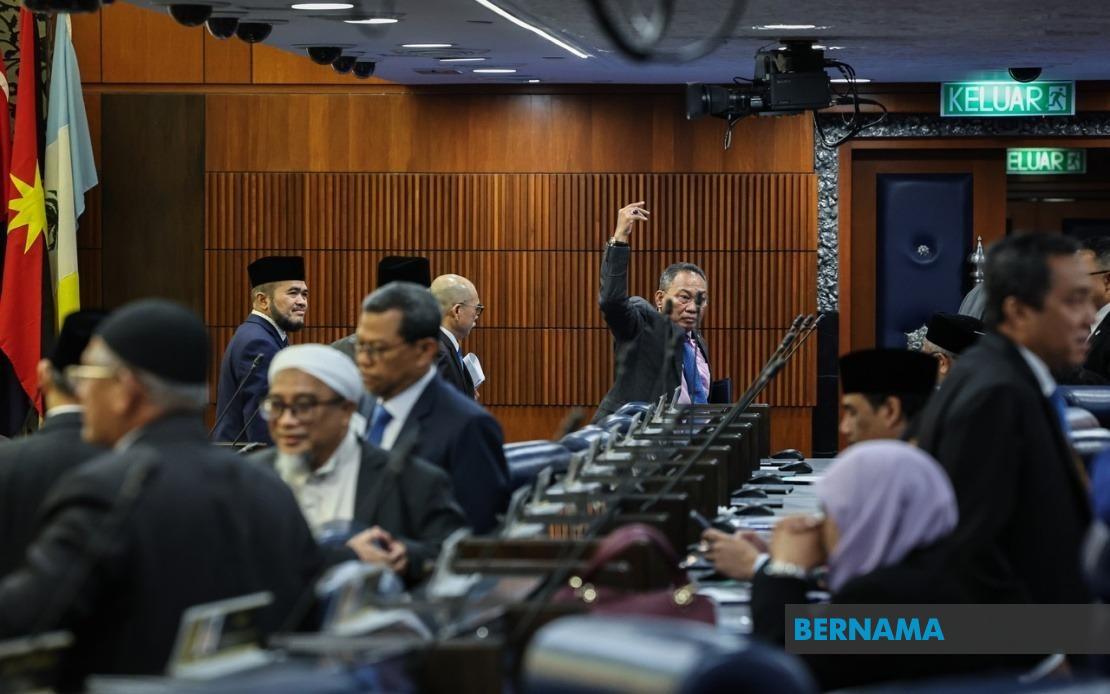
The decision by opposition lawmakers to boycott Parliament's debate on the Tabung Haji Royal Commission of Inquiry report has sparked criticism from political analysts who argue the walkout betrays the fundamental responsibility of elected representatives to hold government accountable. Perikatan Nasional MPs, led by Opposition Leader Datuk Seri Hamzah Zainuddin, vacated the Dewan Rakyat during a special sitting called to examine findings of management and operational weaknesses at the institution between 2014 and 2020. The departure reflected broader concerns about how the opposition conducts its parliamentary duties and whether its actions prioritise political gain over substantive scrutiny of matters affecting millions of Malaysians.
The core issue at stake extends far beyond parliamentary theatre. Tabung Haji serves approximately 10 million Muslim depositors who have entrusted their savings to an institution meant to facilitate pilgrimage to Mecca and provide financial security. The RCI report identified serious governance problems during a six-year period, making Parliament's debate an essential moment for elected representatives to extract accountability from the government and ensure that corrective measures would genuinely protect depositor interests. By absenting themselves, opposition lawmakers forfeited an opportunity to publicly interrogate the government's response to these failures and establish a parliamentary record of commitments that could later be measured against actual implementation.
Associate Professor Dr Mazlan Ali from Universiti Teknologi Malaysia articulated a particularly damaging aspect of the boycott: it sent a signal to depositors that their elected representatives were unwilling to fight for them when circumstances became inconvenient. The academic emphasized that Parliament functions as the nation's premier forum for public interest advocacy, where representatives can raise concerns with government officials directly, demand explanations on the record, and ensure nothing escapes public scrutiny. The opposition's withdrawal meant that thousands of potential questions about depositor protections, asset recovery, institutional reform, and management accountability went unasked and unanswered in a formal setting.
The opposition's stated justification centred on the absence of Prime Minister Datuk Seri Anwar Ibrahim, who was undergoing medical treatment. However, analysts noted this reasoning conflates symbolic presence with substantive capacity. The ministerial briefing fell under the purview of the Minister in the Prime Minister's Department (Religious Affairs) Dr Zulkifli Hasan, whose portfolio encompasses Tabung Haji oversight. As Mazlan observed, the technical knowledge required to explain the RCI findings and government responses remains unchanged whether delivered by the Prime Minister or the relevant minister. The opposition's insistence on the Prime Minister's attendance, despite his documented medical circumstances, appeared to prioritise political posturing over the practical work of parliamentary scrutiny.
Dr Nazreena Mohammed Yasin, a senior lecturer in social sciences at Universiti Tun Hussein Onn, emphasized that effective check-and-balance mechanisms depend on active parliamentary participation rather than boycotts. When MPs engage constructively in debates, they create an institutional platform where government actions face documented scrutiny, officials must provide answerable explanations, and citizens can access a formal record of commitments made. The debate format establishes a mechanism for accountability that extends beyond the parliamentary sitting itself—follow-up actions, policy implementations, and governance reforms can subsequently be measured against statements made on the record. This longitudinal accountability mechanism becomes impossible when opposition members absent themselves.
The implications for Malaysian parliamentary democracy warrant careful consideration. Malaysia's system relies on opposition MPs performing rigorous scrutiny to prevent executive overreach and ensure government remains responsive to public concerns. When the opposition strategically withdraws from parliamentary proceedings, it undermines the institutional balance that theoretically constrains governmental power. This dynamic proves particularly consequential when issues directly affect large segments of the population. Tabung Haji's millions of depositors constitute a politically diverse constituency whose interests transcend partisan divisions—their savings and retirement security should command cross-party commitment to accountability, not become a pawn in political disputes over Prime Ministerial attendance.
The boycott also raises questions about the opposition's strategic priorities. By walking out, PN MPs sacrificed concrete opportunities to advance depositor interests through parliamentary mechanisms. They forfeited chances to propose amendments to oversight frameworks, demand detailed government timelines for institutional reform, establish parliamentary committees to monitor implementation, or create media opportunities to champion vulnerable depositors' concerns. These substantive gains could have positioned PN as credibly committed to protecting ordinary Malaysians, contrasting sharply with the perception that the walkout conveyed disinterest in the issue when circumstances proved politically inconvenient.
From a Southeast Asian perspective, Malaysia's parliamentary institutions face ongoing questions about whether they function as genuine sites of democratic accountability or serve primarily as venues for political theatre. The Tabung Haji debate represented a test case: would Parliament coalesce around protecting a vulnerable depositor constituency, or would partisan considerations eclipse concern for public welfare? The opposition's withdrawal suggested the latter, with significant ramifications for how regional observers assess Malaysian democratic maturity. In comparison, more robustly functioning parliaments see opposition parties intensify scrutiny precisely when government faces institutional failures, recognizing that accountability mechanisms strengthen rather than weaken their political positioning.
The government's response to the RCI findings will proceed regardless of parliamentary opposition. However, the opposition's absence means this critical juncture in Tabung Haji's history occurred without robust cross-party examination of proposed remedial measures. Future problems arising from inadequate reforms cannot be attributed solely to government failure—they will also reflect opposition's abdication of its duty to ensure parliamentary scrutiny occurred when opportunities existed. This shared responsibility for institutional oversight represents a fundamental principle of parliamentary democracy that transcends partisan positioning.
Looking ahead, the precedent established by this walkout may encourage similar opposition boycotts whenever political disagreements arise, further eroding Parliament's capacity to function as a genuine check on executive power. If opposition MPs can withdraw whenever they disagree with government decisions about procedural matters—such as which minister appears before them—the institution becomes vulnerable to serial obstruction that ultimately weakens rather than strengthens democratic accountability. The opposition's constitutional role demands that it participate vigorously in parliamentary proceedings, particularly on matters affecting public welfare, regardless of peripheral grievances about ministerial attendance or perceived slights to its political status.

