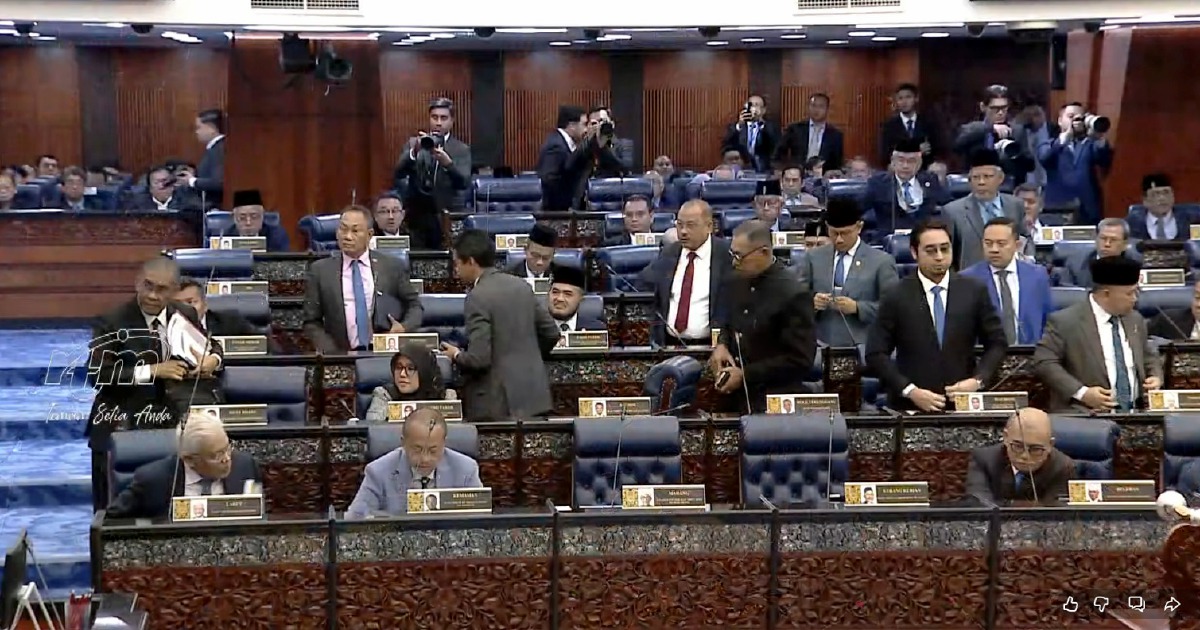
Opposition members staged a dramatic exit from the Dewan Rakyat today, abandoning their seats during a special parliamentary sitting focused on the Royal Commission of Inquiry report into the troubled pilgrimage savings fund, Tabung Haji. The coordinated walkout came after the Speaker rebuffed their formal appeal to defer the debate until Prime Minister Datuk Seri Anwar Ibrahim returned to Parliament, a move that underscores the deepening tensions between government and opposition benches over the handling of a matter that has affected hundreds of thousands of Malaysian pilgrims and their families.
The opposition's decision to quit the chamber reflects a broader strategy to disrupt parliamentary proceedings on an issue they clearly view as politically significant. By requesting a postponement contingent on the Prime Minister's presence, opposition lawmakers signalled that they believe the government's case would be weakened without Anwar's direct participation in defending the administration's response to the RCI findings. The fact that they proceeded with the walkout after their appeal was rejected suggests they consider the debate fundamentally compromised by the current parliamentary composition.
Tabung Haji, officially known as Lembaga Tabung Haji, has long been a sensitive institution in Malaysia's political landscape. As the dedicated pilgrimage savings scheme serving Muslim Malaysians, it carries significant symbolic weight beyond its financial role. The Royal Commission of Inquiry was established to investigate serious allegations of financial mismanagement and governance failures that jeopardised accumulated savings of hundreds of thousands of contributors. For many ordinary Malaysians, particularly those from lower to middle-income backgrounds who rely on the fund to finance their Hajj journey, the RCI findings represent a breach of trust by institutions meant to safeguard their religious and financial aspirations.
The Speaker's decision to proceed with the special sitting despite opposition objections raises questions about parliamentary protocol and the weight given to substantive procedural requests. In Westminster-style parliaments such as Malaysia's, the ability to postpone major debates or press significant figures to respond directly is sometimes viewed as a mechanism for ensuring accountability and robust deliberation. By denying the postponement request, the Speaker essentially chose to move forward with what the opposition characterised as an incomplete parliamentary record, absent the Prime Minister's voice on the government benches.
Anwar's absence from Parliament during this particular sitting, whatever the reason, provided the opposition with tactical leverage they moved swiftly to exploit. The walkout serves multiple purposes simultaneously: it registers formal protest, draws media attention to their position, and creates a symbolic record that the opposition refused to participate in what they deemed an inadequate proceeding. For opposition communications strategies, such moments are valuable for framing the government as unwilling to engage in transparent, full-strength parliamentary debate.
The political context surrounding Tabung Haji remains fraught with complexity. Multiple administrations and political factions have been implicated in various aspects of the fund's governance challenges. The opposition's insistence on the Prime Minister's presence suggests they anticipate using such a debate to extract commitments or force admissions that could be deployed in broader political narratives about government accountability. Conversely, the government may have calculated that proceeding without Anwar present still allows them to manage the narrative around the RCI findings and implementation plans.
From a Malaysian public perspective, these parliamentary theatrics risk overshadowing substantive discussion of the RCI report itself. Pilgrims and contributors deserve clarity about what went wrong, who bears responsibility, what safeguards have been implemented, and how their interests will be protected going forward. When parliamentary time is consumed by procedural disputes and walkouts, the actual findings and recommendations receive less serious scrutiny than they warrant. The opposition's approach, while politically rational, may inadvertently reduce the space available for genuine parliamentary accountability on the Tabung Haji matter.
The incident also reflects a broader pattern in contemporary Malaysian politics where controlling parliamentary messaging has become as important as substantive policymaking. Major debates are increasingly framed as strategic moments to be won or lost rather than opportunities for genuine deliberation and public education. The opposition's walkout, however justified on procedural grounds, contributes to this dynamic by treating the RCI debate as a political contest rather than a matter requiring comprehensive and transparent examination.
Regionally, Malaysia's parliamentary dynamics are watched closely by other Southeast Asian democracies navigating similar tensions between executive authority and legislative independence. How the country handles debates on sensitive matters like Tabung Haji, with major financial and religious implications, offers lessons in both the strengths and weaknesses of Westminster-style governance adapted to a Malaysian context. The walkout itself demonstrates that parliament retains power to express dissent, even if such expressions sometimes sacrifice substantive engagement.
Looking forward, the opposition will likely use this incident to argue that the government lacks confidence in defending its position on Tabung Haji when confronted by a complete parliament. The government, meanwhile, will proceed with whatever statements and policy announcements it had planned, potentially dismissing the walkout as obstructionist. For Malaysian pilgrims and the broader public, the real accountability will come through independent scrutiny of how thoroughly the RCI's recommendations are being implemented and how effectively new oversight mechanisms protect contributors' savings from future mismanagement.

