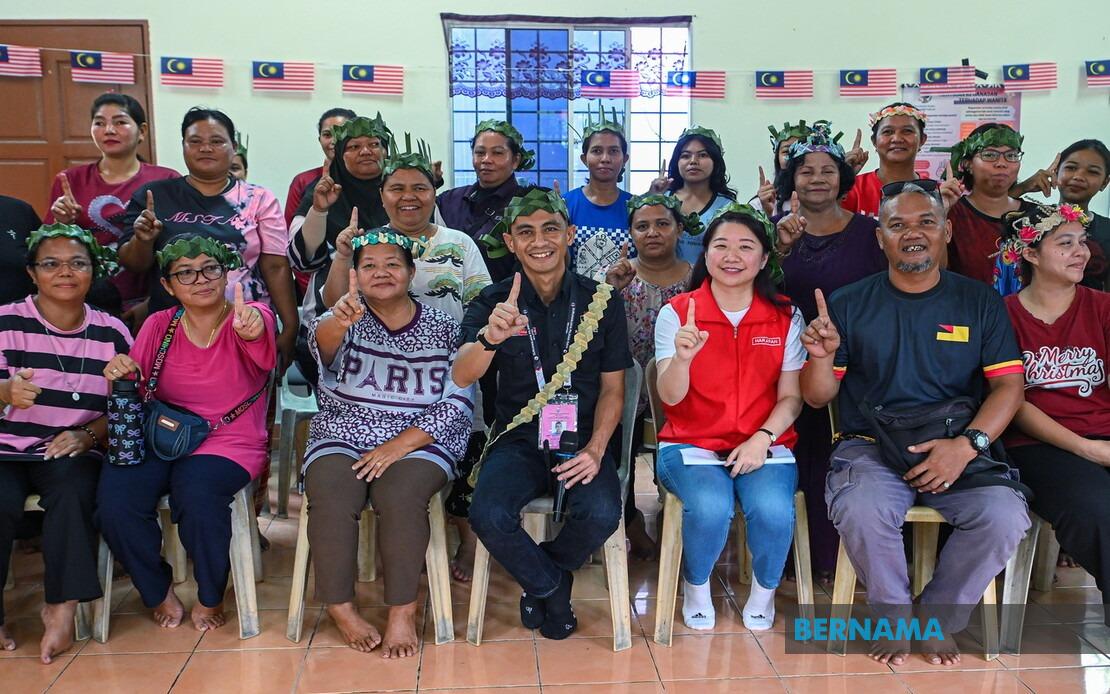
Datuk Ahmad Faez Abdul Razak, the Pakatan Harapan candidate contesting the Labu state seat in Negeri Sembilan, has positioned indigenous community development as a central pillar of his electoral platform. Speaking after attending an Orang Asli Women Empowerment programme at Kampung Orang Asli Tekir in Seremban, Ahmad Faez outlined an agenda focused on tangible improvements in living standards and economic opportunities for the indigenous population residing in his constituency.
The candidate's development strategy encompasses several interconnected initiatives targeting immediate infrastructure needs and longer-term economic sustainability. Should Pakatan Harapan secure the mandate in the state election scheduled for August 1, Ahmad Faez has identified the customary land question affecting Kampung Orang Asli Tekir as a legislative priority warranting presentation to the Negeri Sembilan State Legislative Assembly. This commitment signals recognition of a persistent grievance within indigenous communities, where land rights remain contested and unresolved across much of peninsular Malaysia.
Basic amenities form another critical component of Ahmad Faez's platform. Road infrastructure and internet connectivity represent foundational requirements for economic participation and social integration in the digital age. The absence of reliable broadband access has historically marginalised rural and indigenous communities from educational advancement and commercial opportunities. By elevating these infrastructure concerns, the candidate addresses practical barriers to development that directly affect daily life and economic prospects in Kampung Orang Asli Tekir, home to 796 residents.
Education and youth development feature prominently in Ahmad Faez's vision, reflecting broader concerns about human capital investment within marginalised communities. He emphasises that while Orang Asli youth possess significant untapped potential, they require targeted support mechanisms to acquire marketable skills and generate sustainable income. This framing acknowledges that potential alone cannot bridge opportunity gaps; institutional support and skills development programmes remain essential prerequisites for meaningful advancement.
Economic diversification underpins the candidate's longer-term strategy for the community. Ahmad Faez has identified handicraft production as a viable income stream with market expansion potential, suggesting that local artisanal traditions can be leveraged commercially if appropriate marketing channels and business support become available. Complementing this approach, he proposes introducing modern agricultural technologies including fertigation systems—soil irrigation methods that optimise water and nutrient delivery—to enhance agricultural productivity and create a more reliable income foundation for farming households. This dual-track economic approach balances traditional livelihoods with technological modernisation.
Crucially, Ahmad Faez has framed his engagement with the Labu constituency as sustained rather than episodic political outreach. He underscores that his involvement spans the preceding two years, extending beyond typical pre-election campaign activities. This narrative positioning attempts to distinguish his approach from opportunistic electoral engagement, instead characterising his candidacy as an extension of ongoing grassroots work. Such claims remain subject to verification by constituents themselves, who have direct experience of representative presence and assistance frequency.
Village chief Nasir Musil has expressed confidence in Ahmad Faez's commitment, noting his relative frequency of visits compared to other leaders. Musil's endorsement carries weight within the community hierarchy, though his observations reflect informal assessment rather than systematic documentation. The village chief has independently identified infrastructure development and economic upliftment as community priorities, aligning largely with Ahmad Faez's stated objectives. Notably, Nasir has raised the stray cattle problem as a long-standing public safety issue demanding resolution—a practical concern that, while less prominent in development discourse, directly impacts road users and community wellbeing.
The electoral context shapes these development pledges significantly. Ahmad Faez faces a three-cornered contest against incumbent Mohamad Hanifah Abu Baker of Parti Pribumi Bersatu Malaysia (Bersatu) and Siti Nur Umaira Hasim representing Barisan Nasional (BN). As a first-time contestant, Ahmad Faez must establish credibility while challenging an incumbent advantage. Emphasising sustained community engagement and concrete development priorities serves to build electoral credibility in a competitive field.
The timing of this campaign phase merits consideration. Early voting for the Negeri Sembilan state election occurs on July 28, with general polling scheduled for August 1. This compressed election window means candidates have limited time to consolidate messaging and mobilise support. Ahmad Faez's emphasis on Orang Asli development reflects strategic prioritisation of a constituency segment that may have historically received marginal political attention despite demographic significance.
For the broader Malaysian political landscape, Pakatan Harapan's emphasis on indigenous community development in state elections indicates continued recognition that Orang Asli concerns constitute viable electoral terrain. Historically, major coalitions have sometimes overlooked indigenous constituencies in favour of larger demographic blocs, yet sustained marginalisation creates political space for targeted engagement. Whether such electoral promises translate into legislative action and budgetary allocation remains a persistent question for evaluating coalition performance between elections.
The Orang Asli represent approximately 0.7 per cent of Malaysia's population, distributed across 18 ethnic groups with distinct languages and cultural practices. Socioeconomic indicators consistently demonstrate that indigenous communities experience higher poverty rates, lower educational attainment, and limited access to government services compared to national averages. These structural inequalities persist despite constitutional recognition of Orang Asli status and ostensible government commitment to development programmes. Political campaigns addressing these gaps signal recognition of unfinished development work requiring sustained attention and resources.

