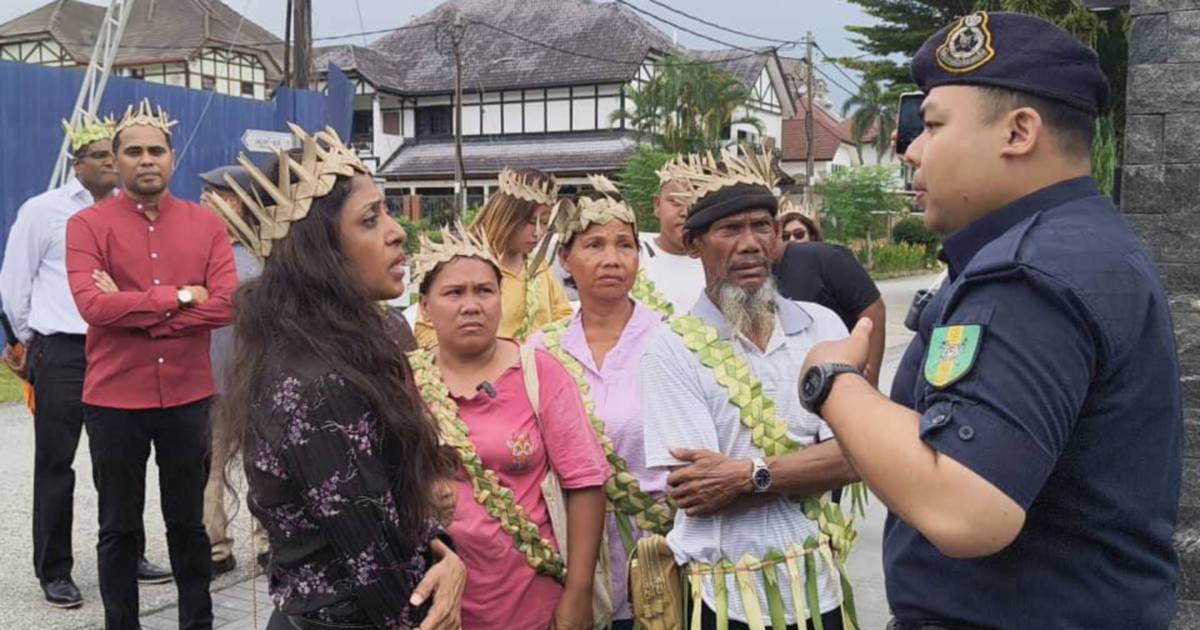
Residents of Kampung Sungai Cot in Kajang have emerged from their meeting with Prime Minister Datuk Seri Anwar Ibrahim with renewed confidence that their escalating land dispute may finally reach a resolution. Juliana Jazlin Ismail, a spokesperson for the village, articulated the palpable shift in mood among community members who have endured years of legal and administrative uncertainty over their territorial claims. The prime minister's personal assurance that he would take direct action on their behalf represents a significant diplomatic breakthrough for an indigenous community that has previously struggled to secure sustained attention from federal authorities.
The intervention addresses one of Southeast Asia's most persistent challenges: the vulnerability of indigenous land tenure in the face of competing commercial and development interests. Orang Asli communities across peninsular Malaysia have historically occupied ancestral territories for generations, yet official recognition and legal protection of their rights remain fragmented and inconsistent. The situation at Kampung Sungai Cot exemplifies this broader pattern, where villagers find themselves defending their homes and livelihoods against encroachment and institutional indifference. What distinguishes this case is the elevation of the matter to the highest level of government, suggesting that Malaysia's federal administration may be recalibrating its approach to indigenous affairs.
Anwar Ibrahim's political positioning has long incorporated rhetorical commitments to marginalized communities, and his direct engagement on this issue carries symbolic weight beyond the immediate dispute. His willingness to involve himself personally signals that the government recognizes Orang Asli grievances as legitimate policy concerns rather than peripheral matters to be managed at lower bureaucratic levels. For the Kampung Sungai Cot residents, this represents validation of their persistent advocacy efforts and a demonstration that sustained pressure through community organization can penetrate hierarchical governance structures.
The timing of this intervention coincides with broader regional conversations about indigenous rights and land sovereignty. Throughout Southeast Asia, indigenous communities are increasingly asserting their territorial claims and demanding that governments implement international conventions on indigenous peoples' rights, including the United Nations Declaration on the Rights of Indigenous Peoples. Malaysia's engagement with these frameworks remains limited, and the government's approach to Orang Asli affairs continues to reflect paternalistic rather than participatory governance models. However, this instance suggests that domestic political considerations may be shifting the calculus.
For Orang Asli advocacy organizations monitoring the situation, the prime minister's commitment represents both an opportunity and a test. Implementation will ultimately determine whether this intervention becomes a genuine turning point or merely another instance of high-level political rhetoric that fails to translate into substantive change. The complexity of land disputes in Malaysia involves multiple government agencies, competing land claims, and entrenched bureaucratic procedures that cannot be unraveled through executive decision alone. Any meaningful resolution will require sustained governmental effort across multiple departments and potentially legislative reform to clarify the constitutional position of Orang Asli land rights.
The broader implications for Malaysia's indigenous communities extend beyond this single village. The precedent established by direct prime ministerial engagement may embolden other Orang Asli groups facing similar territorial disputes to escalate their demands and seek high-level intervention. This could intensify pressure on the federal government to develop comprehensive indigenous land policy rather than addressing disputes on a case-by-case basis. The current ad hoc approach, while politically convenient, leaves communities perpetually vulnerable to shifting administrative priorities and competing development agendas.
From an economic and social development perspective, resolving indigenous land disputes has implications for poverty alleviation and economic participation among Orang Asli communities. Land security provides collateral for economic activities, enables intergenerational wealth transmission, and strengthens community cohesion. When Orang Asli communities spend years engaged in defensive litigation rather than productive economic activity, the cumulative opportunity cost manifests across educational outcomes, health indicators, and economic productivity. Investment in resolving these disputes efficiently represents an investment in regional development and social stability.
The administrative framework governing Orang Asli land rights in Malaysia remains rooted in colonial-era legislation and post-independence policies that frequently privilege state development objectives over indigenous territorial claims. The Aboriginal Peoples Act continues to treat Orang Asli communities as subjects requiring state management rather than stakeholders entitled to genuine self-determination. Any genuine resolution of disputes must address these underlying institutional structures, not merely resolve individual cases. Anwar Ibrahim's intervention, if translated into coordinated policy reform, could initiate the kind of systemic change that individual dispute resolutions cannot achieve.
For observers of Malaysian governance, this episode illuminates the continuing importance of political access and elite engagement in a system where bureaucratic processes often move slowly. Juliana Jazlin Ismail and her community recognized that their case required elevation beyond technical administrative channels, and their successful navigation of political networks demonstrates that determined community advocacy can penetrate governmental hierarchies. However, this also reflects a troubling reality: that indigenous communities must resort to elite intervention rather than relying on institutional mechanisms designed to protect their rights. Sustainable progress requires embedding indigenous rights protection into routine governmental procedures rather than depending on individual political will or advocacy campaigns.
The coming months will prove decisive in determining whether this intervention produces concrete outcomes. Government agencies will need to coordinate their responses, competing claims will need resolution through transparent processes, and implementation timelines must be established and monitored. The residents of Kampung Sungai Cot have legitimate grounds for cautious hope, yet their experience will ultimately shape whether other indigenous communities view similar appeals to higher authority as viable strategies for securing their territorial rights and dignity.

