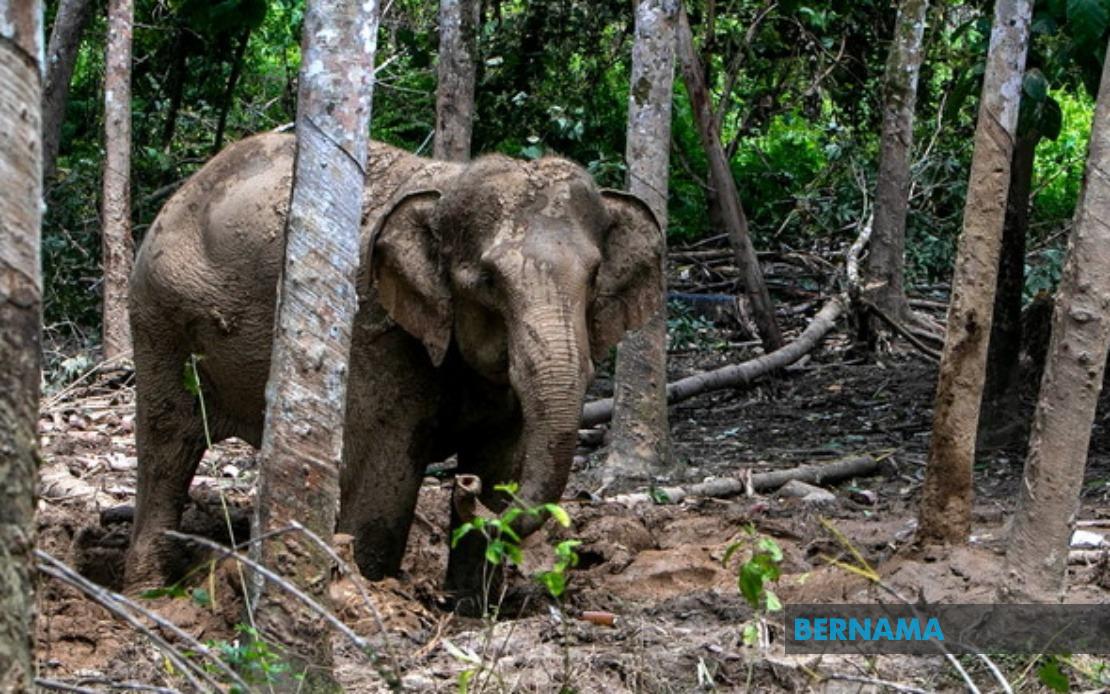
A resident of Kampung Orang Asli Perjek in the Legap Resettlement Scheme (RPS) at Sungai Siput, Perak, remains hospitalized after suffering a severe elephant attack while attempting to protect his village from crop-raiding pachyderms. The incident, which occurred on a Friday evening, underscores the escalating tensions between rural communities and wildlife in peninsular Malaysia, particularly affecting indigenous settlements struggling with agricultural livelihoods.
The Department of Wildlife and National Parks (PERHILITAN) Peninsular Malaysia responded to emergency reports around 10 pm, dispatching personnel from its Sungai Siput district office to document the incident and establish what had transpired. Investigators determined that a herd of four elephants had breached the perimeter of the residential area and made their way into the agricultural plots situated behind family homes, where they began consuming cassava and banana crops that represent crucial food security and income sources for the community.
Witnesses say the victim and multiple neighbours mobilized to drive the animals away, a common practice in rural areas where alternative wildlife management resources are scarce and expensive. However, the situation rapidly escalated when the villager ventured too close to the aggressive herd. One elephant subsequently attacked him with considerable force, causing substantial trauma and blood loss severe enough to render him unconscious at the scene. Local residents responded quickly, managing to extract him from immediate danger and facilitate his transfer to Raja Permaisuri Bainun Hospital, where he was stabilized and remains under ongoing medical care in stable condition.
The deployment of drone surveillance confirmed that all four elephants vacated the settlement after the attack, suggesting the incident may have deterred further incursions, at least temporarily. PERHILITAN officials implemented additional management protocols designed to minimize the likelihood of recurrent confrontations between residents and wildlife in the Sungai Siput locality. These measures reflect growing recognition among conservation authorities that reactive responses alone are insufficient; proactive strategies targeting elephant corridors, migration patterns, and human settlement boundaries are increasingly necessary as elephant populations expand and human communities encroach further into traditional wildlife habitats.
The victim's family will receive government support through the Wildlife Attack Victim Assistance initiative, a social safety net administered by the Ministry of Natural Resources and Environmental Sustainability. This programme acknowledges the genuine dangers faced by communities living at the interface between human settlement and wildlife territories, particularly indigenous populations whose livelihoods depend on agricultural cultivation in elephant-prone regions. The assistance mechanism, while helpful, represents a mitigation strategy rather than a solution to the underlying tension.
PERHILITAN officials have issued public advisory messaging discouraging residents from independently confronting wild animals, especially elephants, which possess the strength and unpredictability to inflict fatal injuries. The agency emphasized that untrained civilians attempting to chase away or control elephants face exponential risks, and such interventions frequently result in the outcomes witnessed in Perak. Professional wildlife management personnel, equipped with specialized training, equipment, and understanding of elephant behaviour, represent the appropriate response mechanism when conflicts emerge.
The broader context of this incident reflects Malaysia's ongoing struggle to balance conservation objectives with the legitimate livelihood concerns of rural communities. The Orang Asli inhabit territories traditionally shared with megafauna like elephants, and their agricultural practices, though essential for survival, create attractive foraging opportunities that draw elephants into populated zones. This dynamic has intensified as human settlements expand and elephant habitats contract, fundamentally altering the ecological equilibrium that previously sustained coexistence.
Residents facing wildlife-related incidents are encouraged to contact the PERHILITAN hotline at 1-800-88-5151 or lodge reports via the Public Complaints Management System (SISPAA) accessible through the department's official website. These reporting mechanisms enable authorities to track incident patterns, identify geographic hotspots, and implement targeted interventions before situations escalate to crisis levels. Community engagement through formal reporting channels also generates data that informs evidence-based policy decisions regarding elephant management and human settlement planning.
For Southeast Asian readers, this incident exemplifies challenges confronting the broader region as human populations expand into territories historically occupied by endangered megafauna. Thailand, Cambodia, and Indonesia face comparable pressures where elephant-human conflicts result in fatalities on both sides. The Perak case demonstrates that even in relatively developed Malaysian contexts with functioning wildlife departments, preventing such incidents remains difficult. Indigenous communities and smallholder farmers bear disproportionate risks, as their economic dependence on cultivating land in wildlife-inhabited zones leaves them vulnerable to encounters that wealthier urban populations never face.
The question of sustainable coexistence requires multifaceted approaches encompassing habitat protection, wildlife corridor designation, community compensation programmes, and crop-insurance schemes that reduce farmers' economic vulnerability to wildlife damage. Malaysia's commitment to such comprehensive solutions will determine whether future incidents like the Sungai Siput attack become increasingly common or gradually decline as preventive measures mature and communities receive adequate resources to protect both livelihoods and wildlife populations.

