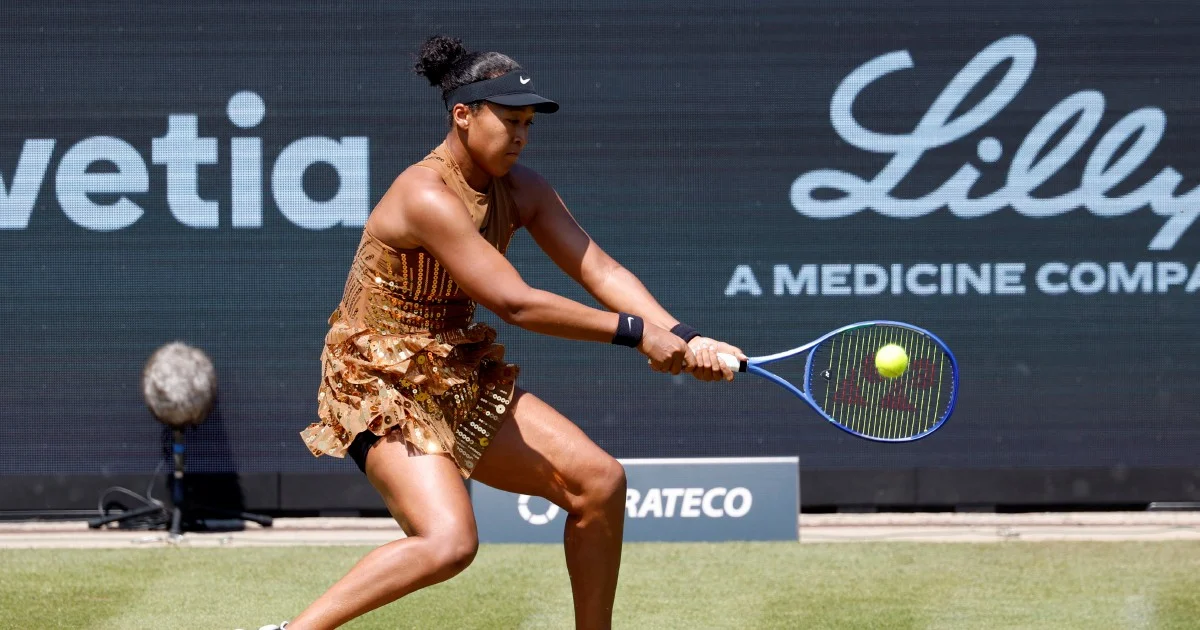
Naomi Osaka has broken new ground in her storied tennis career by reaching her maiden grass court final, dispatching China's Wang Xinyu in commanding fashion at the Bad Homburg tournament in Germany. The four-time Grand Slam champion, despite her remarkable record on hard courts and clay surfaces, has long sought an elusive breakthrough on grass—one of professional tennis's most demanding and traditionally revered surfaces. Her victory at Bad Homburg represents a significant milestone, marking the first time in her professional journey that she has advanced to a grass court final.
Osaka's breakthrough comes as she continues to rebuild her competitive standing following recent personal challenges and periods away from the tour. The Japanese star has methodically worked her way back to form, and her performance against Wang demonstrated the quality and intensity that defined her earlier years when she claimed major titles at the Australian Open, US Open, and twice at the Japanese leg of the US major tournament circuit. Her ability to produce dominant displays on an unfamiliar surface speaks to her technical acumen and mental resilience.
Wang Xinyu's defeat eliminates one of the rising talents from the Chinese contingent on the international women's tennis circuit. The Chinese player has been steadily building her profile and ranking through consistent performances on the WTA Tour, but she encountered an opponent in peak form at Bad Homburg. The semi-final loss, while disappointing, reflects the quality gap between emerging players and established champions when the latter are operating at full capacity.
Grass court tennis occupies a unique place in the sport's hierarchy, particularly in the calendar and in historical significance. The surfaces at venues like Bad Homburg demand distinctive skills—rapid court movement, agility, and the capacity to shorten points require different tactical approaches than baseline-heavy clay court play or the consistent bounce of hard courts. Players who excel on grass often possess exceptional movement and attacking instincts, and Osaka's success in this environment suggests she has adapted her game accordingly. Her preparation and mental approach to this surface will have been crucial components of her semi-final success.
For Malaysian and Southeast Asian tennis followers, Osaka's advancement carries particular resonance given the region's strong interest in Asian sporting achievements and the broader profile of women's tennis in Asia. Osaka's previous Grand Slam victories and her candid approach to discussing mental health challenges have made her a significant cultural figure beyond pure tennis circles. Her return to peak competitive form and achievement of new milestones continues to inspire conversations about resilience and comeback narratives in professional sport.
The Bad Homburg tournament, officially known as the Rothschild Open, holds historical importance as one of Europe's longest-running women's tennis events. The venue's grass courts provide players with valuable preparation opportunities ahead of Wimbledon, typically held within weeks of the German tournament. Osaka's final appearance there positions her advantageously as she looks toward the year's most prestigious grass court championship, where she will compete against the world's elite competitors.
Wang's elimination removes a potential obstacle from the remaining draw, and Osaka will now face her final opponent—determined through other semi-final results—with genuine prospects of adding a grass court title to her collection. Such a victory would round out her surface capabilities and further solidify her status among the sport's elite performers. The psychological boost of winning on a surface where she has previously struggled cannot be understated.
Osaka's journey this season has reflected steady progression rather than the explosive starts that characterized her breakthrough years. Her patient rebuilding approach, working with coaching staff and support teams to recover her confidence and consistency, demonstrates the professional maturity required to navigate the demanding tennis circuit. Many champions have faced periods of challenge; how they emerge and adapt often determines their long-term legacies.
Looking forward, the implications of Osaka's grass court success extend beyond this single tournament. A grass court title would enhance her resume significantly and boost her confidence entering subsequent tournaments. More broadly, her resurgence on diverse surfaces confirms that four-time Grand Slam champions possess the adaptability and skill to excel across different playing conditions, a hallmark of tennis greatness. For tennis fans across the region and globally, her final appearance at Bad Homburg promises compelling competition and the opportunity to witness a champion reclaiming her place among the sport's elite.

